
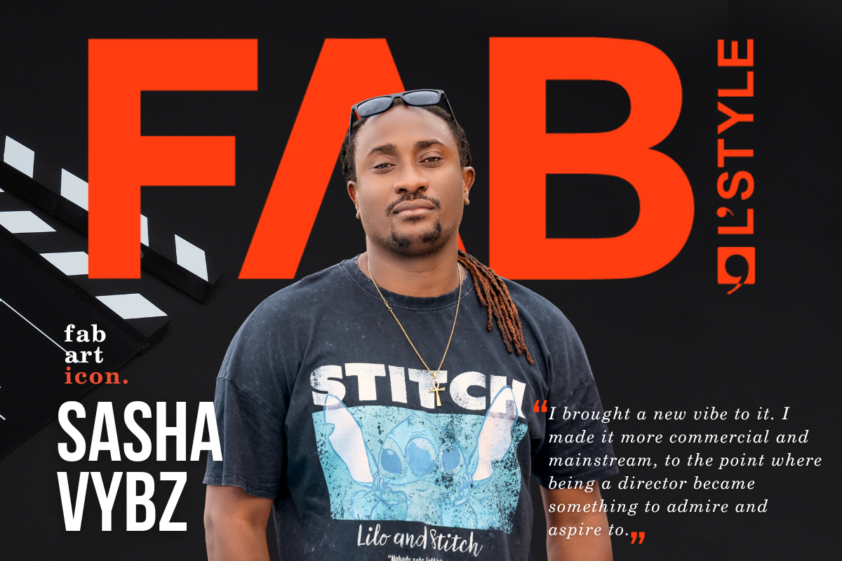
The African music video is no longer an afterthought. Across the continent, visual production has become a multi million dollar engine influencing how artists are seen, streamed, and remembered. In East Africa, that shift did not happen quietly. It arrived through bold frames, cinematic risk, and directors who understood that visuals sometimes could travel faster than sound. At the center of that transformation is Sasha Vybz, born Ian Akankwasa, a filmmaker who helped move Ugandan music videos from low budget hustle to high production spectacle. As streaming platforms, social media, and global Afrobeats audiences redefine attention spans and visual standards, Sasha stands as both architect and witness of a generational change. In this conversation with FAB L’Style, he speaks on faith, fear, authorship, and the responsibility of building images that outlive trends and reform an industry in motion.
Discovering Film as Language and Business
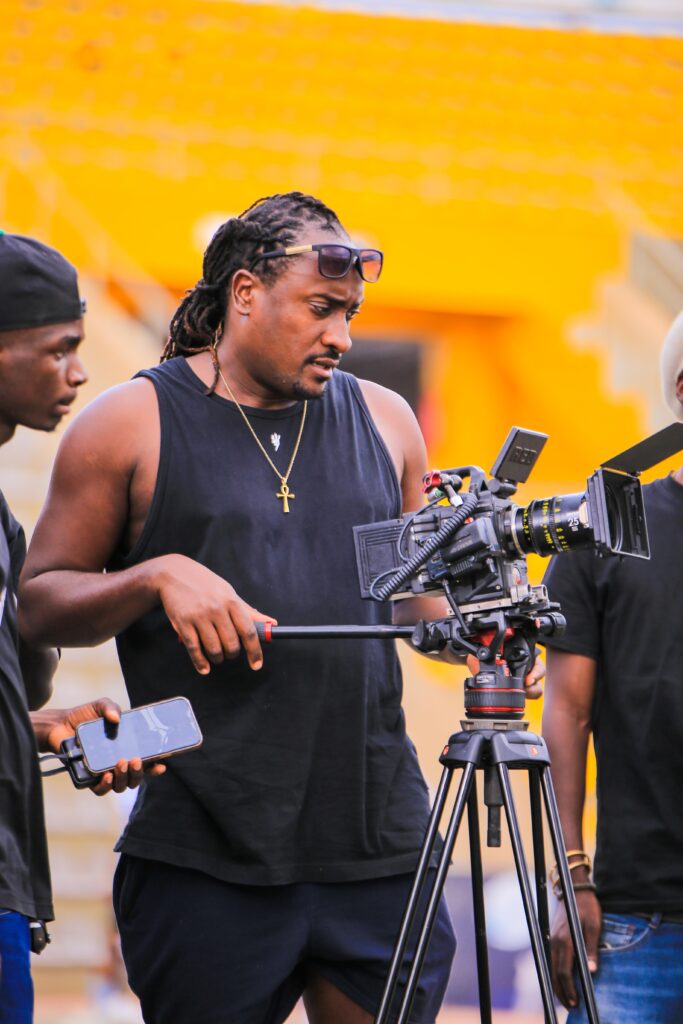
FAB: When you look back at young Sasha, the boy with a dream and a camera, what do you remember about your first spark for visuals?
Sasha Vybz: I’d say it started in Kabale, my village, where I grew up. I’ve always been a curious person. Back in high school, I loved watching movies at the local cinemas. We used to sneak out of school and go to these small shacks where you’d pay about 2,000 shillings to watch a film. I was fascinated by how movies were made. We watched actors like Van Damme and Chuck Norris, and I always wondered how those scenes came to life.
I was also good at drawing and sketching, so the foundation for art was already there. I was a humble and shy kid, so expressing myself verbally wasn’t easy. Storytelling became my outlet. When I got into media and picked up a camera, I realized that taking pictures allowed me to express myself without words. Through the camera lens, I could tell stories visually. That’s how my love for film truly began.
FAB: That’s one part of it, wanting a way to express yourself. But do you remember the moment you realized, “I can actually do this for real, as a business”?
Sasha Vybz: Yes, that came after high school. I remember going to a studio to collect some prom pictures. When I saw how they had edited the photos—removing pimples and making the images flawless—I was amazed. I kept asking, “How do you do this? How do you make pictures look so clean?” A friend told me it was done through editing and Photoshop.
I was keen to learn how to take such pictures, so he connected me to someone else. The next day, I picked up a camera for the first time, and it felt natural. Within a week or two, I was already taking great shots. From there, I started doing photography and later transitioned into video production. That was the turning point for me.
Faith, Fear, and the Moment of Almost Giving Up
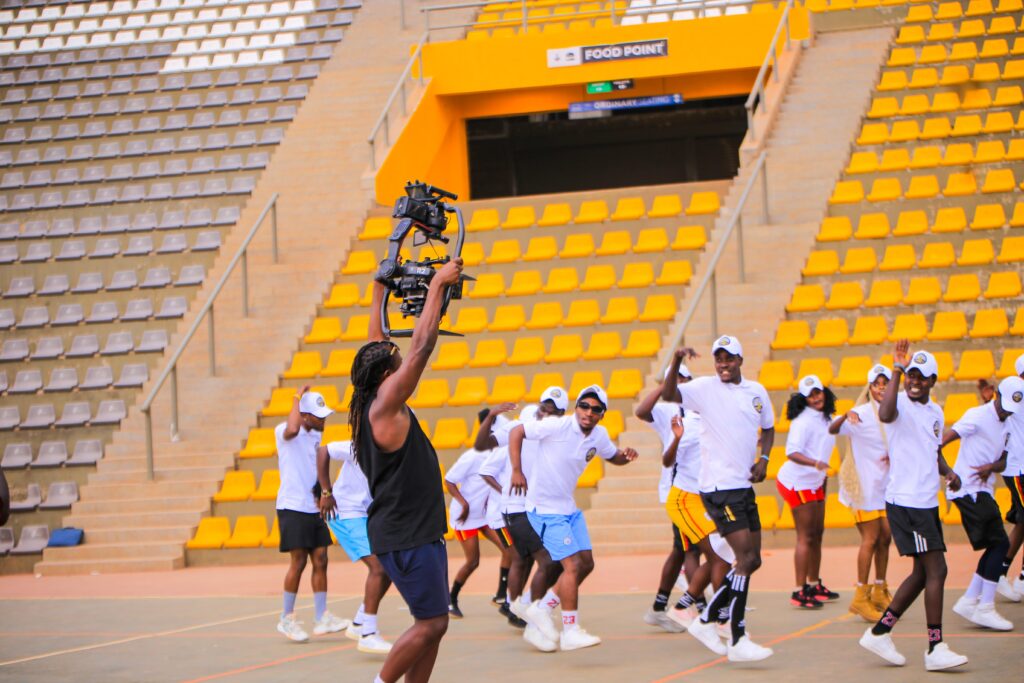
FAB: From what I’ve read, you’ve described your journey as one built on faith and persistence. But was there ever a moment when you almost gave up, even after discovering that you were a natural at it?
Sasha Vybz: Funny enough, yes. About two years ago, during COVID. Everything stopped, and as a creative, I suddenly had nothing to do. I was home for the first time in a long while, just watching my kids run around. It made me think, “What if this whole thing just disappears one day?”
I started doubting myself and wondering if I should try something else because I didn’t see a way forward for film. I was really disturbed. That feeling of giving up lasted about a week. Then something inside me said, “You’re betraying yourself if you quit.” I told myself, “Vybz, you’ve come too far to give up now.” That moment snapped me back to reality. So yes, I’ve had those thoughts, but I refused to let them win.
FAB: Let me rewind a bit and talk about your first big break with Eddy Kenzo’s Stress Free. At the time, he initially turned you down. What did that rejection teach you?
Sasha Vybz: In this industry, you really have to fake it till you make it. When Kenzo turned me down the first time, I had already shot a few videos after high school. I decided to take it seriously and study film professionally. Luckily, my parents were very supportive and believed in my vision. So I went to Cape Town, South Africa, to study film.
Back then, Afrobeats was starting to take off, and South Africa was becoming a creative hub. Many artists, including Davido, were coming there to shoot videos. One day, Kenzo came to South Africa for a video shoot. The Ugandan community there had a guy who was both an artist and a videographer. I was in my first year when he told me, “I have a song with Kenzo, and he’s coming through. Let’s shoot it. We need to support each other.”
He put me on, and that became my first big breakthrough. I was still a first-year student, so it felt surreal. The same person who once turned me down was now trusting me to shoot for him. I brought along some of my classmates from film school to help on set, and together we made Stress Free. It became one of the biggest songs in Uganda and one of the country’s first high-budget music videos. At that time, most Ugandan artists wouldn’t spend more than about $600 on a video, so this project really stood out. When it came out, everything changed for me. Suddenly, I was in demand, and my name was all over the Ugandan music scene.
Found For You
What’s So Special About Ugandan Coffee?
Fashion Futures: How AI, VR, and Innovation Are Reshaping the Style Industry
FAB: After that breakthrough, Sheebah flew you in from South Africa for John Rambo—the first time an artist ever flew you out. For a boy who was once very shy, how did that moment shift your confidence as a director?
Sasha Vybz: It was a big moment. Whenever I’m on set, something just takes over. I’m in control, and it feels like my natural space. As a director, you have to lead. You can’t let anyone else take charge. Your job is to communicate your vision clearly and make sure everyone understands what you’re trying to create.
I remember missing classes for about a week because Sheebah was establishing herself as a major artist at the time. After Stress Free, she wanted me to direct for her, so she flew me in from South Africa. The moment I got on set, I switched into work mode. There was a lot of buzz around the shoot. People kept asking, “Who is this guy they flew in from South Africa? Don’t we have directors here?” The attention was intense because the industry was still growing then, about 10 to 12 years ago. That video went viral and really cemented my place in Uganda’s music industry.
Visual Rhythm as Storytelling Philosophy
FAB: And speaking of that visual, you’ve said before that your films aren’t just music videos; they’re visual stories. What makes a great visual story for you?
Sasha Vybz: For me, it all comes down to rhythm. If you’re not in rhythm—if you’re not in sync with the beat—the story won’t connect. I always tell my students that everything has to flow. A good story gives the song or film visual justice. The rhythm, visuals, and sound should work together seamlessly.
A great visual story happens when you can listen to the instruments, understand the emotion behind the song, and translate that into visuals that move people. When everything aligns—the flow, the feeling, and the message—you know you’ve created something special.
FAB: Still on visual storytelling, for many African video directors, they tend to borrow heavily from Western aesthetics. But your work feels proudly rooted in African texture. One would wonder: what’s your philosophy on blending global polish with local soul? What’s the story behind that?
Sasha Vybz: First of all, I’m a Pan-Africanist. I believe in Africa. I believe in Ubuntu. For me, as part of an emerging industry long before Afrobeats became the global phenomenon it is now, it was important to include African visual language in everything I created. When you stay original and grounded in your identity, it sets you apart. Of course, we borrowed some ideas from the West, but originality was always key for me.
Back then, directors like Clarence Peters, Meji Alabi, and others across the continent were rising. The most important goal was to tell the African visual story in our own language and style. So it was crucial for me to stay original, take inspiration from broader ideas, but twist it, make it Afrocentric, and root it deeply in culture.
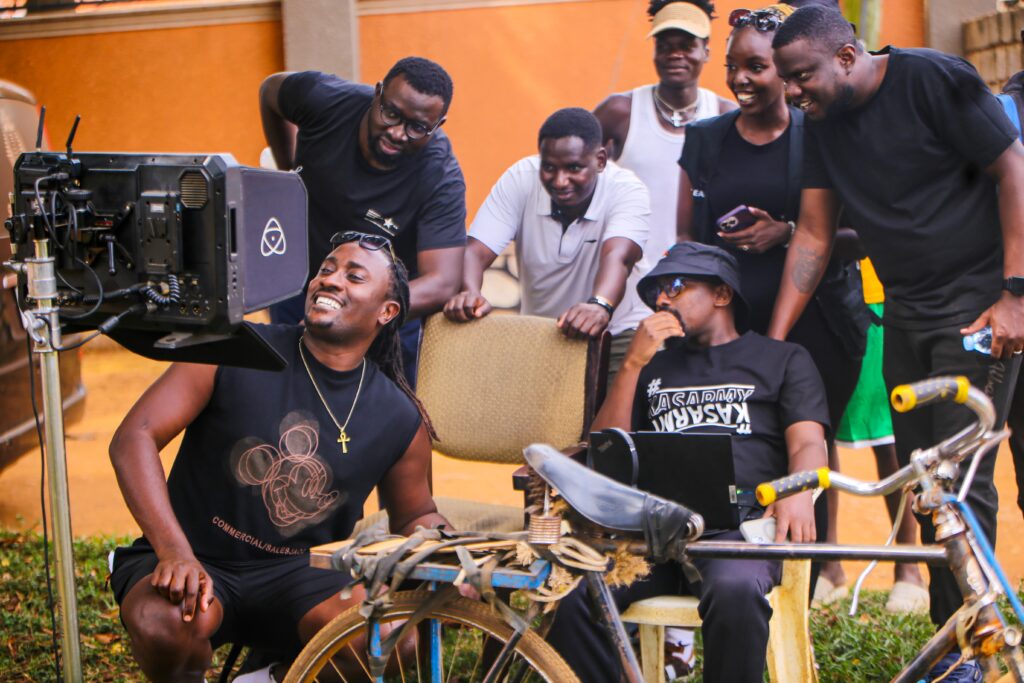
FAB: Let’s talk about collaboration and artistry now. You’ve worked with almost every major artist, from Sheebah to Fik Fameica. Which collaboration taught you the most about trust and vision?
Sasha Vybz: I’ve worked with so many artists that it’s hard to keep count, but one of the most memorable projects was with Jose Chameleone. He’s a legend, one of the greatest East African artists, and someone I grew up watching. My parents idolized him. Everyone did. He’s that kind of big deal in East Africa.
I remember finishing the shoot for Jordan by Sheebah and then getting a call from him. It was humbling to be trusted with such a major visual project because it involved a lot. We travelled nearly 12 hours out of Kampala to Karamoja. And let me tell you, Karamoja is unlike anywhere else. It’s a part of the country that suffered civil war for nearly three decades. Travelling there after the Kony era felt surreal. Kony was a rebel leader who destabilized that region for years. We arrived about seven years after the war ended, in a place that was still largely untouched. Civilization basically stops several hours before you even get there.
We were out there flying drones and shooting with local communities, many of whom barely wore clothes. It was wild. As a director, being in that kind of environment pushes you to capture the raw beauty of the place and tell an honest story. It was a humbling experience. If you watch the video, you’ll see exactly what I mean. It was something that had never been seen on screen before, anywhere in the world. For me, that project was a major turning point, one of the most meaningful experiences of my career.
FAB: Wow! I’m sure that must have required a huge budget to achieve because, already, you’ve become the barometer for artistic ambition. If an artist has “Vybz,” people assume they’ve made it. Does that kind of reputation ever feel heavy at all?
Sasha Vybz: Of course, it does. I wouldn’t lie to you. It’s both humbling and overwhelming at the same time. As a creative, you carry a lot of responsibility. At the end of the day, nobody cares about what you went through to get the work done. They only care about the final result. So yes, it’s a heavy responsibility.
FAB: You said, in the past we mostly had low-budget music videos. Now the industry has evolved from low-budget hustles to high-production spectacles. How has that transformation changed what audiences expect and what directors must deliver in the industry today?
Sasha Vybz: I think that evolution was necessary. You have to look at how Afrobeats, and I’ll just use that term broadly, has grown. Let me take you back to around 2012 or 2013, before I returned from film school. I was flown in to shoot for Sheebah, and the budget was around $1,500. Given Uganda’s economy back then, that was a huge amount of money.
Once that video came out, it changed things. People began to take music videos more seriously. It was no longer the usual “stand and shoot” approach. That one project created a shift where artists started to see music videos as part of their brand identity. As a creative or director, you’re not just making visuals. You’re selling an artist’s brand, communicating a message, and shaping public perception.
That shift made artists realize this was serious business. Before stepping on stage, they needed to look and feel like stars in their videos. And that change led to the rise of full production teams: makeup artists, stylists, and other professionals involved in video shoots. So yes, that transformation turned music video production into a proper industry.
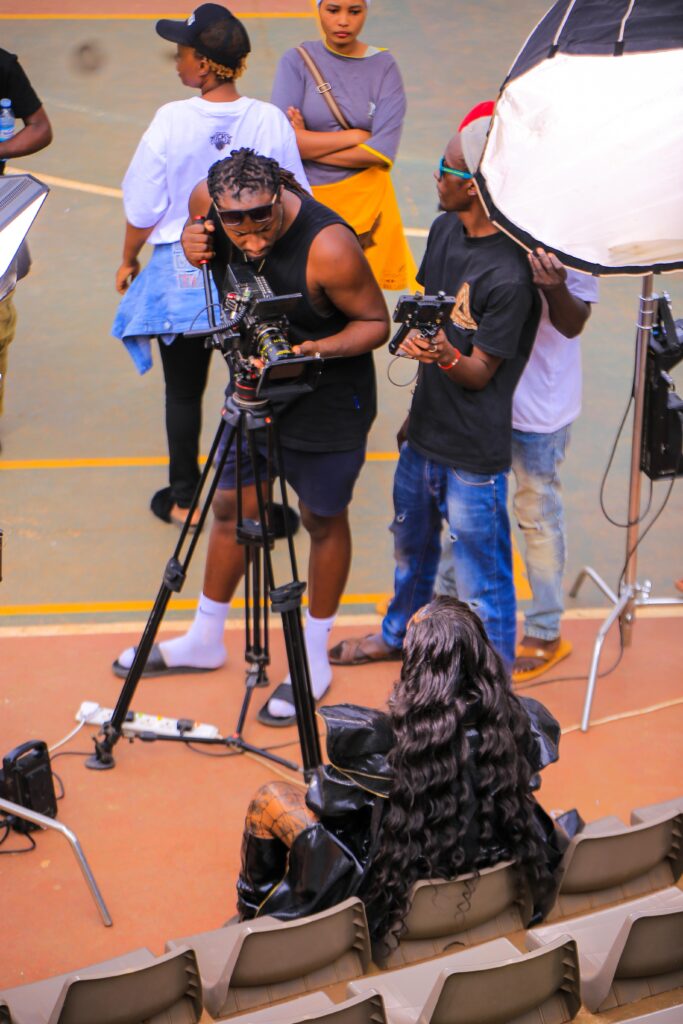
FAB: You’ve just touched on the major shifts in the industry. Today, we’re seeing even more changes, especially with the rise of TikTok and short-form videos. It’s gotten to a point where you ask yourself, “How do we tell the difference between a truly talented artist and someone who just went viral overnight?” Anyone can become a celebrity in 24 hours. We’re also seeing how AI is disrupting the industry. A lot of people are posting things like, “You don’t need a video editor or songwriter anymore,” or “AI can do this for you.” Some are scared, while others believe AI will democratize filmmaking. But some say it will dilute artistry. So my question is, where do you stand in that debate?
Sasha Vybz: I always tell my fellow creatives that art will always be art. Original will always be original, and a copy will always remain a copy. You can’t take away from an original painting; it stays what it is. Even if AI can replicate it and produce something similar in two minutes, it will never carry the same essence.
As filmmakers, we must stay true to the art form. If you understand what drew you into this industry and what fuels your creative drive, then you know that anything created by a human carries something deeper — real emotion and creativity. AI can replicate and perform many of these tasks, and that’s fine. We shouldn’t ignore it. The smart thing to do is find ways to integrate AI into your workflow. If it can save you $10,000 in visual effects costs, use it for that. But never lose your authenticity. Original work will always stand out. The human touch can never be replaced.
So no, I’m not worried. I’ve seen what AI can do, but I’m not scared. Art will always remain art. When it’s made by a human being, it carries that original, soulful touch.
FAB: I like that. “Art is art, and the human touch cannot be replaced.” I’m sure this is a conversation we’ll keep having until we eventually agree on some boundaries.
Sasha Vybz: Yeah, that’s true.
FAB: Let’s move to mentorship and the creative ecosystems in Africa, especially Uganda. You’ve inspired a new generation of African directors, many of whom see you as a blueprint. But as someone who has been in the industry for so long, what do you think is still missing to help upcoming creatives thrive? Let’s start with Uganda and then look at the continent as a whole.
Sasha Vybz: It’s a big conversation, but let me take you back to how the industry has evolved in Uganda. You have a nation that came out of years of turmoil and dictatorship about 30 years ago. The economy is still developing, and we’ve only recently entered middle-class status. Afrobeats has exploded globally, with artists like Davido dominating the scene. So countries like Uganda now have to find ways to compete and claim part of that market share.
Here’s the reality. Uganda has about 50 million people, and only around 24 million have phones. Out of that number, only about 10 to 13 million people are active on social media. That already limits the industry because artists make most of their money from shows and live performances. Then COVID happened, and artists couldn’t perform at all. That exposed a harsh truth: we need to start generating income online, not just from shows.
Take a Ugandan music video, for example. The biggest hit song might get around 4.5 million views in about three months. The biggest of the big might reach six million views overall. But that’s still not enough for most artists. Financially, it doesn’t add up. You could invest around 500 US dollars, but a million views on YouTube doesn’t pay much. Maybe $2,000, and not every artist reaches that. It’s a tough reality.
Seven or eight years ago, the industry was still small, and although it has grown over the past few years, I don’t think there’s enough market to sustain Ugandan artists fully. That limits growth because the audience reach is small. When I was in Nigeria, we were trying to collaborate and expand our reach to grow the industry beyond borders. The goal was for the Ugandan scene to reach other countries and not exist only within Uganda. That conversation is still happening. We’re still pushing to grow the industry, but it’s still struggling, both in music video production and film.
FAB: While preparing for this interview, I was trying to understand the current state of the film industry in Uganda. One of the most fascinating things I found was that many content creators seem to have a disconnect between what they’re creating and what the local market actually wants. It’s as if the audience is asking for one thing while the artists, driven mostly by passion, are producing something else. It’s like someone creating a product that doesn’t meet the needs of their market. Do you agree that there’s a disconnect between what creators are producing and what audiences want?
Sasha Vybz: Yeah, there is. And you have to look at Uganda itself, the economy and the culture. We all grew up watching movies. We love films. But when a Ugandan movie is released in cinemas, people don’t go to watch it. They’d rather watch Hollywood or American films. That’s what they want to see.
I think it’s both a cultural and confidence issue. Ugandans need to start believing in local creators who can tell great stories. People love trends, and that adds to the disconnect. So yes, there’s definitely a gap. What we’re trying to do now is change that mindset, to get people to appreciate and watch original Ugandan content made by Ugandans for Ugandans. That’s exactly what we’re working on: fixing the mindset.
FAB: Moving away from that, there’s another conversation happening in the industry. There is often little protection for creative rights in the African entertainment space, not just in Uganda. Have you ever had to fight for your intellectual property or credit?
Sasha Vybz: Yes, almost every time. Every day. Even now. It’s crazy because if you check the news today, you’ll still find ongoing copyright battles involving artists. It feels like every month there’s talk about passing a new copyright bill. You can make a movie, release it in cinemas, and the next day, it’s being sold in stores on CDs without your permission. The system still doesn’t work in Uganda. We need to learn from neighbouring countries and establish stronger laws and regulations to protect creative rights. That’s what would truly safeguard filmmakers and allow us to generate enough revenue to sustain the industry. So yes, copyright remains a major issue in Uganda.
FAB: What would a creative economy that truly works for East African creatives look like in your eyes?
Sasha Vybz: I think we’re actually fortunate to have over 100 million people who speak Swahili. The best way to grow our industry is through something our president has been pushing for a while, which is the East African Community. Of course, it doesn’t happen overnight. It’s a gradual process, but it has already made travel between Kenya, Uganda, and Rwanda much easier. If the community could expand and create systems that allow creatives to collaborate freely, enjoy tax exemptions, and film across borders without restrictions, it would transform everything. That kind of openness would push our industry to another level.
FAB: Some people often say that just because you can shoot a music video doesn’t mean you can shoot a film, and just because you can shoot a film doesn’t mean you can shoot a commercial. But you’ve worked with brands like Pepsi and Radiant. What’s the difference between telling a brand story and a music story?
Sasha Vybz: With brands, you have to understand what they’re trying to sell. You must be careful, detailed, and clear about the message they want to communicate. Music videos are different; they’re more spontaneous and creative. On set, it’s all about the energy. You can even create a viral moment by accident. Brand commercials, on the other hand, require structure and precision. Everything has to align with the client’s message. In music videos, you have more creative freedom and can experiment as much as you want. For brands, the process is more disciplined and message-driven. So yes, the difference is huge.
FAB: Finally, this is a question I love to ask because we rarely stop to reflect. In 50, 100, or even 200 years, when people speak of Sasha Vybz, what do you hope they’ll say about you?
Sasha Vybz: That I changed the game. Shoutout to all the big directors who came before me, people like Buddy, Chiwa, and Pro. The industry already existed, but I think people will remember that I brought a new vibe to it. I made it more commercial and mainstream, to the point where being a director became something to admire and aspire to. I helped people see that being a video director is powerful, creative, and respected. So yes, I changed the game. I set the pace. I changed the game. That’s what I hope people will say.