


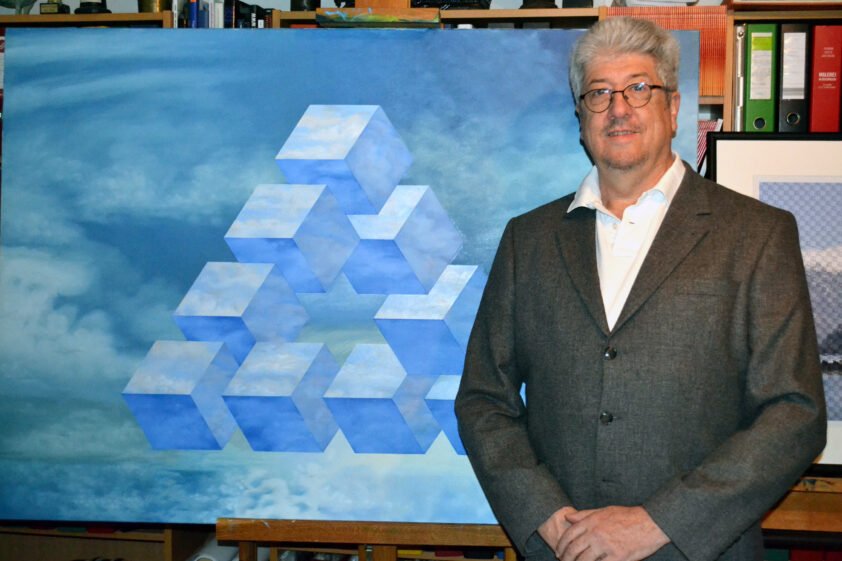
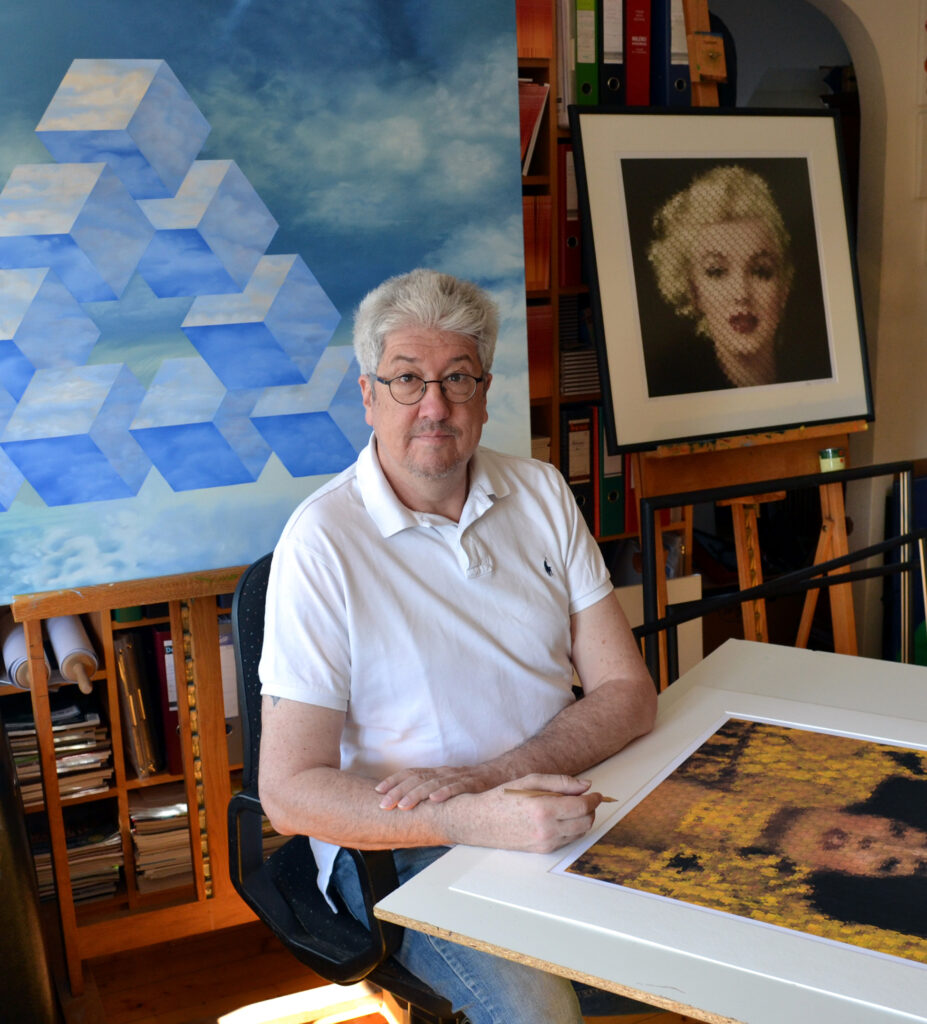
As a contemporary Austrian digital artist, Peter Mahler bridges academic painting traditions with experimental technologies, positioning himself uniquely in today’s European art scene. The term Pixelismus, coined by Prof. Walter Sand, connects Peter Mahler digital art to Pointillism and Expressionism, redefining the pixel as a contemporary brushstroke. While related to composer Gustav Mahler, Peter Mahler never relied on the name. Instead, his contemporary art practice evolved independently before audiences began recognising parallels between music and image.
This Peter Mahler contemporary artist interview reveals an artist committed to peace, authenticity, and technological evolution without abandoning artistic lineage. He reflects on family legacy, Pixelismus, fossil-inspired works, and how digital art and AI reshaped his creative identity. From oil and tempera to pixels and algorithms, Mahler’s journey traces the evolution of contemporary Austrian art across generations.
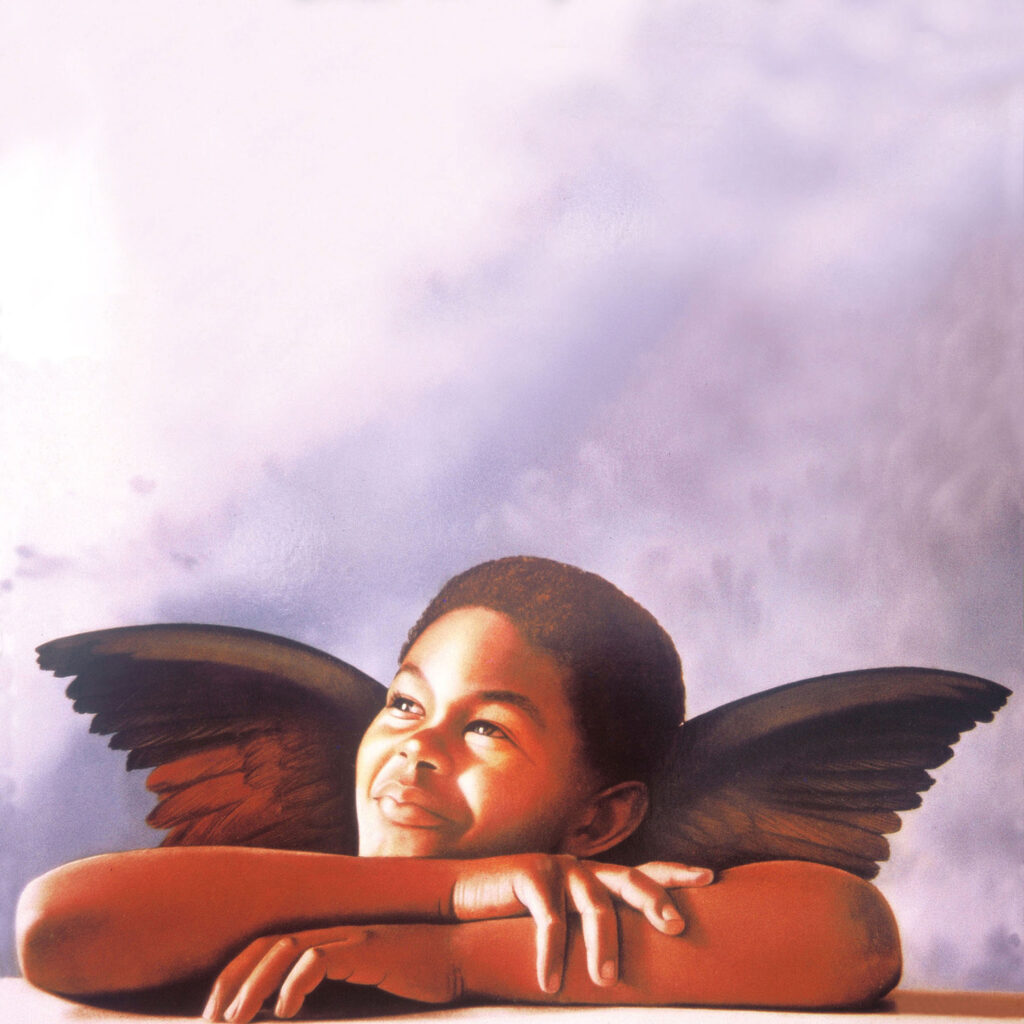
Cover image for “Angel at the gate”, detail
Mixed technique on paper, collection of Ronald Laude
FAB: When did art become personal rather than an inherited expectation?
Peter Mahler: My relationship with art began quietly and instinctively. As a child, I spent hours drawing and painting without knowing why. I discovered an art-history book in my parents’ house and began copying the images — yet even then, I altered them, adding surreal elements that made them my own. Alongside these drawings, I created ink illustrations, strange comic-like scenes, and story-based strips. Later, I began painting at home.
Artists often work because something within them resists ordinary language. Certain emotions or memories cannot be spoken; they must be transformed. Looking back, my family carried many such unspoken stories. Perhaps this is one of the reasons I became an artist. It was never about inherited expectations. It was always personal.
Despite the family connection to Gustav Mahler, there were no artistic demands placed on us children. My Austrian relatives were focused on survival, rebuilding their lives in the New World, and overcoming the trauma of Nazi persecution. Artistry was not an expectation — it was a quiet inheritance of spirit, not obligation.
After serving in the U.S. armed forces as part of his naturalisation process, my father changed our family name from Mahler to Maler. Perhaps he wished to distance himself from the pain of his past. When I later received Austrian citizenship, the name reverted to its original Austrian form. Thus, in my Austrian passport I am Mahler, while in my American passport I remain Maler. Returning to Austria restored my true name almost by itself.
My changing signature — from Maler to Ma(h)ler to Mahler — mirrors the journey of my life: loss, transformation, and the quiet return to my origins.
FAB: Does carrying the Mahler name create expectation—or resistance—when you present contemporary work?
Peter Mahler: For many years—both in the United States and long after I arrived in Vienna— I rarely mentioned the family connection. There was neither expectation nor resistance.
That changed when Prof. Walter Sand publicly spoke about parallels between Gustav Mahler’s work and mine. He described us both as romantics with wide creative palettes and passionate expression. Since then, several events have combined Mahler’s music with my art — from Mahler malt Mahler at the Grand Hotel Vienna to the exhibition Past and Present of Mahler’s Art World in Chengdu.
In recent years, this connection has also led to invitations to speak in Jerusalem, Austria, and China — moments that showed me how deeply people respond not only to Mahler’s legacy, but also to the way my own work continues that lineage in a contemporary form.
I have only had positive experiences sharing the connection. In China especially, ancestral heritage carries deep meaning, and I was met with great respect and warmth.
FAB: How did your early surroundings influence your visual instincts?
Peter Mahler: Certain childhood experiences influenced me profoundly. Once, while playing ball in a field — without knowing I needed glasses — I fell flat on my face. Right in front of me, half-buried in the soil, was a perfectly preserved fossil filled with tiny shells. It felt like a message from another world.
Later, a pipe was installed in a nearby stream, releasing reddish water every evening. In my young mind, this caused the death of the small animals living there. These impressions — the beauty of ancient life and the destruction of present life — stayed with me.
Years later, they became the foundation of my Gegenwartsarchäologie, a series large enough to fill a small museum exhibition. Each piece was displayed under glass, accompanied by texts written by the fictional archaeologist Dr Hietzinger, who served as a semi-serious conceptual narrator describing these “future fossils” discovered in Viennese construction pits.
One of the central works was “Charly” — a life-sized human skeleton surrounded by the objects he was “buried” with: a Walkman and a handful of Austrian coins. According to Dr Hietzinger’s report, Charly was found in a Baugrube in Ottakring, his belongings catalogued like relics of a vanished civilisation.
Another piece was a “fossilised computer”, its components cast in cement and exhibited as if excavated thousands of years from now. There were many such works — humorous, tragic, ironic — all asking the same question:
Recommended
FAB: What traces will our species leave behind?
Peter Mahler: If a generation can see this clearly, perhaps it will inspire change.
FAB: What pushed you from classical foundations into digital experimentation?
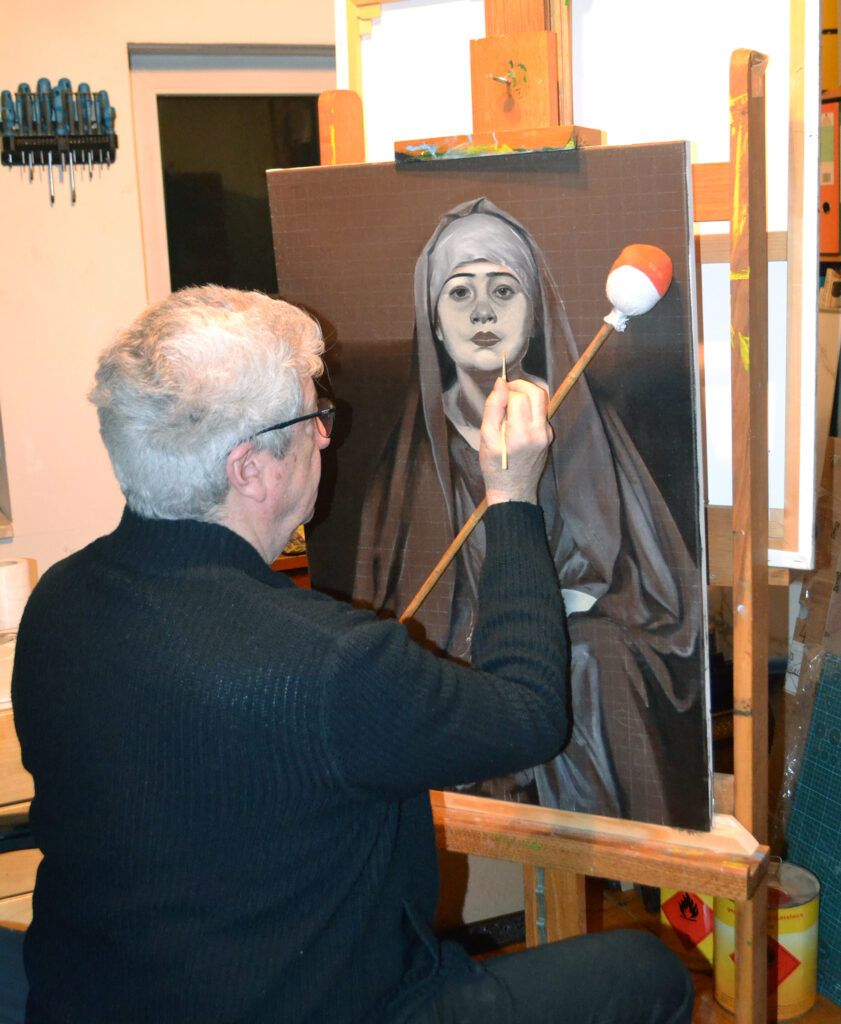
Peter Mahler: My first passion was the classical mixed technique of oil and tempera, and I was a radical realist. I combined these methods with photorealistic imagery and taught them for many years.
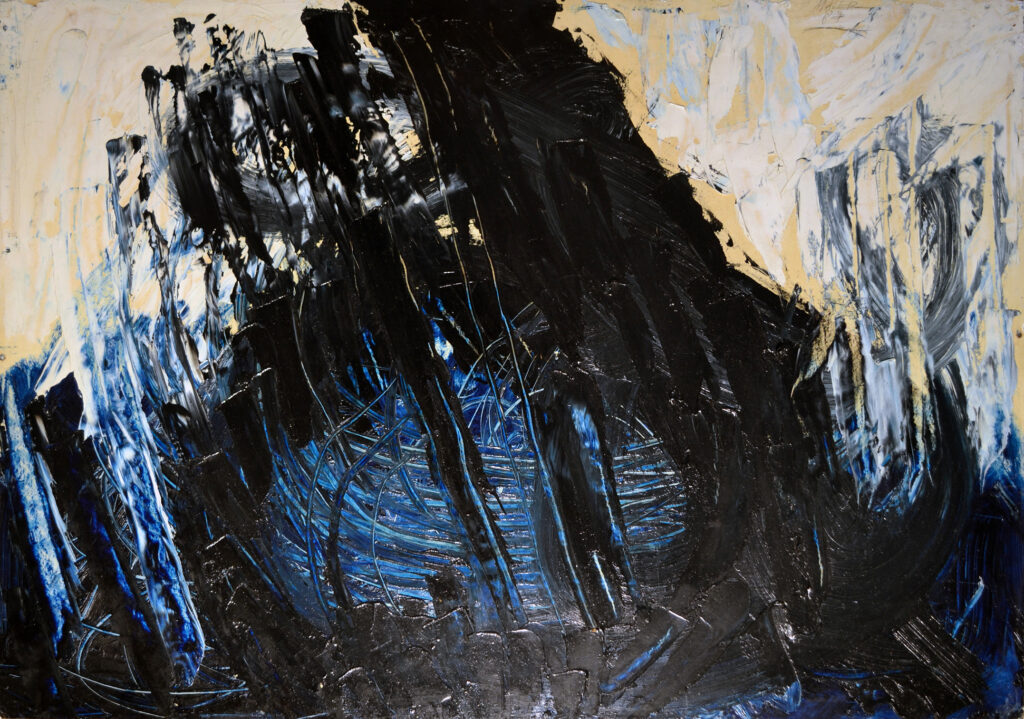
Eventually, the precision felt restrictive. I longed for spontaneity, and this led to a creative eruption. In my Viennese studio, I produced large, expressive paintings with such intensity that paint landed on the ceiling. It was chaotic, liberating, and transformative — the moment I stopped painting what I knew and began painting who I was.
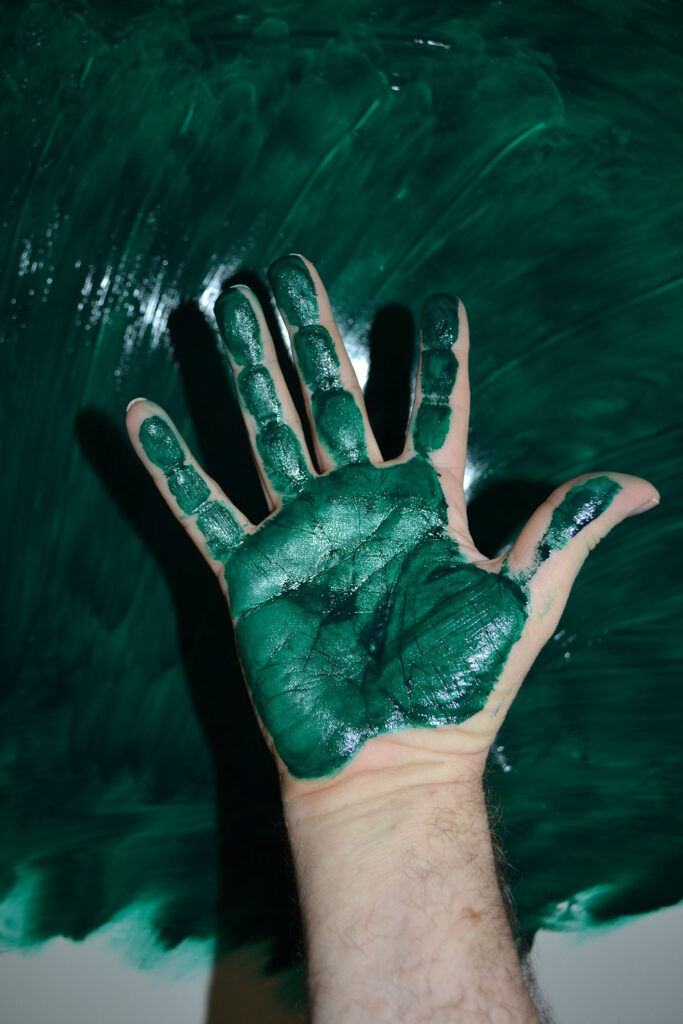
From this came a new phase: painting directly with my hands in oil, without brushes. These works were exhibited in Vienna and across Europe through Galerie SUR.
Later came the cement casts, the epoxy pillars, and my parallel work as a graphic designer, which introduced me to Photoshop. I still remember version 2.0.
Breaking free from classical constraints, combined with a desire to stay current, naturally led me into digital art. I love computers and AI; they have become trusted companions.
FAB: Was there resistance — internal or external — to that transition?
Peter Mahler: Perhaps a little. I wondered whether digital prints would be valued as highly as hand-drawn works. But I realised that in my own universe — and each of us has one — I define the value of my creations.
Since embracing digital art, I have exhibited and sold my works continuously. Friends and supporters encouraged me from the beginning. Today, many artists work digitally with great artistic and commercial success. I feel very much on the right path.
FAB: What work marked your arrival into your own voice?
Peter Mahler: The breakthrough came during that period of wild expressionism — the moment I broke free from academic constraints. It allowed me to rediscover the child who found fossils and witnessed environmental destruction. Those early impressions became part of my artistic identity.
Some of those early works remain in family possession. Perhaps one day I will show them.
FAB: Did audiences initially understand the fusion of traditional and digital in your work?
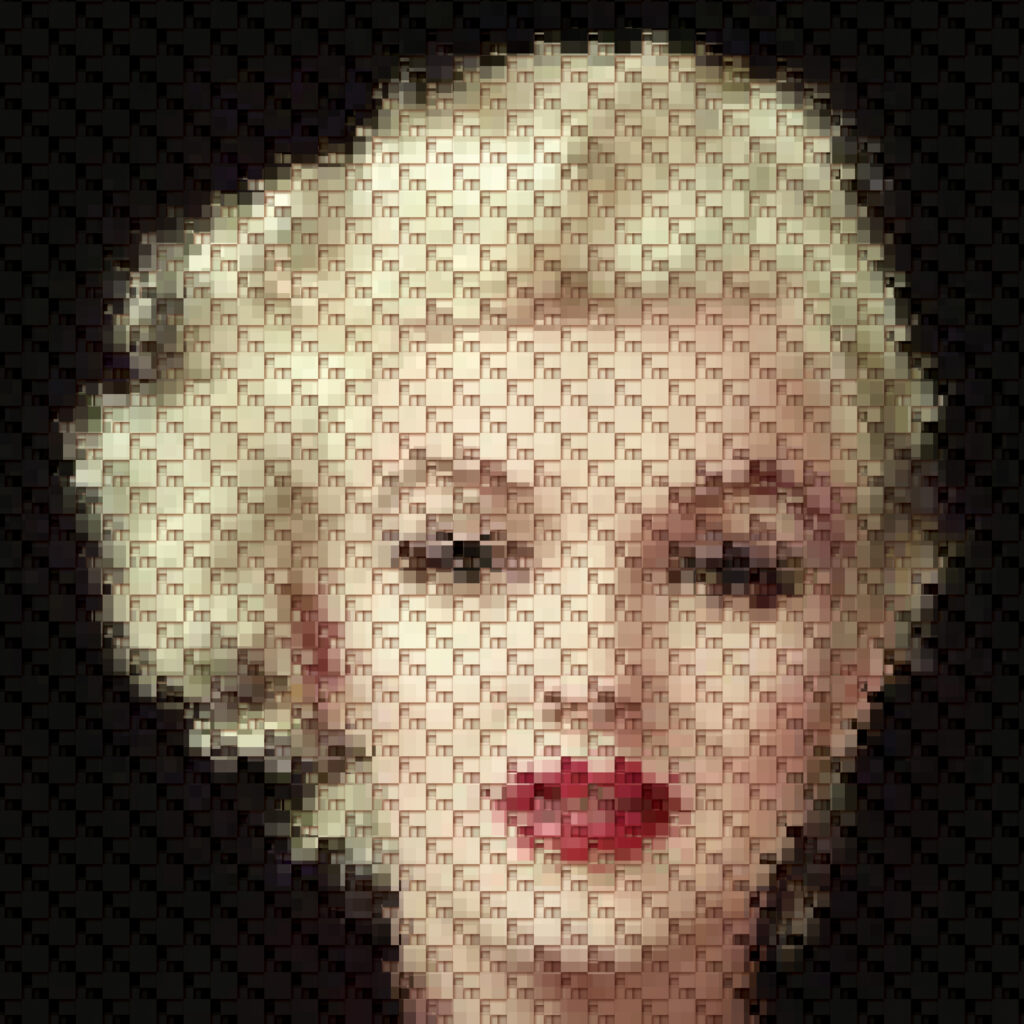
Peter Mahler: It required some explanation. Prof. Walter Sand encouraged me from the beginning and coined the term ‘Pixelismus’ nearly 25 years ago.
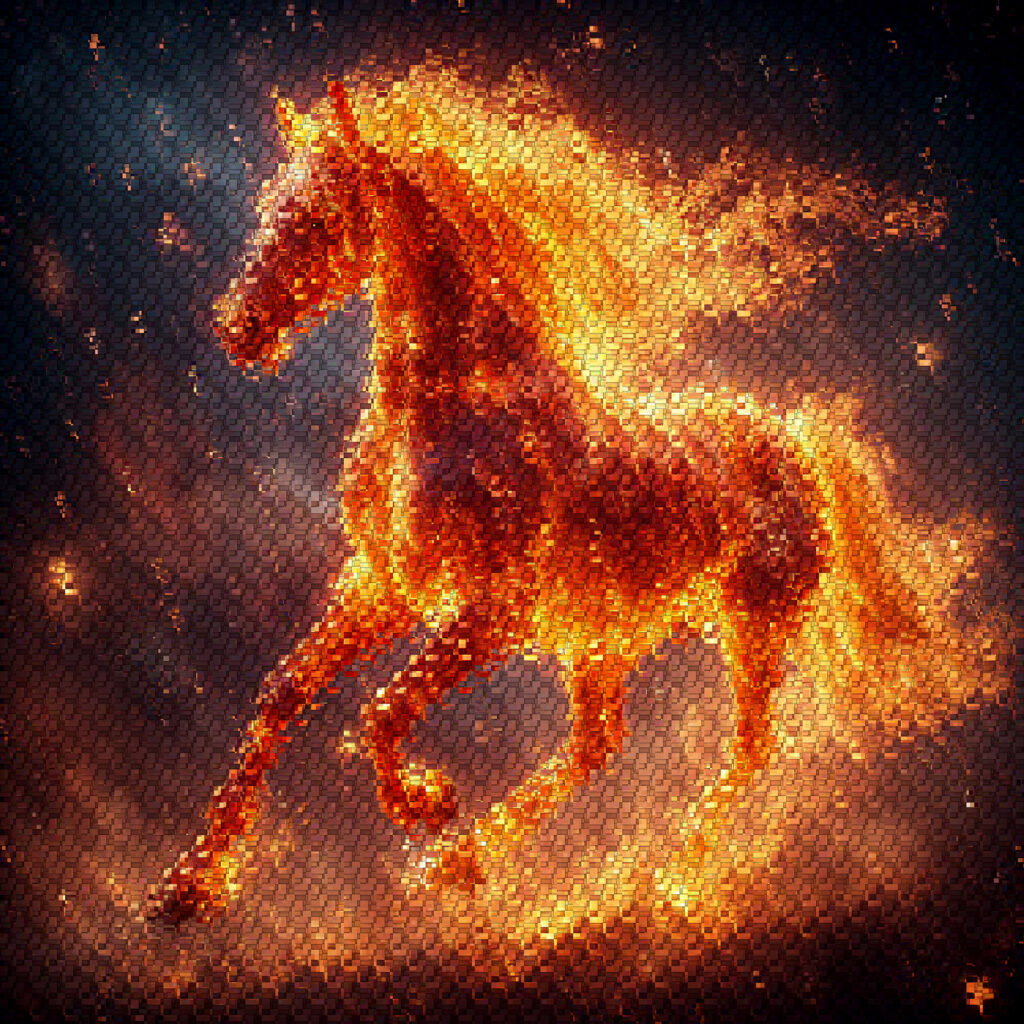
It took time for even me to understand its significance. The relationship between Pointillism, Expressionism, and the pixel as a modern brushstroke has been noted in the media. For me, the pixel is a brushstroke—a contemporary extension of a 19th-century idea.
In the beginning, only Professor Sand truly recognised this connection.
FAB: How do you balance preservation of tradition with innovation?
Peter Mahler: Part of me remains deeply traditional. I am currently working on an old-master painting in oil and tempera and may take commissions occasionally. But my heart belongs to digital art.
I honour the artistic values passed down by earlier generations while remaining open to 21st-century innovation. I see new technologies not as threats, but as tools that expand the palette.
FAB: What does authenticity mean in an era of endless reproducibility?
Peter Mahler: Authenticity can be preserved through originals and limited editions. Some of my editions contain fewer than ten pieces worldwide; others are unique. This allows collectors to acquire something truly exclusive.
Authenticity is reinforced through signatures, edition numbers, dates, places of origin, stamps, seals, and certificates. But above all, authenticity depends on the artist’s integrity. A limited edition must remain limited.
FAB: What concerns define your practice today?
Peter Mahler: I feel a strong responsibility to address the urgent need for world peace. It may sound romantic, but the impulse is too strong to ignore.
Quantum-related theories suggest that reality unfolds as we view or interpret it. This idea inspires me to create large works — like the 6 × 6 metre piece showing a child in a bombed-out apartment, looking into a war zone. Combined with text, it becomes a powerful anti-war message.
Wars must become obsolete. Our world needs cooperation on a global scale. Art can help direct attention toward both problems and solutions. If reality unfolds through perception, then focusing collective attention on peace may truly make a difference.
FAB: What future direction feels inevitable, even if you resist it?
Peter Mahler: If we co-create reality, perhaps nothing is inevitable. But if something awaits us, let it be a future of global peace and cooperation. Until then, we must do what we can to encourage it.
FAB: What would a 19th-century academic painter recognise in your process?
Peter Mahler: I imagine inviting a 19th-century painter into my studio and turning on my computer. After the initial shock, he would fall in love with Photoshop. After discovering AI, he might feel unemployed.
As an academically trained painter myself, I understand the transition. These tools are extraordinary. As we move into 3D and beyond, new technologies will appear, shaped by human creativity. They will lead to masterpieces we cannot yet imagine.
Artists are meant to embrace this future.
FAB: If someone who knew you at 12 saw your life now, what would make sense — and what would shock them?
At 12, I was a skinny boy running through fields, collecting fossils, insects, reptiles, and amphibians. I left for Austria at 21—more than fifty years ago. Not much from that time seems directly connected to my life now, except the experiences that later shaped my art.
But if we talked for a few minutes, they would recognise the same love for nature that has stayed with me all my life.