


Before the first medal is won, the Olympic Games already reveal something powerful. Through ceremonial fashion and national uniforms, countries communicate identity, ambition, and modernity to a global audience of billions. Recently, the mannerisms and ceremonial fashion of the Olympics have been big statements, centred on the dialogue of heritage and modernity; from the sophisticated symbolism of Haiti to the rich, immersive Mediterranean experience of Greece, Olympic fashion is style, culture, and luxury mixed with modernity.
Haiti Redefines Modern National Identity
For the Haiti team, the customs of the Olympics were represented as an evolution of fashion that is characterised by time and modernity. The country has moved away from the conventional and traditional by presenting an evolutionary identity that celebrates the past but is keen on stepping into the future.
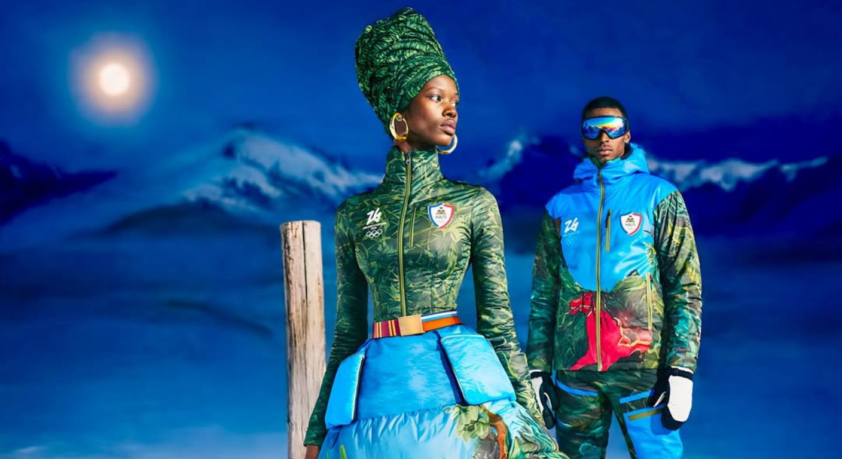
Although the Haiti entry at the Games consists of only two skiers, Richi Viano and Stevenson Savart, the impact of the island nation has been far-reaching. They’ve ditched the usual, more conservative attire of navy blue and black for gear that erupts with bold hues. In the Italian mountains, they wear uniforms that stand out in vibrant shades of green, blue, and red that reflect their heritage. These are one-of-a-kind uniforms designed by Stella Jean, who worked in collaboration with ex-skier Pietro Vitalini, finding inspiration within artist Edouard Duval-Carrie, from Haiti.
However, aside from the literal meaning of the design, there is also another, even deeper meaning. To begin with, the particular work of art portrayed Toussaint Louverture, one of the most famous revolutionary leaders. Of course, when the painting was eventually deemed too political by the International Olympic Committee, the artists altered it to depict a lone red horse running in a tropical forest.
The overall result is quite beautiful. For women, there’s a fusion of high-end fashion with athletic wear. With a structured green jacket paired with a full skirt divided into tiers, displaying all the painted scenery, paired with a classic Haitian headwrap and gold hoops, this outfit does not disappoint. Similarly, for males, there’s an interesting fusion of typical skiwear with these vibrant images of nature and horses.
The silhouettes, the tailoring, the styling—all of it appeared to have been done thoughtfully, as if it were intended. These were not the costumes of an outfit inspired by nostalgia; these were the costumes of a team that recognised the past, yet embraced the international, modern fashion conversation. The approach taken by Haiti proved that cultural expression doesn’t have to be specifically retro to be legitimate, but can indeed be forward-thinking, progressive, and fashionable, making a nuanced yet impactful statement on the Olympic stage.
Mongolia: Cultural Fusion in Contemporary Times
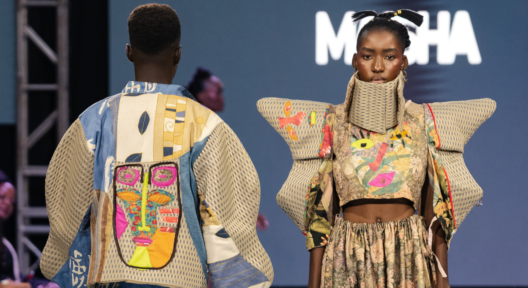
Mongolia stood out as a strong second choice due to its appealing combination of established cultures and modernistic designs. The country’s Olympic ceremonial outfit have managed to successfully translate the traditional aspects of Mongolian cultures into modernistic designs without compromising them.
Textures, structure, and symbolic reference were all juxtaposed with modernity, as exemplified with contemporary tailoring and wardrobe consideration. This blend ensured that Mongolia was both culturally specific and, at the same time, modern and relevant in the global arena.
What made the presentation by Mongolia so good was the fact that it did not over-modernize but simply respected its tradition while still trying to let it evolve naturally. With this, Mongolia succeeded in establishing itself as an exemplary case where tradition could still flourish within a modern framework of fashion, especially during an event like the Olympics.
Greece: Mediterranean Energy and Oceanic Movement
The most notable fashion experience of the Olympic Games came from Greece, which exuded an unequivocal air of Mediterranean flair. The traditions invoked feelings of sunshine, movement, and water—you could call it “flooring on the ocean.”
The colour schemes, textures, and fluidity of the designs definitely reflected the nation’s association with water and light through geography and culture. Greece did not rely so much on ancient symbolism; it was more associated with human senses. The result was fresh, modern, and emotionally charged.
This was seen in the success of the Greek Olympic fashion, which was able to succeed by capturing the essence of place and how one feels, rather than relying on the past. This showed the ability for a country with one of the oldest histories in the world to be able to seem youthful.
Olympic Fashion as Cultural Diplomacy
While the Olympics may be defined by athletic achievement, fashion has become one of the most interesting sides of the story. From Haiti to Mongolia, and to Greece, these countries reveal the larger truth: Olympic costumes have become the epitome of cultural storytelling. These costumes have moved from the level of cultural ceremonies to the level of fashion editorials on a global scale. In this dynamic environment, it is clear who the winners are: those who recognise that fashion, in and of itself, isn’t the clothing, but the message.
These examples illustrate the way countries and brands use the games to communicate:
- Cultural evolution
- Luxury and Craftsmanship
- National identity in the modern world
The balance of tradition and innovation, therefore, as global audience become more visually literate and fashion-conscious, Olympic fashion shows promise to gain more and more importance culturally and commercially.