
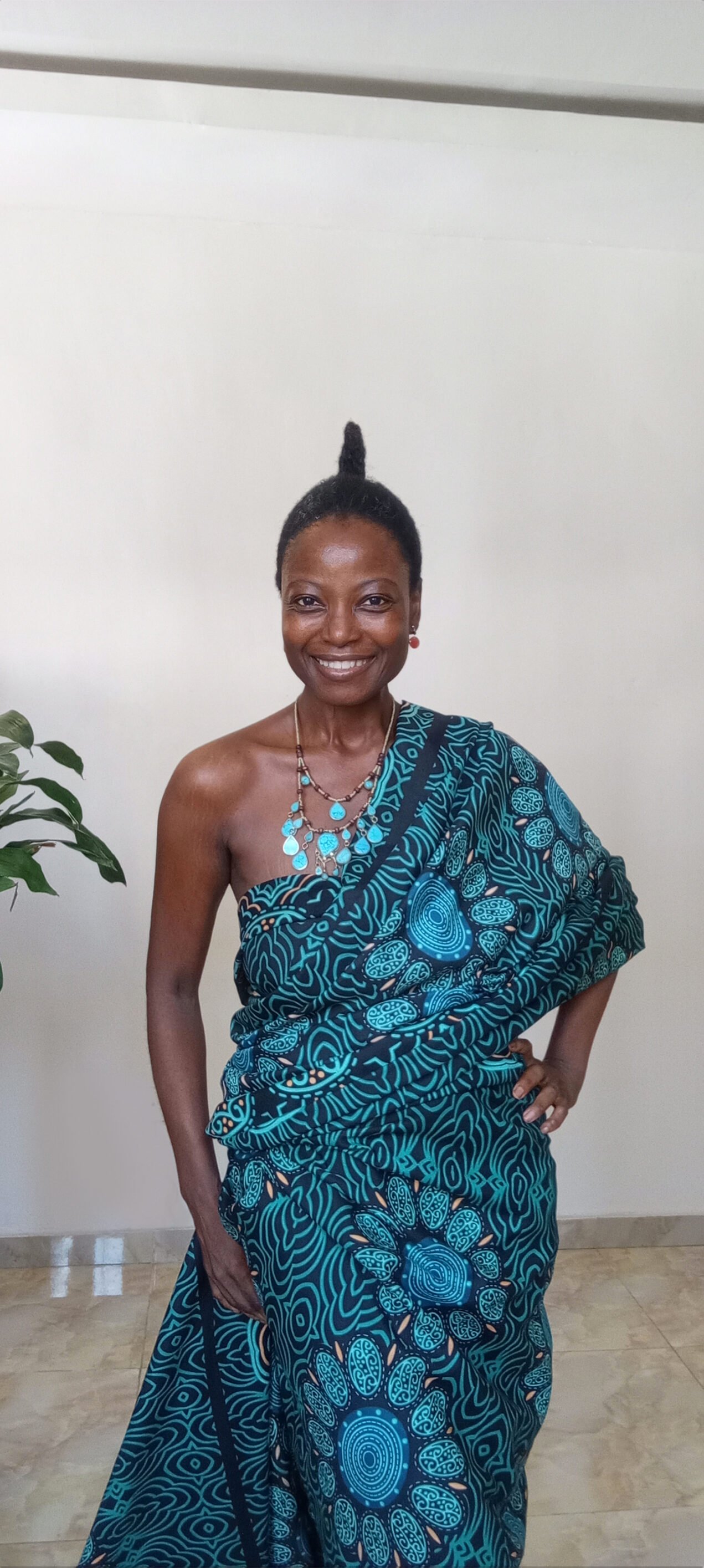


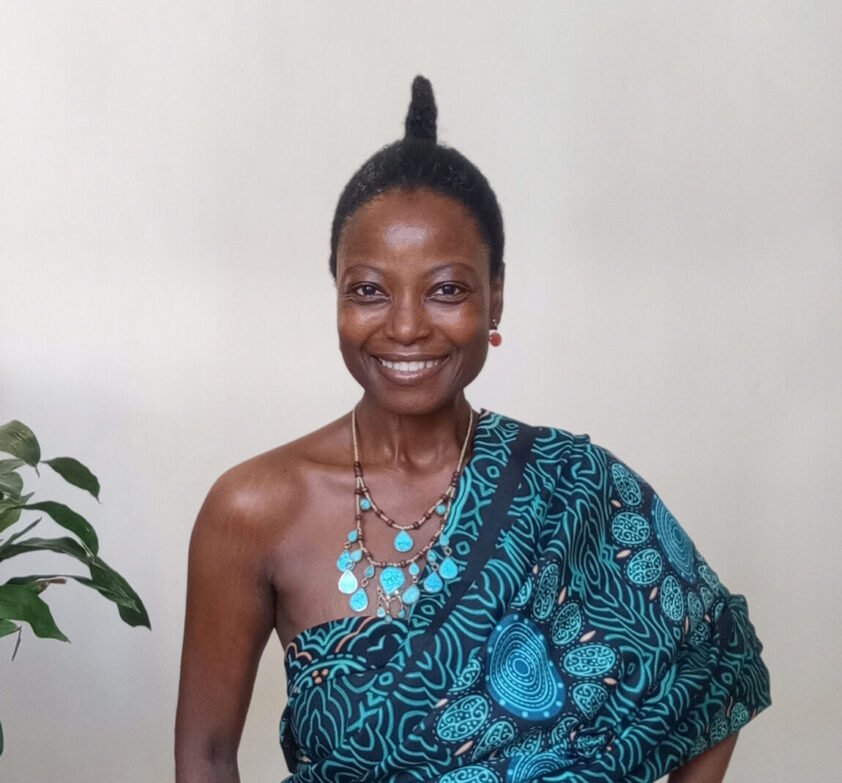
They say no matter how far the river flows, it never forgets its source. Sitting with Lola Bashua, that proverb stops being poetry and becomes lived truth. Here is a woman who has walked the polished pavements of London and still chooses to return to the soil of Isale Eko, not out of nostalgia, but as a conscious act of reclamation. In a world racing toward the artificial, she chooses the ancestral with clarity and conviction. Part artist, part oracle, part cultural archivist, she moves between roles as a curator, historian and what she calls a “wholistic” living practitioner.
Lola is not simply speaking about an African way of life; she is embodying it, fully and unapologetically. In this conversation, she leans into the questions many would rather avoid: What did we lose? Who taught us to forget? And what becomes possible if we remember? And as the elders remind us, when the drumbeat changes, the dancer must adjust. This conversation is that drumbeat.
FAB: You are many things: an artist, an actress, a curator a historian, and a holistic lifestyle advocate. When you strip all of that away, who is Lola Bashua at her core?
Lola: Lola Bashua is a person. Lola Bashua is a living spirit, first of all. The spirit of creation having an experience, a physical experience, and observing the world through my eyes. Lola Bashua is a creative.
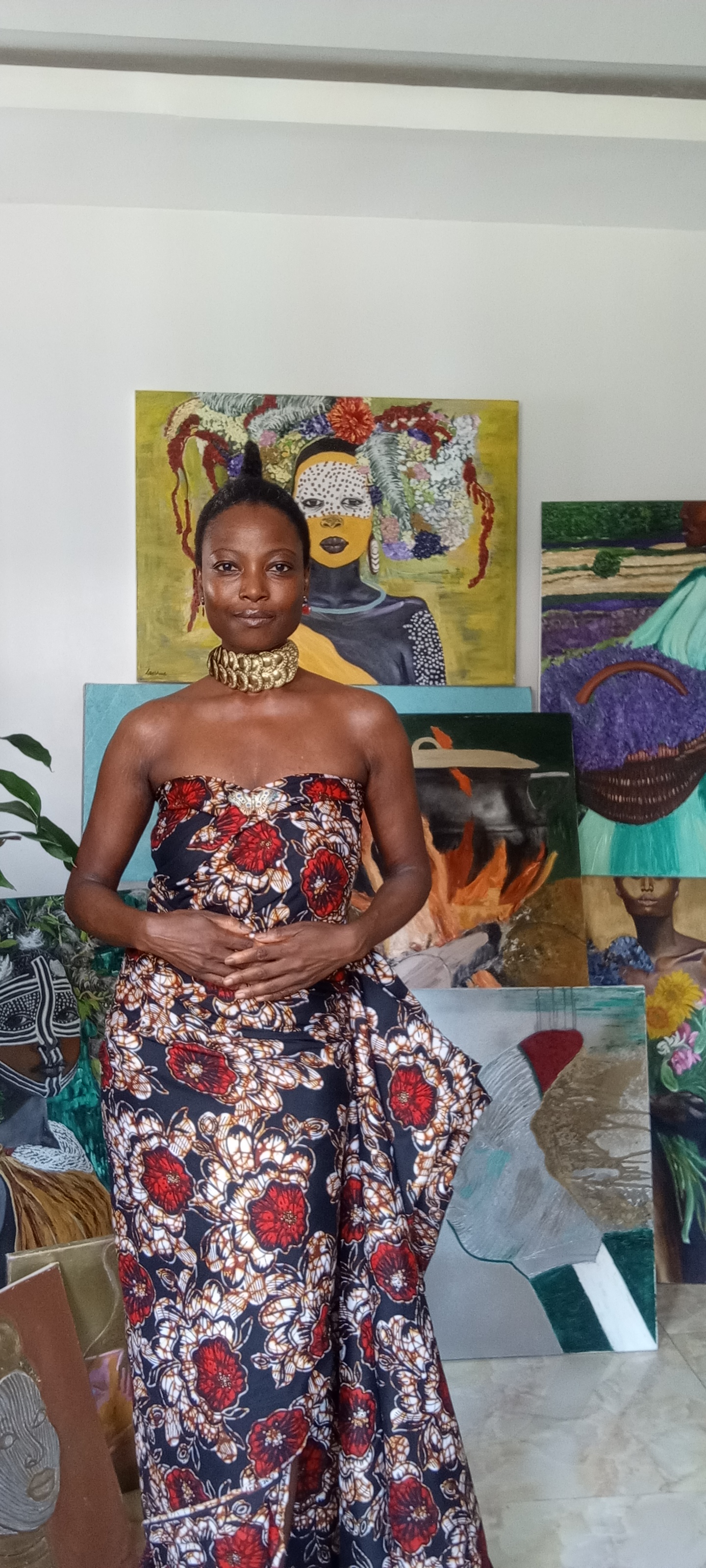
FAB: You have an affiliation with Lagos Island. When did you first become aware of that dual identity, being from Isale Eko and being raised in London?
Lola: While in Nigeria as a child my Dad took me to family events there, but I did not understand what it meant. So it was just something I knew, that my roots were in Isaleko.
When we moved to England It became buried within the depths my consciousness. It was not until later in my adult life, shortly after my mom passed away, Actually, today 25th of March is the anniversary of her passing. She died of breast cancer in 2002.
That was when the thought of Isaleko started to arise within me, perhaps because of what I was going through at the time.
What does it mean to me now? Now I know I am Omo Onile. I have been all around the world and lived in different parts of the world and I’m British also and the UK is also home, it’s where I grew up and I have a sense of belonging and connection there as also.
However the moment I step on this our African soil this land, I feel deeply rooted.
I attended the Eyo festival last year 2025, this was my first time attending the festival and I have to say it was a lot of fun.
It was an indigent heritage nourishment and grounding experience for me, you could say literally grounding as we all had to take our shoes offas part of the rules of the festival when in the presence of an Eyo.
So I walked bare feet on my indigenous ancestral land, Lagos Island in affirmed ownership of the land, custodianship of the land, rooted and connected regenerated and refreshed a tree of life in jubilation it was such a great experience!
Being a Lagosian can apply to anyone who lives here, but being an indigene of Lagos means the absolute world to me. It is a crown of esteem that I wear proudly and honor.
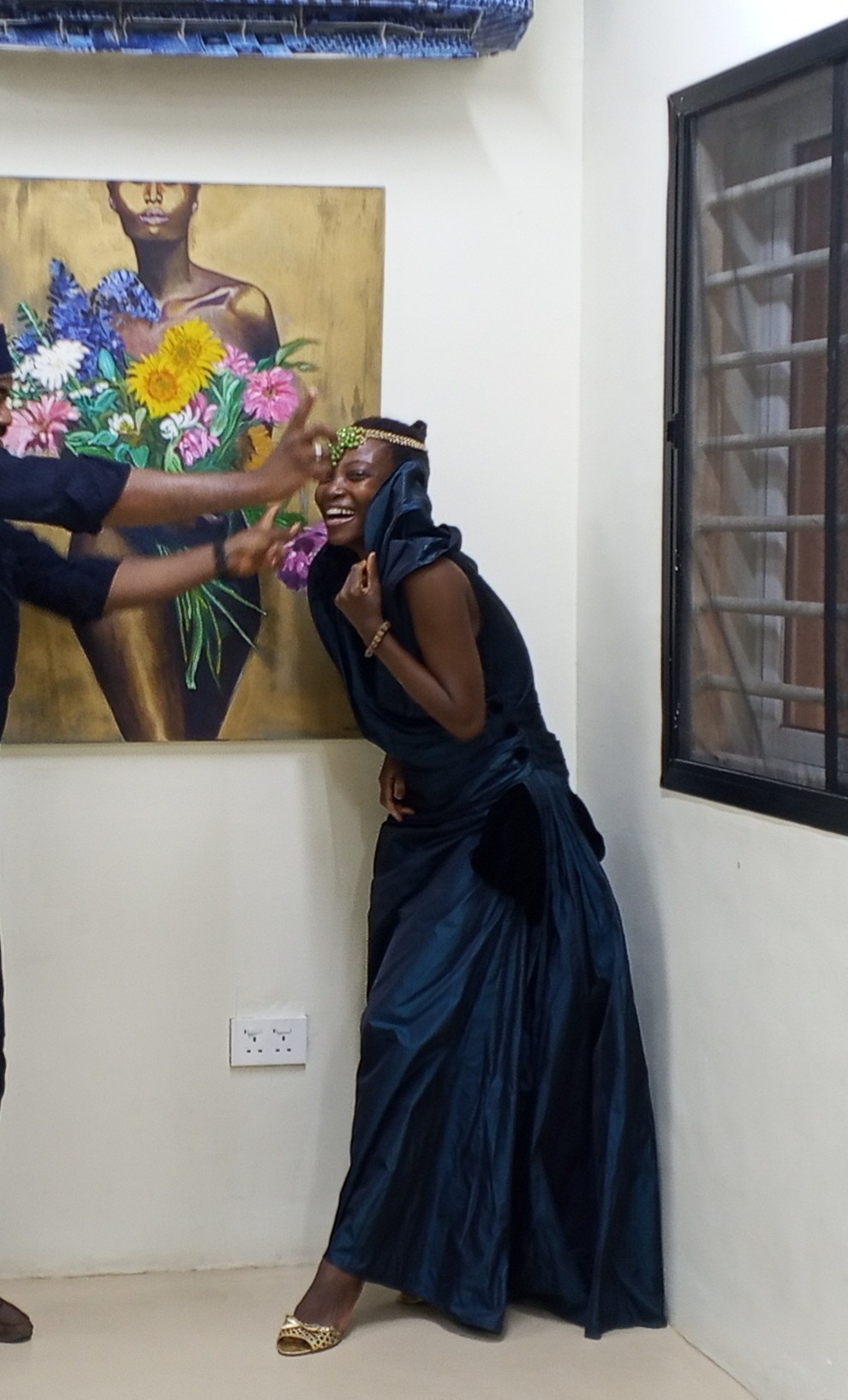
FAB: You speak about returning to an indigenous African way of life before external disruption. What does that look like in your everyday life?
Lola: This is where my holistic lifestyle practices comes in. I am doing it to the best of my ability.
I do not have a fridge in my house. I use a clay pot. You know the old-fashioned clay pots they used to have in the village, and you fill them with water, and that is your cold water I have one of those.
I am a vegan also. I choose to eat food that is indigenous to our land. Occasionally, I might make something that is not from our land, but I do it in a modern African way.
I have a Nigerian vegan lifestyle Instagram page called @myveganlifeinnigeria where I showcase the vegan indigenous food with a modern twist I make and eat daily.
I use a pestle and mortar instead of a blender I prefer to use natural items as we would have done in past times like wooden cups and cooking utensils, I particularly love using coconut shells for storage and cups, and since I don’t have a fridge i eat fresh food that is indigenous to our land daily.
I avoid using artificial seasonings so i make my own using our traditional natural seasonings herbs and spices some of which I grow myself in my herb garden, modernizing my food in very minimal ways while adapting International recipes. This is how I live my life on a daily basis.
I believe it is healthier for us.
In ancient times, we did not eat meat as much because hunters had to go and hunt for it, and they would be gone for weeks. So people ate fruits, vegetables, and legumes in an indigenous way.
I wear indigenous clothing as much as I can. I use traditional clay crookery and our locally made kitchenware because I consider them better quality and better suited to our lifestyle and it’s also a way to support our local artisans and improve our economy. I even have calabashes.
I believe in returning to these practices because they restore us to balance in our mind, body, and being. It is a holistic approach to life that I take and I encourage other people to participate in as best as they can.
I know it is not easy when you have a husbands a wife, children, a job, and many responsibilities you want to use the modern quick fixes. So you have to adapt where you can.
I try to avoid electronics as much as possible, except for absolute necessities like the telephone and computer. I do not even have a TV. Thats how I live daily.
Recommended For You
What It Really Takes For African Artists To Be Taken Seriously Globally
Turning African Jewellery Into Queer Protest and Personal Power
FAB: Do you think many Africans today understand what was lost culturally, or do you believe there is still a disconnect?
Lola: I wouldn’t use the word disconnect. I would say that our people, unfortunately, have had a kind of lobotomy. I actually have a painting series called History Lobotomy discussing this very matter.
Unfortunately, it is almost as though the minds of our people have been wiped. So they have very little understanding of it. It is going to take a great awakening for people to recognize this.
I think it is also a self-worth issue because we do not know our history. Our people tend to gravitate toward Western ideals and Western ways of living, thereby ignoring all our treasures. The West loves our treasures. They come for our treasures, but our people ignore them due to a lack of understanding, because their minds have been wiped of the knowledge and understanding of them.
So no, our people do not really understand this at all. I shock people. I live in the middle of a prominent part of Lagos and I do not have a fridge or an air conditioner. People look at me like, “What? You don’t have a fridge? You don’t use air conditioner” I do not have a microwave either.
It is radical to people. But it is actually the most natural thing for us. We are yet to recognize this. And I believe we will.
I am not saying ignore all technology what I am saying is let us return to ancient technology that was more in alignment with nature as we ourselves are nature..
We as a people need to reawaken and reconnect to this understanding, it is the way forward to our true restoration and healing as a collective. Creating this awareness is one of my main goals it is my calling to do so which I’m here to achieve.
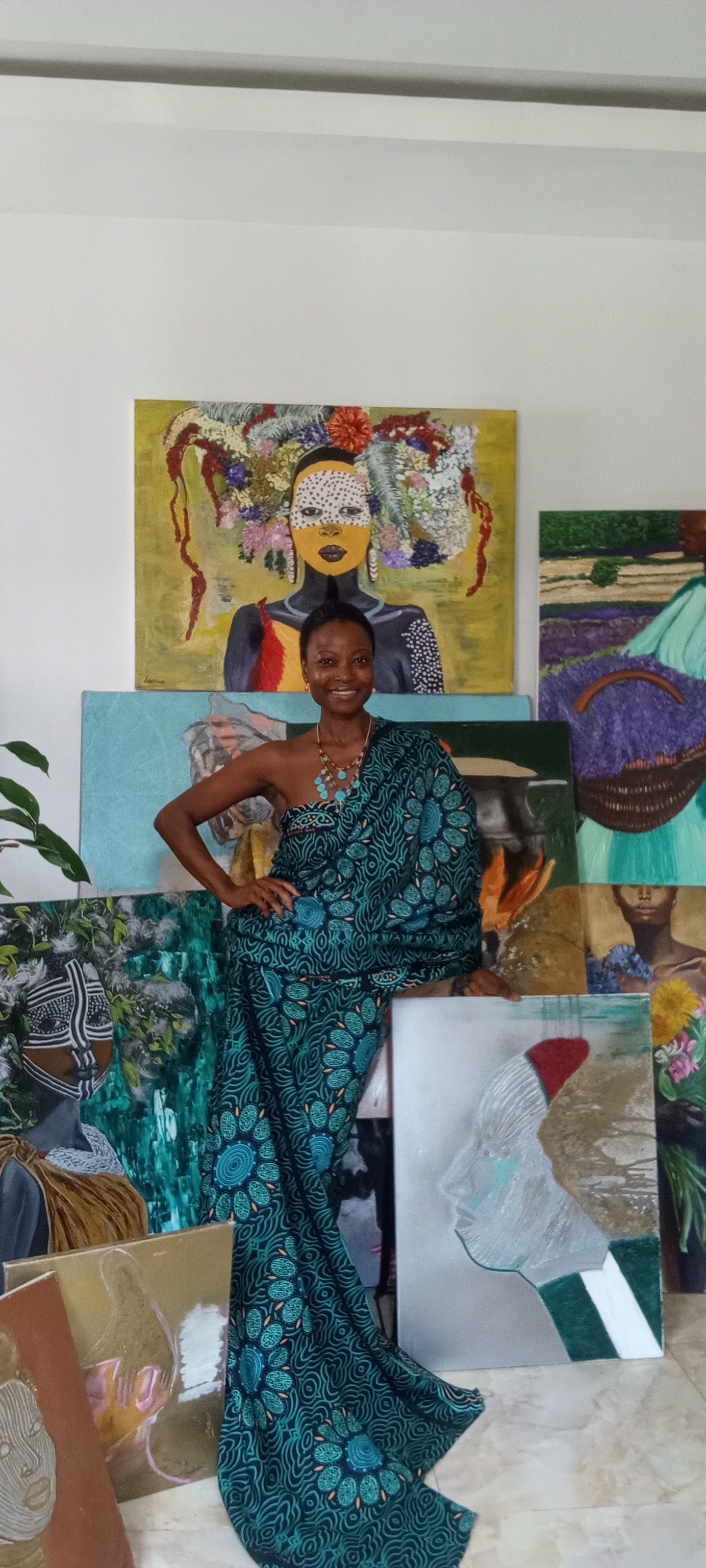
FAB: Speaking about your artwork, you had no formal training in visual art, yet your work has appeared in international exhibitions. Do you see your gift as a talent, a calling, or something beyond both?
Lola: It is both. It is a gift and a calling. My art is deeply spiritual. From the beginning, it came from a place of spiritual awakening. It is prophecy.
My works carry elements of the past, present and prophecy. The past reflects history, the present expresses what is happening now, and the prophecy reveals what is to come. That is the role my art plays.
If you think about it, that is the origin of art. Art comes from artefacts. In our culture, these so called artefacts had a purpose. They were not just decorative. They served a function. My art functions in the same way it is a reminder an instruction and a revelation. It has a purpose. It has always had a purpose and always will.
Painting for me is a spiritual experience. It comes from deep within my spirit core the one breath of life.
FAB: You describe your work as rooted in natural healing and speak about returning to nature for alignment. What does healing mean to you beyond the physical?
Lola: Healing means alignment with creation. That is the simplest way to describe it and the absolute core of healing: Alignment with creation which is nature, with the creator, the truth of nature.
When we are aligned, everything stands in order.
When we are aligned with nature then there is true harmony.
At the moment, the world is misaligned with nature, it is actually against nature. It operates in opposition to nature. We build concrete structures that block the soil. We cut down trees, especially in places like Lagos.
Areas like Lekki have so little greenery and is notorious for flooding, one of the major reasons being a lack of trees.
All These actions move us away from creation, nature, instead of bringing us closer to it.
For me, healing means a return to creation through alignment. And through that alignment, there is a natural flow. That natural flow restores the mind, the body, and the spirit to harmony, because everything is connected. Everything comes from thought, the thought goes into the mind, into the body, and then manifests.
To heal, you must align yourself with what was created naturally as best as you can in this modern world it is the way forward.
I also believed that nature knows best that the best life we could live is a natural life. so in everything I do I try to do it by putting nature first, in every area of my life.
If I start everything with how it was aligned to be in nature I can’t go wrong if I align myself with the way nature intended I will always win so that is who I am and what I do.
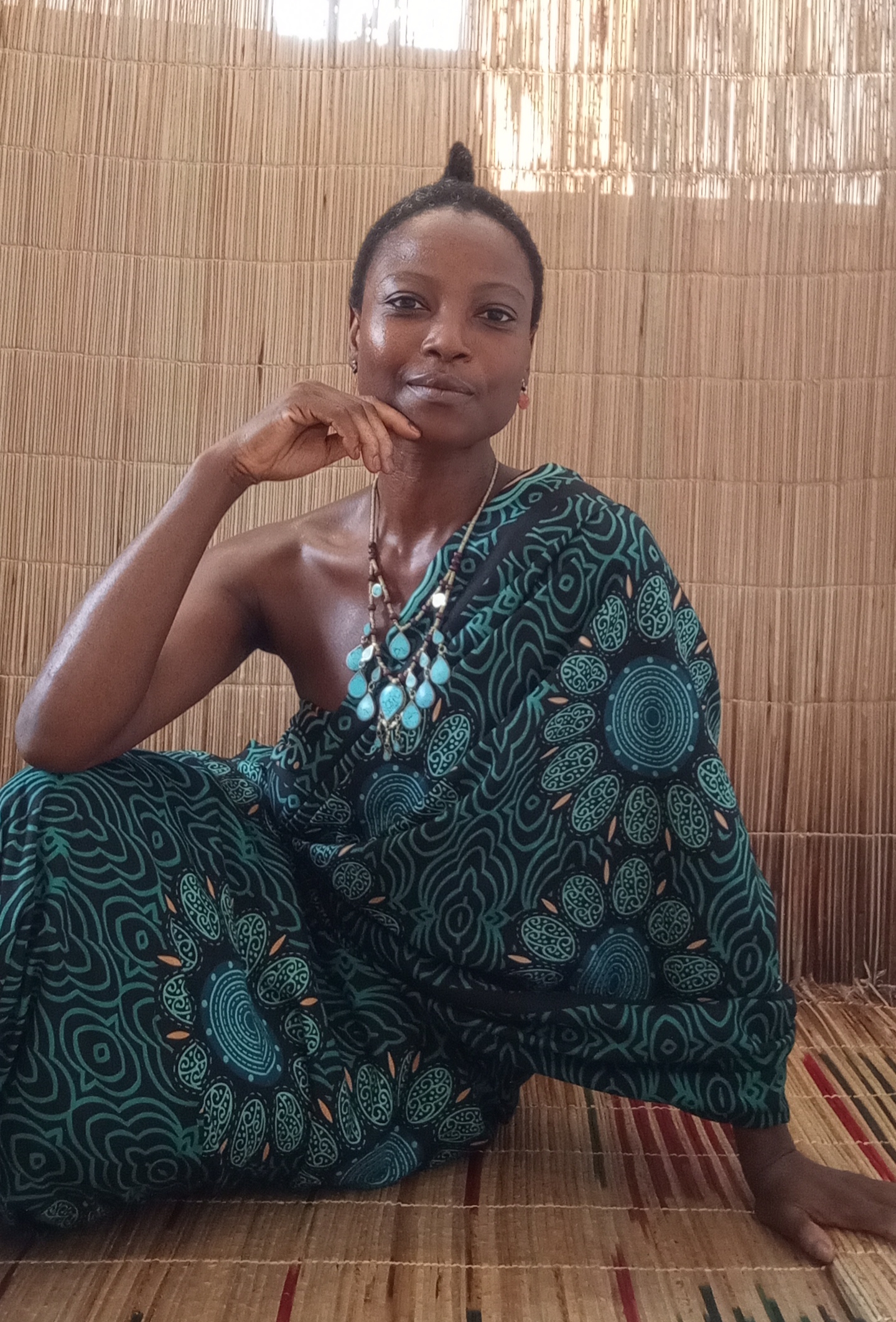
FAB: Some people might see this perspective as too idealistic. Do you believe real change is possible?
Lola: Because we’ve gone this far, I can see how people think that. But there are radicals like myself. And as long as there’s a tree outside my window or somewhere in the world, it’s never too late.
The wonderful thing about nature is that nature is always restoring itself. It is always healing itself. We are designed to heal ourselves. That’s why when you get a cut on your finger, if you don’t do anything, it will still heal. If you cut your hair, it will still grow, unless there are variables where people have
ailments, which are misalignments within their body that cause them either not to heal as quickly, or in some unfortunate cases, not to heal at all. But we are healing naturally. The Earth itself heals naturally.
So, despite the fact that people believe it’s a lost cause, it’s not a lost cause at all, because creation is designed to return to its natural state. If you leave anything long enough, it will return to its natural state. If you leave a human being in a simple experience long enough, they will return to being natural. It’s really a mindset thing—find a way to align yourself.
In the world we live in today, I think a lot of people are starting to wake up especially after 2020. That changed a lot of things for many people. It was a wake-up call for everybody that this runaway train has gone too far and it’s time to rein it in. And so there’s a great movement right now of people who are returning to alignment with nature so that we can have a future that is better for us, our children, and the generations to come.
The way we are living right now is just not sustainable. Whether people want to choose that way or not, in order to survive and thrive, we have to aligned with nature. It’s the only way.
FAB: What is your prescription for someone thinking, “How do I dress, eat, and live in alignment with nature?”
Lola: Okay. The first thing is to recognize that you yourself are nature. We are all nature.
There is this tendency to think, “Oh, we’re going to go and enjoy nature. Let’s all go for a nice walk in the park.” There’s nature, and then there’s us. No, you are part of nature. That’s the number one thing. Once you recognize that, you are in alignment with nature.
Because you are one with nature, you are also nature experiencing nature. That’s the first step.
From there, think about things you can do on a daily basis that are in alignment with nature. Like
What you wear, I wear natural fabrics. I don’t wear any artificial fabrics. I don’t put anything in my hair. I wear my hair natural.
Wearing natural hair is something great happening now, another excellent movement which is encouraging us Black women to wear our hair the way it was created, without artificial additions like wigs or extensions. Which a lot of women still do, however there is a transition happening.
I use only natural products. I make my own products. I literally use shea butter, black soap, sea salt, natural salt from the ocean and I keep everything as natural as possible.
To the average person, start with that. Make sure you wear cotton and linen, natural fibers, which are healthier for the body. They keep you aligned.
What you eat: I eat what grows from the earth. If it doesn’t grow from the earth, I don’t eat it. If I have to buy something like flour that’s already processed, I read the ingredients. If it only has one or two main ingredients, maybe three, it’s acceptable. If it has more than three ingredients, it’s a no. Keep everything as original as possible.
I try to avoid genetically modified food. It’s very difficult, which is why I grow a lot of my own food. You can have a little garden and grow some yourself.
Most people in Nigeria do that, which is really nice.
Since I’ve been back, I’ve noticed people grow shoko (the Yoruba type of spinach vegetable) or tomatoes in their gardens, which is great.
Also, be more cognizant of what goes into your mind:
what you watch and say: how you interact with others.
Love is very key to all of this. Nature itself is love. Since you are one with nature, and nature is one with you and everyone is nature, you have to remember that the next person is you. Love as you would be loved.
That is key: to love others and have empathy. This can be challenging sometimes in Nigeria. I’ve noticed since I’ve been back that people can be a little harsh with each other, but we are very loving people. It’s just the way we interact sometimes.
I think a lot of it stems from daily frustrations, not from a lack of love, because we are very kind by nature.
People will stop and care for others. I love that about being home. Though some of the most loving people I know are in the West, but the cultural African everyday interaction of loving one another, like offering someone a seat on a bench, in the middle of the bustling market is really lovely.. I speak from experience.
So Love others as you love yourself, because they are you. They are part of you. We are one. If you remember that, you cannot go wrong because you are not going to hurt yourself.
Also, let’s think about how we build our homes. We’ve taken it to another level, building with concrete, making homes that need air conditioning.
In our Pre-interruption, traditionally, we built houses using clay, with courtyards that allowed cross-ventilation, with a tree in the middle. If we build homes like that again and everyone planted at least two or three organic natural indigenous fruit trees in their yard for food and shade these are simple things we can do to make a change. If everybody does a little, it starts to get the wheel turning in the right direction.
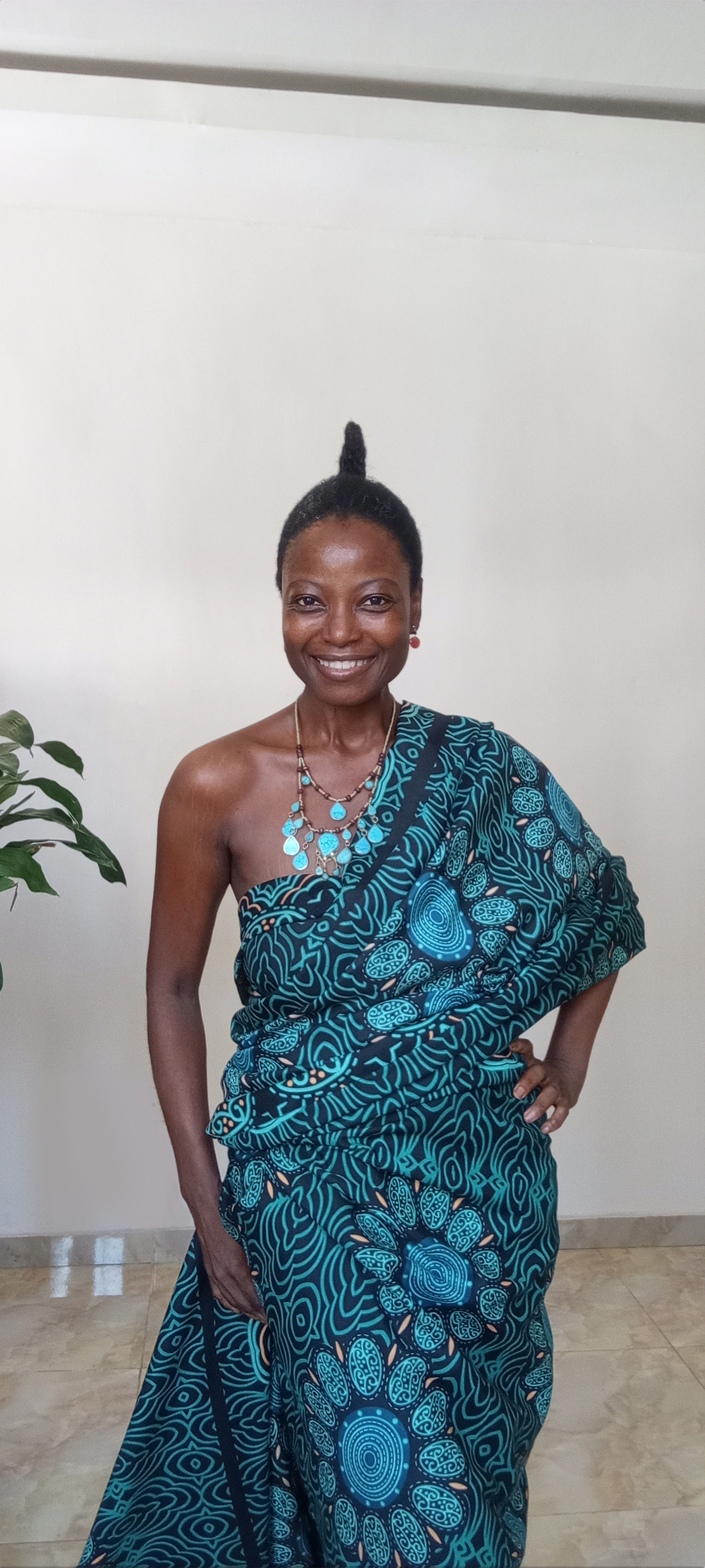
FAB: Finally, let’s talk about your last exhibition. Since returning to Nigeria, how did it go? And what projects are you working on next?
Lola: It was a wonderful experience. I had my first Nigerian solo exhibition at Nike Art Gallery the Olori rooms, which was a desire come true. Mama Nike is truely lovely and incredibly supportive. She is a mother to me i truly adore her she is great role model for me, her gentle humble character and endless love is so inspiring to me, she means a lot to me, and being given that opportunity was quite extraordinary! For which I’m very grateful and thankful.
I really enjoyed the process of creating this exhibition.
So she gave me the space and I put the exhibition together myself which is of the things that made it special. In the past, galleries in the West handled everything. I would simply deliver my artworks and attend the opening. But this time, I curated and organised the entire exhibition. That process taught me a lot, especially about the power of great collaborations.
The exhibition was a great success. I sold paintings. When you sell paintings, That’s a major triumph. I got commissions out of it also Those are the key thing to achieve when you have an exhibition and I did. I also met new people. I made new friends which is opening doors to new opportunities.
Right now, I am curating an exhibition for an artist coming from Spain, Yago Sanchez which will run between 17th to 20th of June, my mission is to make Lagos the center for
all world art so our artist don’t have to go to the west for validation but instead the west comes to us, a reverse of the current status quo. I am also in discussions about projects at the National Theatre later for later the year.
Also I’m writing my e-books. I have three e-books I’m working on. I’m working on my e-book on the history of Yoruba language and its connection to paleo languages. Yoruba is an ancient language, it’s very ancient and my discoveries about this has led to me writing this e-book.
I’m also writing a book on my art and a collection of my poems, That’s going to be a coffee table style book.
And I’m writing a book on holistic lifestyle. So there’s a lot of things coming up.
It’s a very exciting time for me. I’m excited for what the future holds. Yes it’s a thrill. It’s so freeing. Being in Africa, we have the opportunity to do a lot more than in the West and I value that freedom greatly.
When in the West, you tend to be in one area, and you focus on that niche, and you develop that niche, and you get very good at it. But there’s only room for so much.
But the wonderful thing we have in Africa, especially in Nigeria, is that you can do so many different things. The branches of your talents can really spread out in whatever direction that you feel called to work in and there are opportunities and the freedom to build on it while keeping a unified focus.
I really love that about being home.
So I have the list of all the things that I do, but you can be sure that there’s more coming. Because there’s so many ideas, and there’s opportunities to make them happen.
