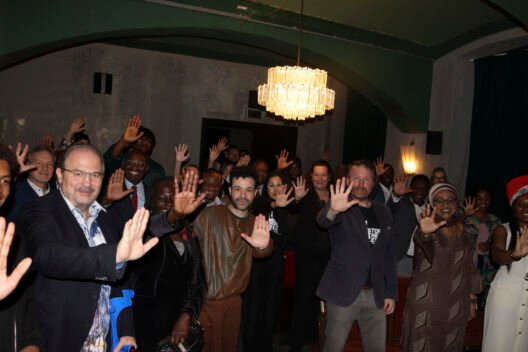
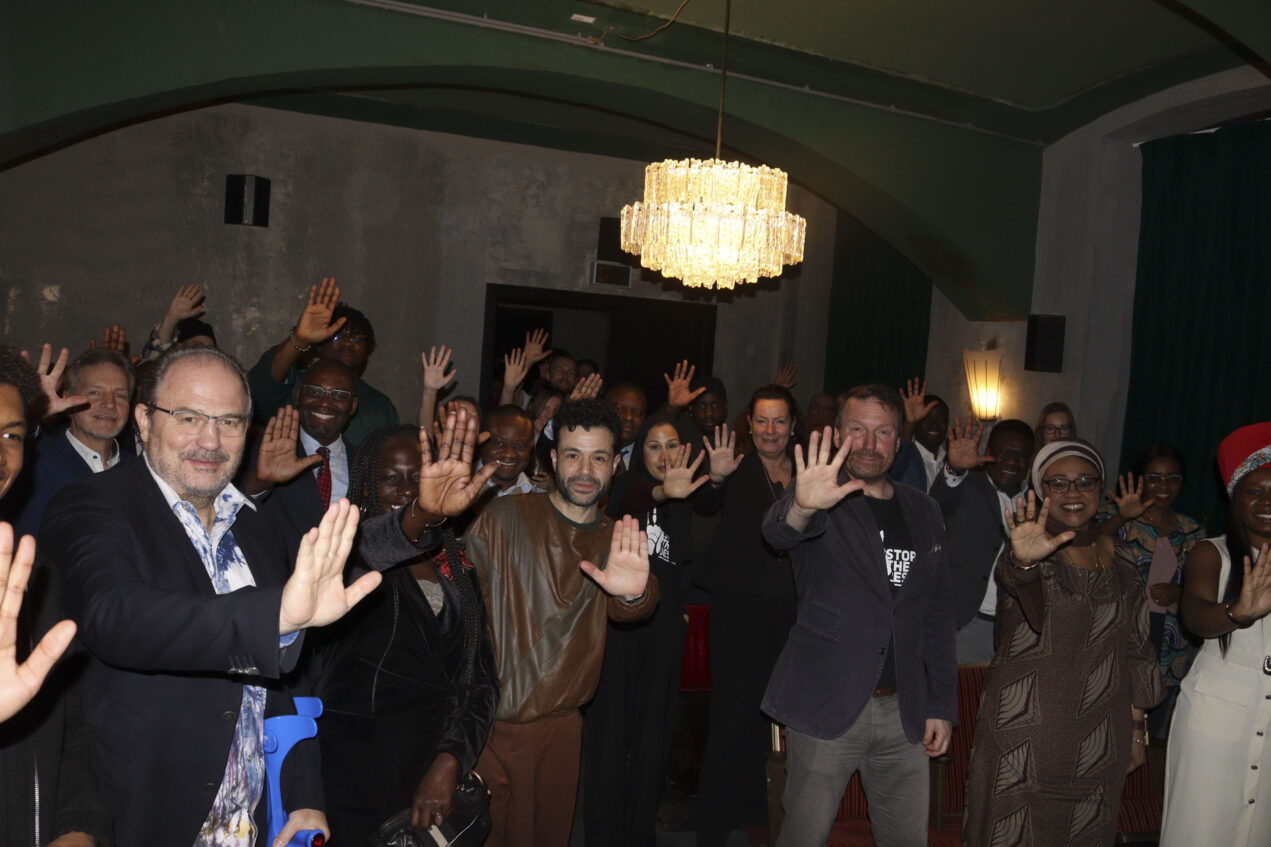

On Sunday afternoon, a quiet crowd gathered inside Affinity Gallery for the opening of “What Shaped Us Does Not Disappear”, the newest solo exhibition by Joke Amusan. The show, which runs from 8 March to 15 April 2026, brings together suspended sculptures and textile works that explore how memory, migration, and inherited knowledge continue to influence identity long after people move across borders.
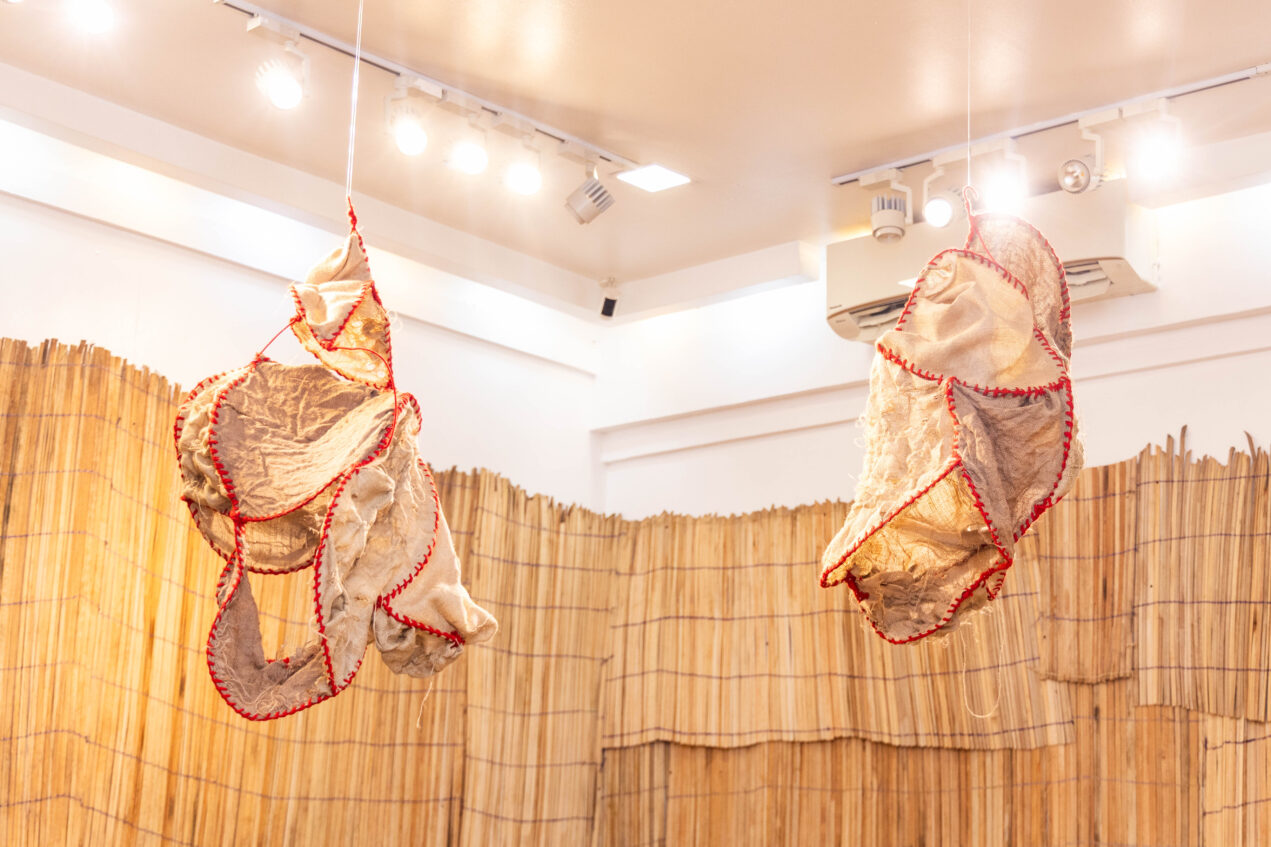
At first glance, the gallery feels less like a room of objects and more like a landscape of quiet conversations. Sculptural forms hang gently from branches and stretch outward into space. They twist, spiral, and cocoon around themselves. Each piece appears suspended between movement and stillness, as though the works themselves are carrying stories across time.
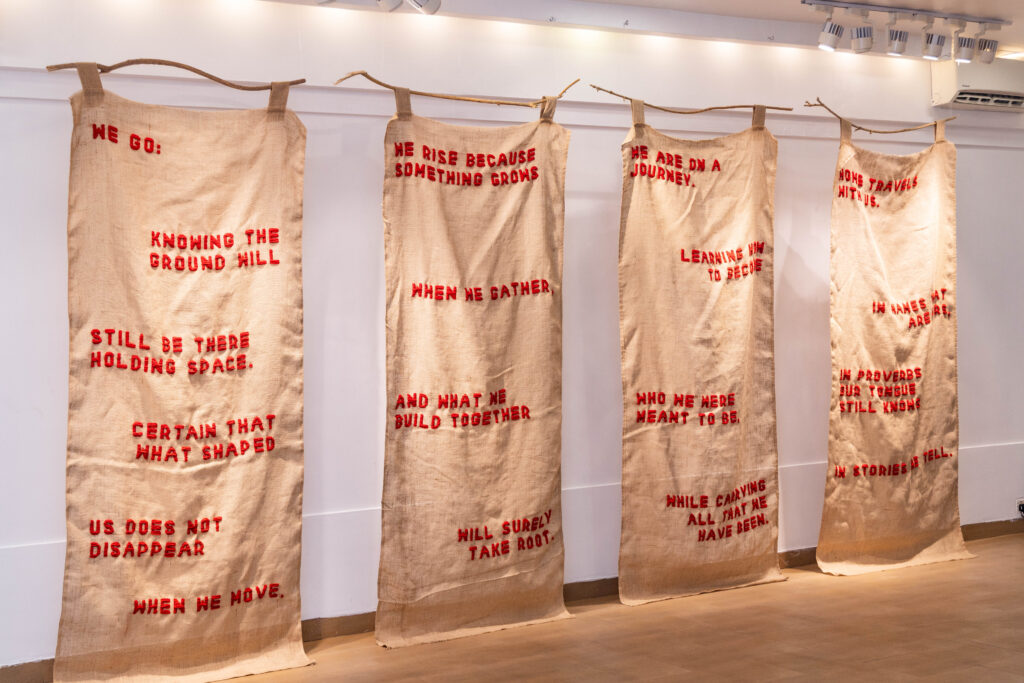
The exhibition opened on International Women’s Day, a detail that felt particularly fitting for an artist whose practice often centres the layered experiences of Black womanhood. Visitors moved slowly through the installation, pausing beneath floating structures that seemed to breathe with the room.
Amusan, a German Nigerian artist based in London, has built a reputation for installations that blur the boundary between sculpture, textile, and storytelling. Her work often examines how people carry fragments of home with them. Names. Proverbs. Histories. Small inheritances that travel silently through generations.
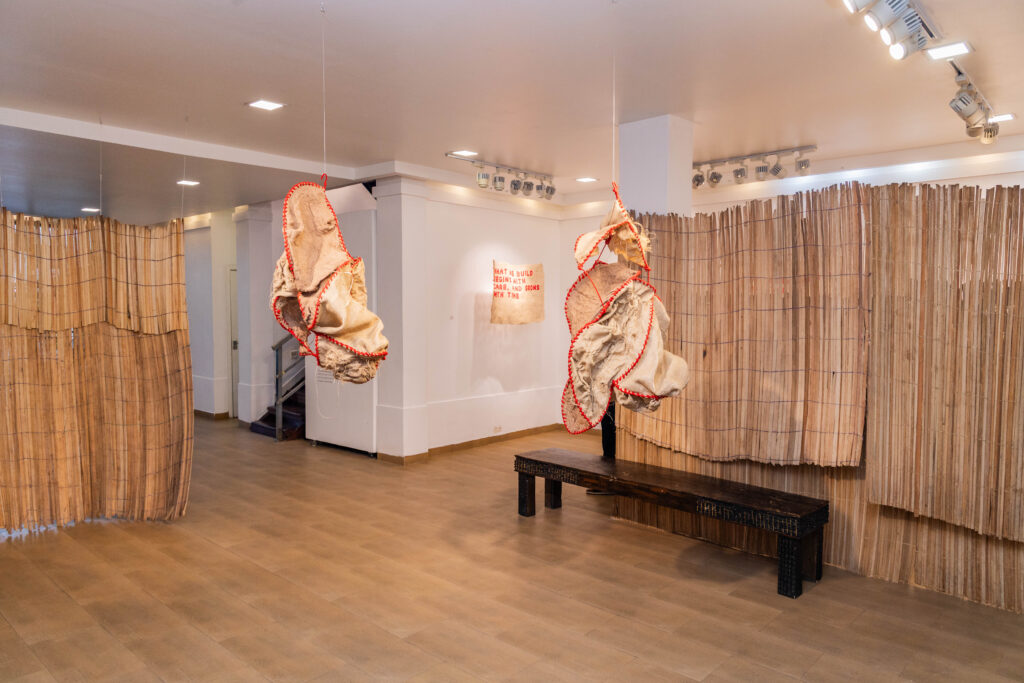
In this exhibition, those inheritances take physical form. Organic shapes appear throughout the gallery. Some resemble cocoons that seem on the verge of opening. Others stretch like vines searching for something unseen. The forms suggest cycles rather than fixed points. Movement inward toward origin. Movement outward toward the future.
The result is an environment that invites reflection rather than instruction. Visitors do not simply observe the works. They navigate them.
“What shaped us does not disappear,” Amusan explained during the opening conversation with guests. “Even when people move across countries and cultures, the stories that formed them remain present. They live in memory, language, and the body.”
The exhibition also reflects the broader mission of Affinity Gallery itself. The contemporary gallery is dedicated to promoting African artists who are actively driving the narrative of the continent through their work. Its programming aims to celebrate the richness of African culture while educating new audiences and preserving creative histories for future generations. In doing so, the gallery positions itself as both a cultural platform and a learning space for young Africans discovering the power of art as storytelling.
The exhibition arrives at a moment when questions of migration and belonging are increasingly impacting global cultural conversations. For many viewers in Lagos, the themes feel familiar. Families stretch across continents. Children grow up between cultures. The idea of home becomes both fixed and fluid. Amusan’s installations acknowledge that complexity without forcing a single answer.
The artist’s broader practice has steadily gained international attention in recent years. Her work has appeared in exhibitions across the United States and the United Kingdom, including “Re.Stance Collective” in New York, “Glitch the Gaze: The Feminist Recode” in London, and “From Africa to Detroit: An Exploration of the Diaspora” in Detroit. Earlier shows have also been presented in Virginia and Memphis, tracing the evolving dialogue between African and diasporic narratives.
Recognition has followed that momentum. In 2025 Amusan received the Thameslink Art Award, and she was previously shortlisted for the Ingram Prize. In 2022 she was nominated for the Female Founder award at The Independent Awards.
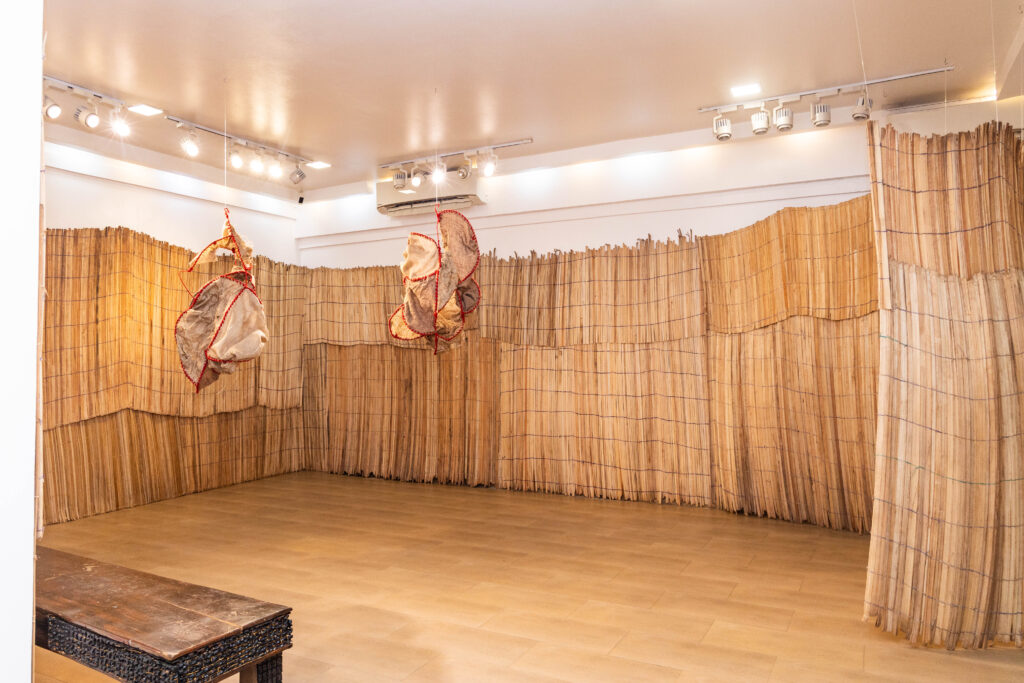
Yet inside the gallery in Lagos, those accolades feel secondary to the intimacy of the work itself. Visitors lingered beneath suspended forms, occasionally reaching out before stopping short of touching the delicate structures. Some spoke quietly about family histories. Others simply watched the shifting shadows cast by the installations as light moved through the room.
It is this human response that the artist ultimately hopes to spark. Her installations often function as meeting points rather than solitary objects. The works encourage people to gather, to remember, and to share their own stories. The gallery becomes less of a display space and more of a communal archive.
By the end of the opening afternoon, that atmosphere was unmistakable. Conversations unfolded between strangers who found echoes of their own experiences inside the work.
For a moment, the gallery held a collective understanding. Migration may reshape lives. Distance may stretch across generations. But the forces that shape identity rarely fade. They evolve, they travel, and they remain.
“What Shaped Us Does Not Disappear” continues at Affinity Gallery in Lagos until 15 April 2026.