
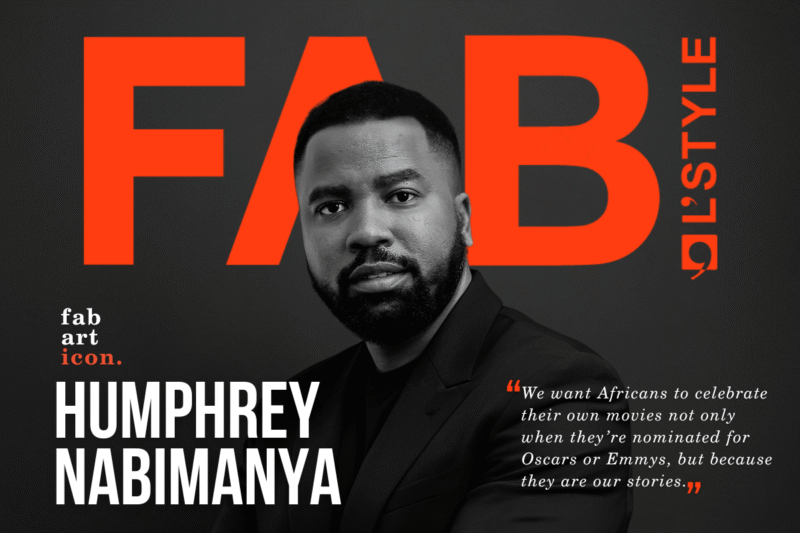
Not everyone who starts small stays small. Some people turn their setbacks into strategy and their passion into policy. Humphrey Nabimanya did exactly that. As the founder of Reach A Hand Uganda and the force behind the IKON Awards, his journey from humble beginnings to national influence is a masterclass in purpose, persistence, and people-centered leadership. Through his work, he has inspired a generation to dream bigger, think differently, and take charge of their own stories. In this exclusive interview, Humphrey opens up about mindset, mentorship, and the transformative power of youth empowerment in Africa.

FAB: Many people know about the movement you’ve built and the impact you’re making. But very few know the boy or the man who dreamed it all up. When you think back to that first spark that became “Reach A Hand Uganda (RAHU),” the “IKON Awards,” and the many other initiatives you’ve created, what moment started it all?
Humphrey Nabimanya: It began when I realised I had grown up in a very vulnerable environment. As you mature and start understanding how the world works, you begin to notice the challenges around you and wonder, “Why was I so unlucky to be born this way?” But that same “unluckiness” can become the luck that shapes who you are. For me, it was about recognising where I came from and allowing that understanding to fuel my passion.
I was born in Katereza, a small village in the Rwampara District. It’s a rural, remote area in Uganda, and even today, poverty levels remain very high. My father had over twenty-six children, many of whom passed away in the 1980s and 1990s due to HIV. He had educated most of them, and many worked in hotels and the tourism industry, which was booming in Uganda at the time. Unfortunately, most of my siblings died from HIV, often without knowing what it was. Back then, people believed they had been bewitched.
When I was born, my mother died when I was about nine months old. What really killed her was the shock of discovering that her daughter, who had married at sixteen, lost her husband to HIV just a year after marriage. That heartbreak weakened her, and she never recovered. My sister, left alone at a very young age, took me to Kampala while battling her own health challenges and facing discrimination as someone living with HIV.
In the 1990s, HIV was rampant, killing people across all classes—politicians, soldiers, and the poor alike. The stigma was severe. By the time I was three, I understood that HIV was real. My sister took me to every pastor who claimed to heal it. Whenever a traditional healer announced a cure, we were first in line. She carried a handbag full of herbal remedies wherever we went.
By 1994, awareness about HIV began spreading across Uganda. People were learning how to prevent it and speak about it more openly. My sister joined a support group that provided food and care for people living with HIV, and I was one of the beneficiaries. At that young age, I began to stigmatise myself, believing I might also be infected. But through my sister, I learned that information is power. She became an advocate, openly declaring her HIV-positive status and helping to form support groups for parents who wanted to speak with their children about their status.
By the time I was six, I was already helping other children whose parents were HIV positive. I prepared them emotionally for when they would learn about their parents’ condition and encouraged them to live positively. That was when my journey as a social worker and advocate began, inspired by my sister, who was my pillar of strength.
In 1998, my sister moved to the UK for better medical care. She was one of the first people in Uganda to take part in ARV medical trials. Whenever she received medication, I would secretly take some—not for myself, but to share with friends whose parents were sick. That compassionate spirit was instilled in me early. I saw myself as a helper, someone who could support others even when I had little.
When my sister left, life changed drastically. My brothers and sisters moved from the village to Kampala, but our main source of support was gone. She had met a man in the UK who was also living with HIV, and stayed there with him. Life became hard, and everyone went their separate ways. I dropped out of school for about 18 months. When I eventually returned, it felt like coming back after a pandemic when students were forced to resume after years away. I struggled to adjust but realised that education was power.
I rejoined school in Primary Five in 2001, completed Primary Seven, and became a peer educator through the Mulago Peer Educators Association. That was when my purpose became clear. I knew I wanted to dedicate my life to advocacy and social change. I started doing community outreaches, speaking to schools on weekends and holidays, sharing my story, and teaching young people about life skills, reproductive health, and sexual education.
In 2007, I joined television. I started a youth talk show called Youth Voice on NBS, now Next Media, one of Uganda’s largest media houses. The show aimed to educate young people across the country. In 2008, I launched the Rural Youth Voice Project, travelling with celebrities to rural communities to empower young people with life skills and HIV prevention education.
By 2010, I began thinking about how to build an organisation that could serve young people more sustainably. That same year, I got the opportunity to travel to the Netherlands for a youth conference as a TV presenter and advocate. It was a turning point. My sister encouraged me to seize the opportunity, but I saw it differently. I didn’t want to be like others who left Africa and never returned. I told the organisers, “I have two choices: stay here and start a new life or go back to Uganda, finish my education, and start an organisation inspired by my journey.” I promised them that in four years, my organisation would make a real impact in Uganda.
They were moved by my story and agreed to support my education. When I returned to Uganda, my family was disappointed because they had hoped my move to Europe would bring financial support. But I knew my purpose was at home.
In 2010, I founded Reach A Hand Uganda with only twenty dollars—about forty thousand Ugandan shillings then. With a few friends, I used my TV platform to reach schools and communities. It began as a small movement but grew quickly. Within four years, we attracted donor attention. Our first grant came from the MTV Staying Alive Foundation, worth ten thousand dollars after three years of implementation. That later grew to thirty thousand, then one hundred thousand by 2017. Today, our annual budget is around 5 million US Dollars, supported by multiple donors and partners.
Reach A Hand Uganda became the foundation for many initiatives. From the start, we used drama and skits in schools to communicate messages about HIV, drug abuse, mental health, and disability inclusion, which is close to my heart because of my brother. We envisioned becoming Uganda’s biggest youth brand within ten years, and we achieved that.
Now, fifteen years later, our goal is to leave a lasting footprint across Africa. We’ve launched the “Reach A Hand @ 100 Years” campaign, imagining what our impact will look like in the year 2125. We want our presence felt across the continent, and we are starting expansion next year into neighbouring countries.
Reach A Hand gave birth to Uganda’s modern movie industry through the IKON Awards initiative. We began with the Young Achievers Awards to recognise talented people in fields like business, ICT, and agriculture. After two years, we rebranded it into the IKON Awards, focusing on film and television—an area close to my heart after fourteen years in media.
I worked with the MTV Staying Alive Foundation for about six years, promoting MTV Shuga across Africa. That experience inspired us to create our own Pan-African TV series, Kyaddala, featuring actors from Nigeria, Kenya, and Rwanda. It became a major success, and we realised we needed to grow with the film industry. That’s how the IKON Awards evolved into the biggest film and television awards program in Uganda. Our next goal is to make it the biggest in Africa.
We want Africans to celebrate their own movies not only when they’re nominated for Oscars or Emmys, but because they are our stories.
Reach A Hand Uganda also created Sauti Plus, a for-profit creative agency supporting the organisation’s sustainability. It is now one of Uganda’s leading voices in e-mobility, sexual reproductive health and rights, social behavioural change, film, and TV production.
That’s my journey in a nutshell. We could talk all day about what we’ve achieved, but what matters most is this: anything that touches young people, we’re part of it. We are building a youth-focused organisation that empowers young people in every dimension of their lives.

How Humphrey Nabimanya Built Reach A Hand Uganda and the IKON Awards Movement
FAB: Oh my God! What an incredible story. Would it be wrong to say that you officially began your advocacy at the age of six? Africa is the youngest continent in the world, yet young people still feel excluded from real decision-making. You’re very passionate about empowering this youth population. What’s the next evolution for youth empowerment beyond awareness campaigns?
Humphrey Nabimanya: I’d say this next phase is both scary and hopeful. If you look back at the revolutions of the 1980s, when many governments changed, it was young people who led that change. But those same leaders, once in power, created systems that reduced youth influence because they understood the power young people hold in driving revolutions.
We see the same thing happening today. In West Africa, for example, most of the movements reshaping governments are led by young people. That same wave of change is now moving toward Southern Africa. The good news is that this time, young people are being trusted and placed at the centre of national conversations.
The part that worries me is what happens when today’s youth become tomorrow’s adults. Will we repeat the same mistakes? That’s the real challenge. Still, there’s a lot of hope. Innovation and technology are largely driven by young people. Many of the fastest-growing businesses today are owned by youth. So I believe the future could be even better than what we see now. That hope keeps us going.
FAB: You’ve mobilized thousands of young advocates. From your experience, what keeps young people motivated to lead change, especially in a generation struggling with unemployment, burnout, and digital fatigue?
Humphrey Nabimanya: What motivates young people today is inclusion. They’re no longer waiting to be invited to the table; they’re already there. Young people are now at the forefront of many of the changes we see.
But what we emphasise at Reach A Hand Uganda is maintaining generational linkages. The experience of the older generation still matters. We need their wisdom just as much as they need our energy.
What’s exciting is that young people are now helping design policies and programs, not just implementing them. They’re shaping the future in practical ways. At Reach A Hand Uganda, for instance, it’s the youth driving the work. They lead the programs, plan the strategies, and represent the movement. This same pattern is emerging across Africa, and it’s something we must continue to support.
FAB: If you had the power to redesign Uganda’s or Africa’s education system to truly prepare young people for the 21st century, what would that look like?
Humphrey Nabimanya: I’d start by learning from history. When the older generation was in their 30s and 40s, they changed the course of their countries. They took charge and revolutionised everything. But they also made a mistake — they didn’t create space for the next generation to lead. They removed certain subjects, like political science and governance, from our education system because they feared raising a more informed and politically conscious youth.
That’s why many young people today aren’t passionate about politics; we focus on social change instead. But you can’t create social change without working with politicians. There’s already a gap there.
So the first thing we need to do is reintroduce those subjects that promote civic and political awareness. Second, we must transform our education from being information-based to being skills-based. Young people should learn to create jobs, not just to seek them. Right now, we’re raising job seekers instead of employers. That has to change.
Humphrey Nabimanya: Look at Nollywood. It’s known for its craft and consistency. Nollywood has thrived because three generations of filmmakers have built upon each other’s work. The Gen Z filmmakers you see today are standing on fifty years of groundwork. That’s why it’s so powerful now.
It’s the same with South Africa. Think of Generations, the iconic show we used to enjoy. Before that, there were others. Hollywood and Bollywood have done the same. Every country that takes film seriously uses it as a tool to tell its story and promote its image.
Uganda, on the other hand, is still in its infancy when it comes to film. We haven’t even started crawling yet. Rwanda, for example, has mastered the art of showing itself off with beautiful structures and organisation. Uganda has always been a promoter — we promote music from everywhere. Nigerian artists like P-Square and 2Face first found major audiences here. We’ve supported Bongo, Lingala, and now Afrobeats. That shows how influential Uganda can be.
So, I asked myself, why not do the same for film? Why not build a platform that helps the world discover Ugandan cinema? That’s how the IKON Awards started. We realised that our stories were great, but we lacked the platforms to share them. Our filmmakers weren’t getting enough visibility or financial reward. Getting a thousand views on YouTube is a struggle, and yet, when a Ugandan film lands on Netflix, the whole country celebrates.
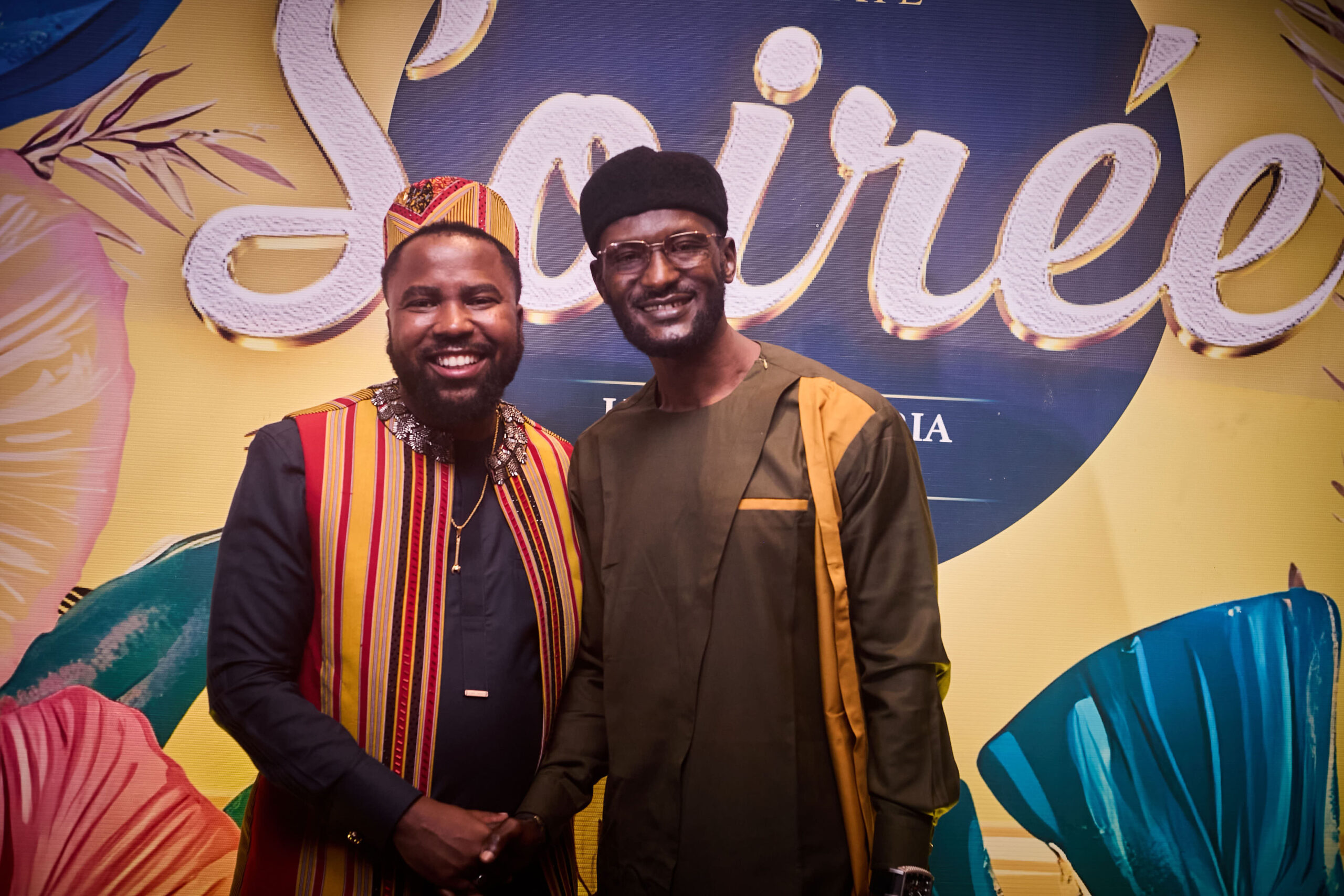
We wanted to change that. The IKON Awards were created to celebrate Ugandan and African films, connect industries across borders, and promote collaboration. That’s why we’re partnering with Nollywood and filmmakers from across the continent. We want Africa to know Uganda through its films.
The IKON Awards are not just about glamour or trophies. They are about building an industry that can stand shoulder to shoulder with other global film markets. We’re creating a platform that contributes to tourism, builds partnerships, and grows our creative economy.
In ten or fifteen years, when people talk about where the African movie industry truly began, I want them to say Uganda, and I want the world to know exactly why.
We want Africans to celebrate their own movies not only when they’re nominated for Oscars or Emmys, but because they are our stories


Why Humphrey Nabimanya Believes Mindset Is Africa’s Real Revolution
FAB: You’d agree that awards often risk becoming glamorous moments that fade away. Are there systems in place to ensure that IKON remains a movement that transforms mindsets and industry standards over time, rather than just another creative award focused on glamour?
Humphrey Nabimanya: Yes, it’s about mindset. IKON is not just another creative award; it’s a movement. It’s a platform that promotes collaboration among African filmmakers and helps sell our movies to the world, just as Afrobeats and Amapiano have elevated African music. We want this movement to be embraced not only by individuals but also by governments. That’s the direction we’re pushing for.
Look at Kenya, for example. The government offered over three million US dollars to host the Grammys because it recognised how that investment could boost tourism. So why can’t our governments invest in initiatives like this that can attract international attention and revenue? We want to grow our own platforms to strengthen tourism and create economic value within the continent. That’s what we’re envisioning with this movement.
FAB: As someone who works in both advocacy and television, what do you think the media often gets wrong about how young Africans want to be represented?
Humphrey Nabimanya: Many media houses tend to prioritise stories that generate money, especially political ones. During election seasons in Uganda, for instance, almost all coverage is centred on politics. Young people are sidelined. Their stories rarely get airtime.
When I had my TV show, it was only given one hour a week, while political programs could run endlessly. We need more platforms that allow young people to speak, be heard, and own the conversations that shape their futures. The media should move away from excessive politicisation and focus on programs that truly serve and empower young audiences.
FAB: Movements are exciting to build but often difficult to sustain. What has been your toughest leadership lesson in keeping “Reach A Hand” relevant and resilient for more than a decade?
Humphrey Nabimanya: Advocacy is expensive, but it’s also essential. Changing mindsets takes serious investment. That’s why major companies like MTN, Coca-Cola, and Pepsi spend so much on marketing. They are shaping consumer behaviour, and similarly, advocacy shapes public attitudes and values.
The challenge is that youth and women-focused causes are often treated as charity work or donor projects. But we’re in the same business of influence and communication. If we continue to rely solely on donors, we limit sustainability. So we shifted our model.
For instance, the Brave Girl’s Festival we’re organising this weekend is heavily funded by corporate partners. We’ve learned to tap into their budgets because they want access to young people, who are their biggest market. That’s how we sustain our programs. We’ve turned them into commercialised, youth-centred initiatives rather than donor-led projects.
Because of this approach, we never shut down programs when a donor withdraws. We’ve built sustainability through ownership and leadership from young people themselves. Our Peer Educators Academy, which started ten years ago, has trained over 3,050 peer educators nationwide. In the past decade, we’ve run more than 30 programs, all still operational today.
These programs have inspired over 5 youth-led organisations across the country that now operate independently. That’s how we’ve managed to keep Reach A Hand alive and relevant, by creating ownership, sustainability, and a community that believes in long-term change.

FAB: You’ve reached millions through RAHU, but what does real impact look like to you? Is it in the numbers, the systems, or the mindset shift in one young person?
Humphrey Nabimanya: For me, the biggest impact is the mindset shift. In the next 20 to 50 years, I want to see a 23 or 25-year-old CEO confidently managing budgets of one or five million dollars without being judged as untrustworthy or inexperienced. If we achieve that kind of mindset transformation, most of our problems will begin to fade.
When young people take charge and generations learn to work together with mutual respect, real systems will emerge. We will see greater equality in how resources are managed. Society will not be divided into rich, middle, and poor classes but will function in a way that allows everyone to live comfortably and support one another.
Everything begins with mindset. Take our political system, for example. Because of how it is structured, someone who has never experienced comfort or wealth rises from a rural community to become a leader. Naturally, the first thing they do is acquire what they’ve always desired. Can you blame them? Not really. It’s human nature. But after ten years, such a leader often leaves behind little progress because their focus was on personal gain, not service.
If we built stronger systems that ensure people in rural areas also have access to good healthcare, education, and infrastructure, leadership would no longer be a culture shock. Leaders would govern from understanding, not aspiration. On the other hand, someone raised in privilege may not grasp the struggles of the poor. That disconnect is part of why leadership in many African countries feels unbalanced.
People like me who have lived through the hustle often say, “Politics? No, I’ll do my part elsewhere.” We focus on building legacies rather than seeking political office. But this avoidance also leaves a leadership gap. Our political and developmental problems all circle back to one thing: mindset.
People need to stop viewing social entrepreneurship as charity. It’s business — business that changes lives
Humphrey Nabimanya: People need to stop viewing social entrepreneurship as charity. It’s business. It involves transactions, but these transactions change lives and communities instead of just generating profit.
Many assume social enterprises are about giving things away for free, but that mindset is wrong. Social entrepreneurship is actually one of the most demanding forms of business. Anyone stepping into it must understand they’re taking on serious responsibility.
That responsibility begins with building proper systems. Just as you’d structure a profit-driven business to protect your financial interests, you must build strong systems to protect people’s interests. If your social enterprise collapses, you’re not only losing a business; you’re also removing opportunities from the people who depend on it.
This kind of work isn’t about self-interest. It’s about sustainability and accountability. Many people rely on what we do, so every decision matters.
Humphrey Nabimanya: We need better policies. Sometimes, we spend too much time fighting for corporate frameworks instead of implementing them. That has to change.
We also need to bring in people who understand creative business, not just those who are talented. Talent and business are two very different things. The countries that have flourished understood this early on. If we can build that foundation—strong policies and a clear understanding of creative business—everything else will follow.
FAB: We’ve talked about the IKON Awards, RAHU, and the initiatives you’re leading. Let’s go back to you as a person. When you strip away the titles — founder, philanthropist, changemaker, and not a politician, of course (laughs).
Humphrey Nabimanya (interrupts): You see, we can never completely avoid politics. Everyone is political. The first institution where politics begins is the family.
FAB: Absolutely. In some way, we’re all politicians. But who is Humphrey Nabimanya in private moments?
Humphrey Nabimanya: Humphrey Nabimanya is a father of three, two girls and one boy. I’m a proud dad. I’m also someone who finds no distinction between work and life. For me, work is life and life is work. I don’t operate with the idea of work-life balance. Instead, I have a work-life fun mode because both can coexist.
You’ll never hear me talk about retirement. If you’ve been given a purpose that extends beyond yourself, you must think in terms of legacy, of creating something that outlives you and even your family. That’s what drives me.
I love to travel, whether it’s across the country or abroad. Even when I travel for leisure, it’s still connected to my work, but I enjoy it deeply. Everything I do gives me joy. I find fun in my work, my partner, my connections, and even in solitude. I also have moments when I prefer silence — just me, alone, reflecting.
FAB: Work is fun for Humphrey Nabimanya, and fun is also work. The two are intertwined. But what have failure, fatigue, or doubt taught you about purpose and persistence?
Humphrey Nabimanya: I’ve faced those moments where I ask myself, “How will I manage this?” But I’ve learned that having faith and doing good daily keeps you going. I’ll be honest — I’m not someone who goes to church every day. But I believe in doing good every day: help someone, appreciate someone, compliment someone. Those small acts bring blessings and positive energy that fuel your journey.
Of course, I get tired sometimes. When that happens, I go back to my village where it all began. That place reminds me of why I started and reignites my energy. Each time I return, I feel renewed and more determined.
Running African businesses is demanding. Building generational impact comes at a cost that most people don’t understand. It can strain your family, friendships, and peace of mind. Yet when you die, people may not remember you for being a great husband or father, but for the impact you made.
The key is to find balance. Determination and sacrifice come with a price, and if you’re not ready for it, burnout will follow. Many people give up or shut down because they underestimate the emotional and personal cost of building something meaningful. But for me, every challenge has reaffirmed my sense of purpose. It’s what keeps me moving forward.
I don’t operate with the idea of work-life balance. Instead, I have a work-life fun mode because both can coexist
FAB: You have a lifelong goal of empowering people. You’ve said you have no plan or even a thought of retirement. As someone dedicated to uplifting others, who empowers you?
Humphrey Nabimanya: That’s a good question. Sometimes when I look up, I see no one. But I do have mentors. Some of them serve on my board of trustees and board of governors. They are people I can talk to openly, vent, and pour out my thoughts to. After those conversations, I always feel lighter. That’s a major source of empowerment for me.
I also draw strength from my children. Watching them grow, seeing their character and how they handle things, gives me hope. I pray that one day they’ll choose to continue my legacy, not because I pushed them to, but because they believe in it. My role for now is to expose them to what I do, just like my sister once did for me. It was her influence that sparked my passion for this path.
Empowerment comes in many forms. Each time I do good for someone and feel that quiet satisfaction, I’m recharged. When I hear stories of how my actions have helped someone, it’s deeply fulfilling. It keeps me going. Those testimonies are fuel.
Do I have mentors I talk to? Yes, I do. Do I have role models? Not really. I prefer mentors I can reach, people I can speak to and learn from directly.
FAB: When history looks back, what’s the one sentence you hope it writes beside your name?
Humphrey Nabimanya: I’d love it to say, “Here is the man who learned to grow by working with people smarter than him.”