

“Until the lion learns to write, every story will glorify the hunter.” That African proverb might as well be the spirit guiding Gandani Carlton’s rise, a Nairobi-born creative who dared to rewrite the narrative around masculinity, adornment, and queerness through jewellery. He dropped out of university, turned theatre stages into classrooms, and eventually transformed brass, memory, and rebellion into Ngamani, a brand that’s not just jewellery but a protest. In this fearless conversation, Gandani unpacks what it means to treat the body as an altar, why luxury is the freedom to choose yourself, and how his bold, unapologetic designs reclaim space for queer African bodies in a world that too often tries to erase them.
FAB: What’s your story? How did it all begin? Was there a defining moment when you thought, “Yes, this is the path I’m meant to follow”?
Gandani Carlton: Like many African kids, I followed the traditional route: primary school, high school, and then university. But within my first year at university, I realized it wasn’t for me. I’ve always been a creative person with so much to give, and the rigid structure of the university system felt stifling. I felt boxed in.
So I deferred, thinking it would be temporary, but I never went back. I needed to pursue something that allowed me to explore my creativity more freely. I didn’t know exactly what I was searching for at the time, but I knew staying in university felt wrong. Well, I trusted that instinct and gave myself space to find clarity.
After leaving, I started experimenting with personal creative projects. I began with self-portraits, which eventually led me to theatre. I’d acted in drama club growing up, so theatre felt like a natural next step. I began performing at the Kenya National Theatre and later transitioned into set design and costuming. Eventually, I became the production manager for the theatre company at just 19, turning 20.
That experience opened up my world. I remember working on a particular play where I was handling costumes. I loved every minute of it. People started telling me, “You should try styling professionally,” or “Have you thought about doing this beyond theatre?” At first, I brushed it off. But one of the plays required some unique pieces we couldn’t find in the market, so I designed and sketched them myself. People responded so well to those designs that I decided to start a jewellery brand.
At first, I made pieces just for myself. I even thought, “If no one buys them, I’ll wear them, because I love to dress well.” But when I posted the first picture, the response was overwhelming. Hundreds of people were interested. And that’s how it all began.
FAB: You describe the body as both a canvas and an altar; that’s such a profound perspective. What inspired that thought?
Gandani Carlton: “The body as an altar” reflects where I am in life right now. I often update my bio to align with the phase I’m in and the message I want my brand to communicate. Currently, that phrase ties directly to my collection Madhabahu, which is Swahili for “altar”.
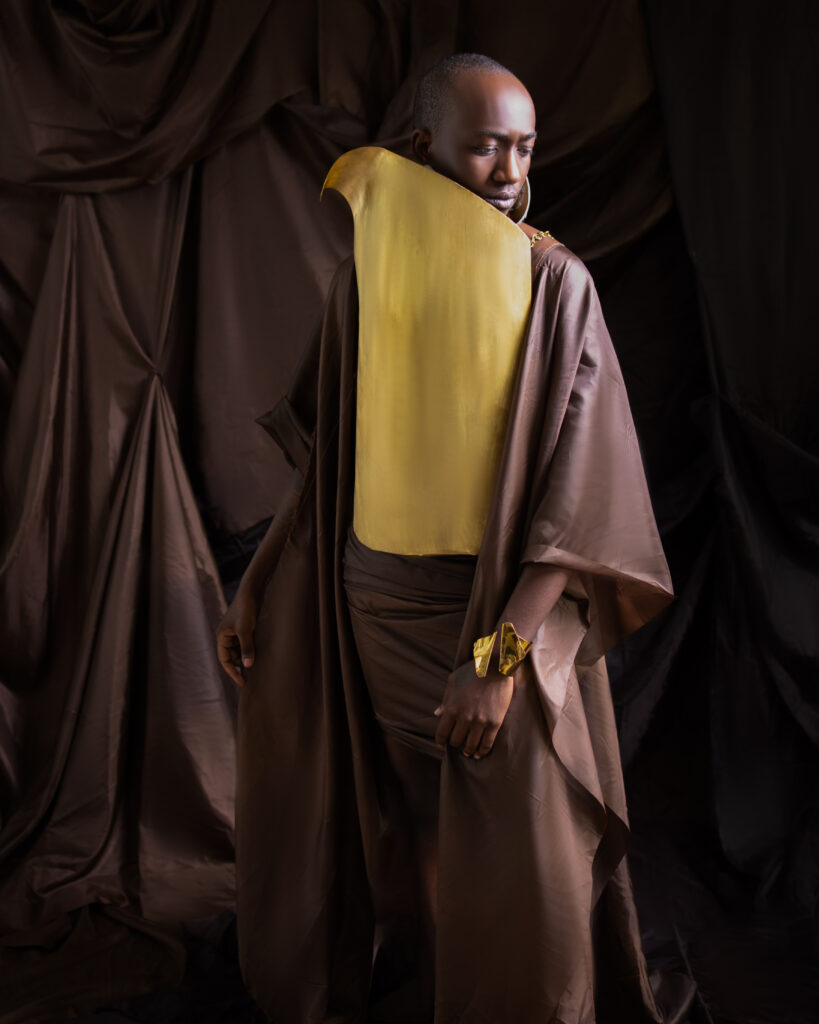
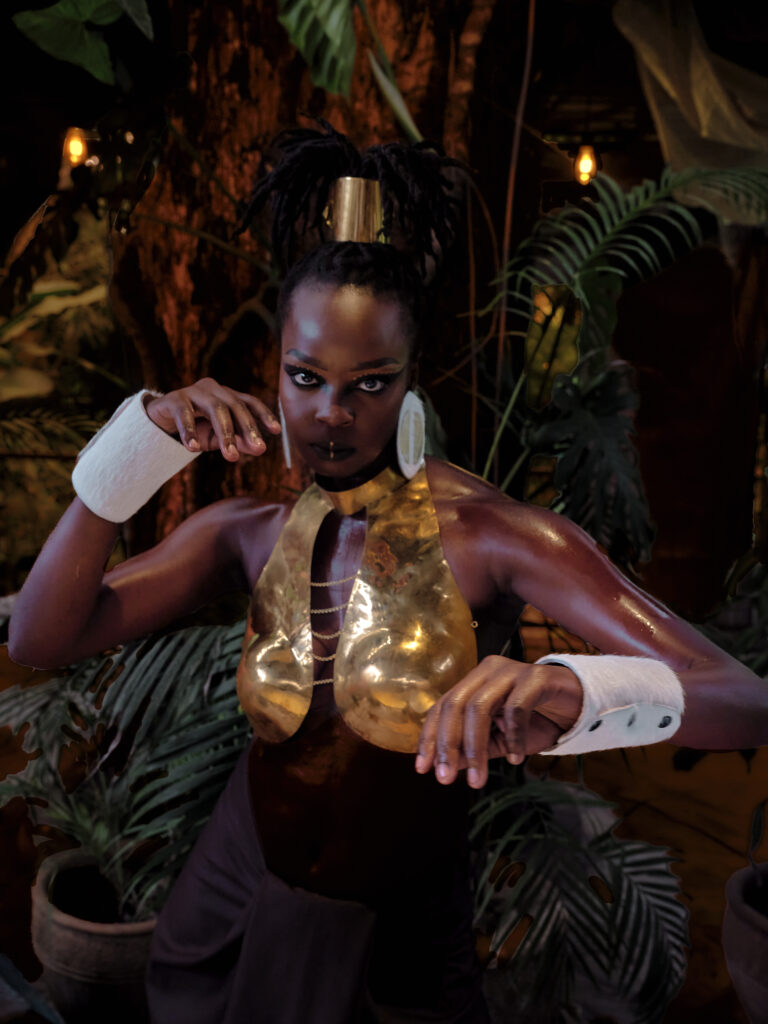
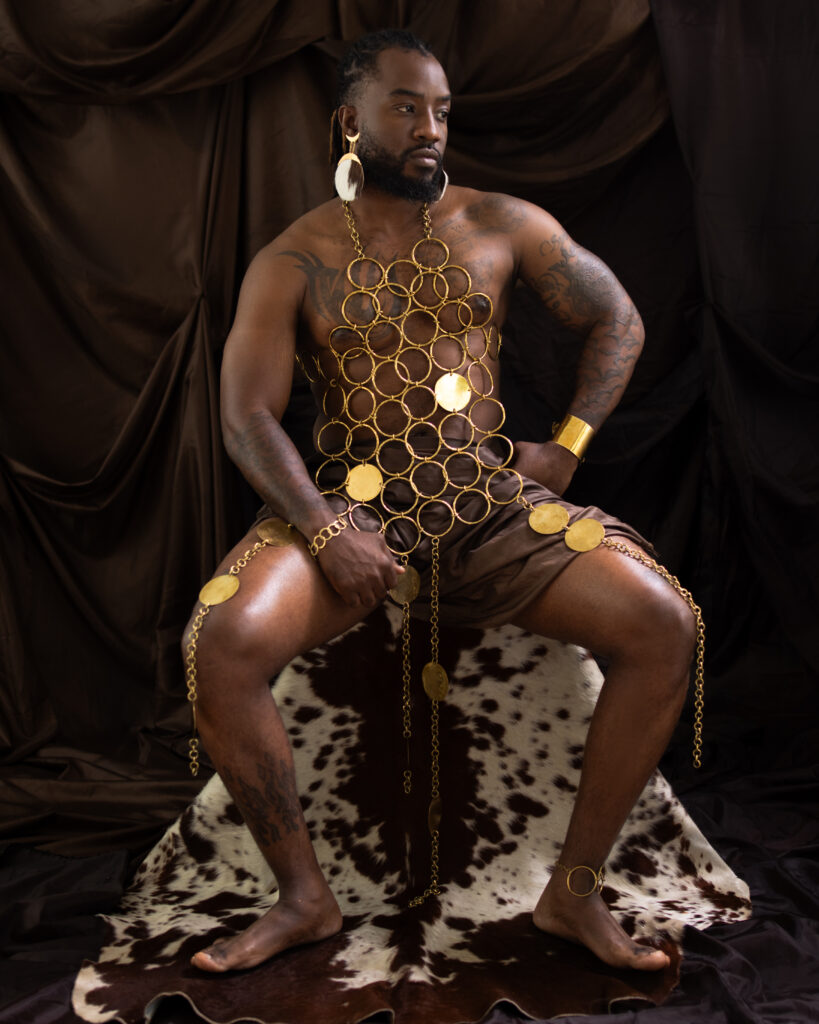
In pre-colonial times, African men took adornment seriously. Zulu warriors wore cowhides into battle, Maasai men adorned themselves with beads, and Swati men wore earrings. Adornment was part of their identity. But today, many modern men view adornment as soft or unmanly. My work challenges that idea. I want to revive that ancient pride in how we present ourselves.
To me, the body is sacred; it’s been with you since birth. How you present it shouldn’t be dictated by trends or toxic ideals but by what truly resonates with you. My mission is to give people—especially men—the space and tools to express their individuality through fashion and jewellery.
And even beyond adornment, I hope that by boldly expressing our truth, we inspire others to do the same. We want our light to create room for others to shine.
FAB: What does luxury mean to you outside the traditional fashion definition?
Gandani Carlton: To me, luxury is a choice. Choice is the biggest luxury people can afford. There are people who deny themselves that luxury, even though it’s easily accessible to them. And there are others who deeply value it, because what’s easily available to one person may be completely out of reach for another. My luxury and your luxury may look very different.
For me, luxury might mean adorning myself or even choosing not to go to university. For someone else, university might be a far-fetched dream, but they have the luxury of fresh food from the farm every day and not chemical-infused food or access to clean water and the luxury of a quiet life. Luxury is a choice. And in that way, choosing to be yourself is a luxury. So why choose to conform?
The Influence of Nairobi and Queerness on Ngamani
FAB: Let’s explore the soul of your brand, Ngamani. How do your roots in Nairobi and your queerness shape its essence?
Gandani Carlton: From the start, Ngamani has never been just a business; it’s always been a personal expression of who I am. In fact, looking back at past collections feels like therapy. Each one reflects a different phase of my life and evolution. Growing up, I was constantly told to tone myself down: don’t dress too boldly, don’t speak too loudly, and don’t express too much. All of that just to make others feel more comfortable. But this idea that dimming your light allows others to shine is complete bullshit.
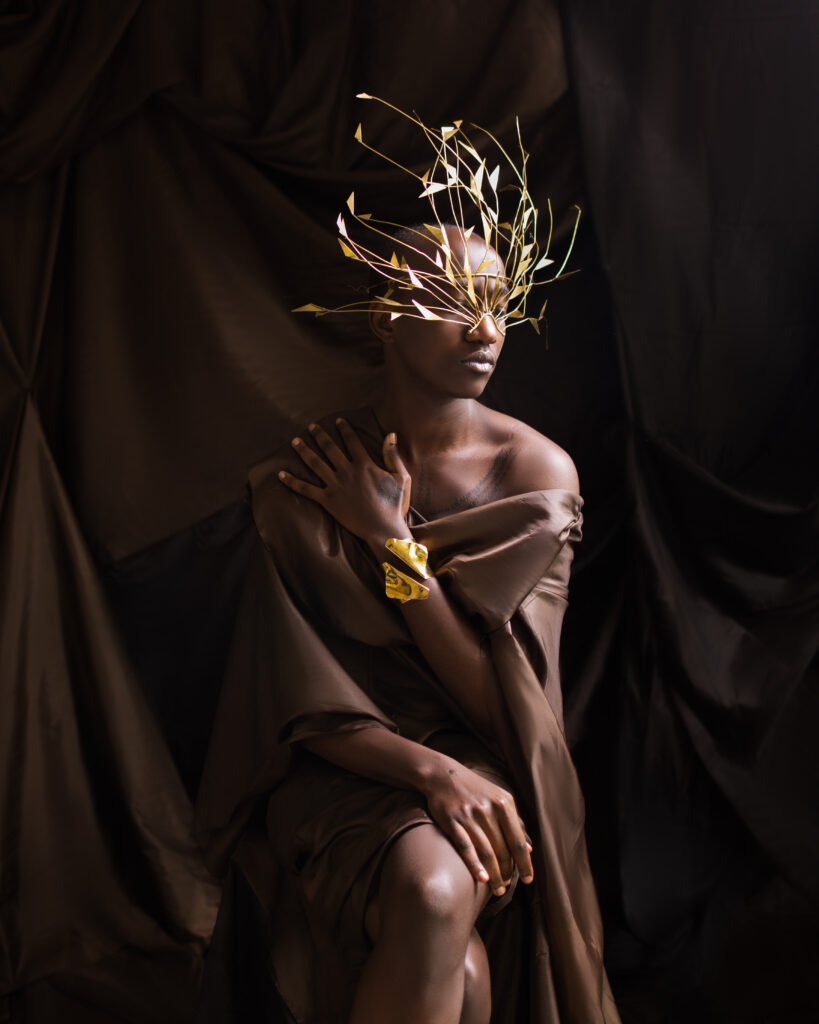
I believe there’s enough room in the world for all of us to be bold, expressive, and unapologetically grand. That’s the energy Ngamani brings. Our pieces are intentionally dramatic, larger than life. We’re not trying to be “quiet luxury” or minimalist. A Ngamani piece commands attention. Whether people love it or hate it, you will be seen. You won’t disappear into the background. That visibility is our power; we refuse to be erased.
FAB: What’s the first thing you do when creating a new piece from scratch?
Gandani Carlton: Honestly, the piece tells me what it wants to become. I can’t start unless I have a story. As I’ve said before, Ngamani is therapy for me. Until I feel something powerful or purposeful, I’m just drawing circles.
I often remind people I didn’t invent the circle. You see circular earrings everywhere. What makes my work different is the intention behind each design. Every piece has a name and a story tied to what I was feeling at that time.
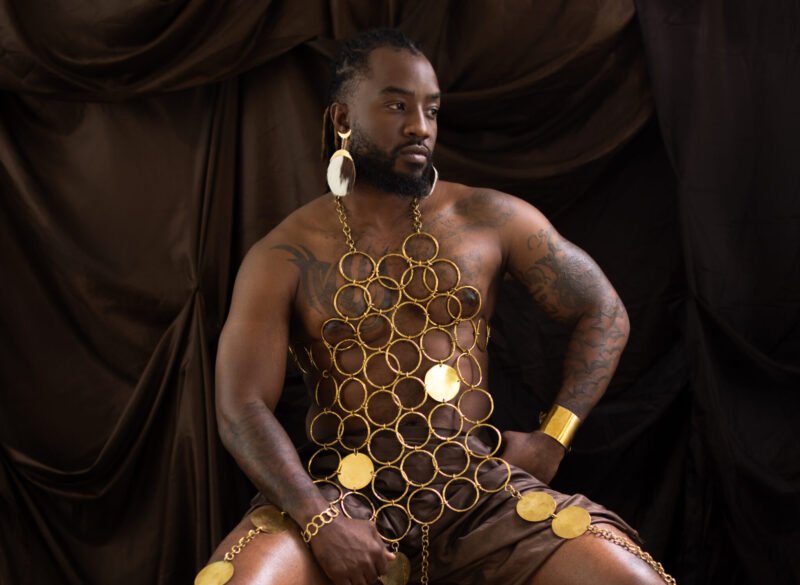
Take the Madhabahu collection, for instance, Swahili for “altar”. It’s about reclaiming male adornment. Out of 20 pieces, 14 are worn by male-presenting individuals. It’s inspired by how Zulu, Maasai, and Swati men used to dress, with pride and adornment.
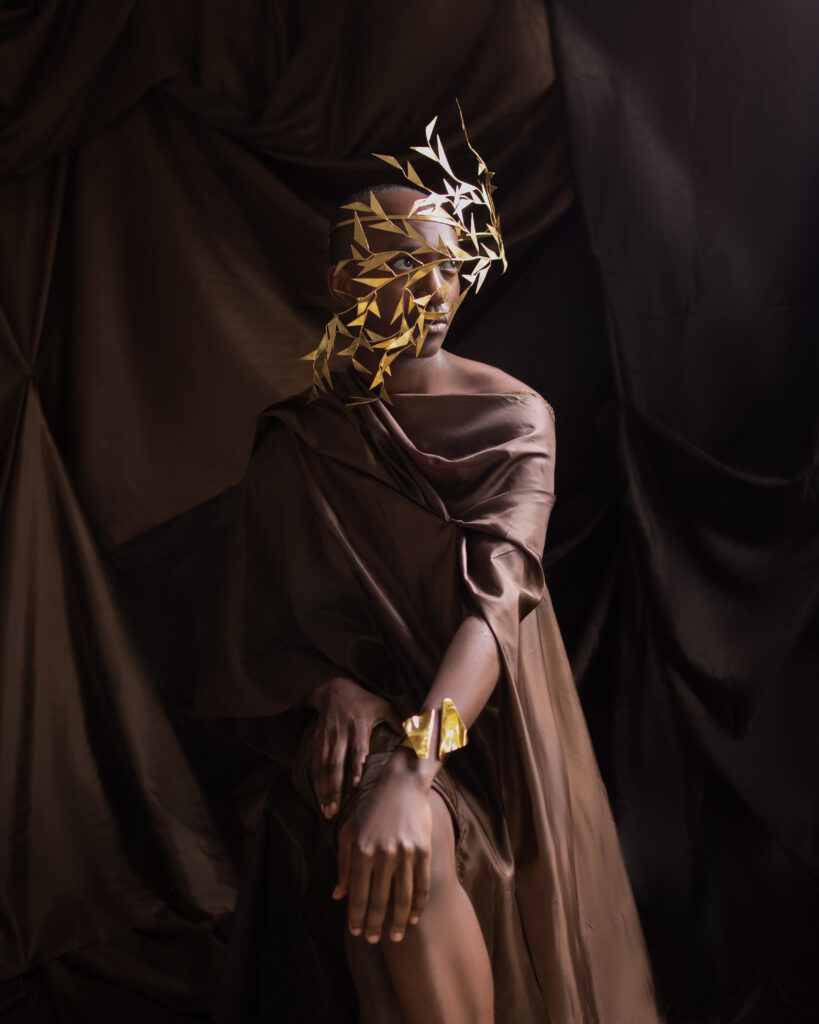
We’re also celebrating diverse male bodies—plus-size, slim, and all types. If I’m going to adorn the body, I want it to feel confident and celebrated. That’s why we’re playing with form. The human body is sculptural, and that comes through in the jewellery. For me, the story always comes first. The pieces follow naturally. Never miss a beat in fashion, arts, beauty, and lifestyle, follow FAB L’Style Magazine.
FAB: Your pieces feel so spiritual and cinematic. Who would you love to see wearing them on the red carpet, not just for style, but for what it symbolizes?
Gandani Carlton: Oh, I have a whole list. First, Erykah Badu. She’s so spiritual, and I feel seen through her work. Her style is otherworldly, but every detail is intentional. Then there’s Lil Nas X. He embodies this carefree, unapologetic queer energy that’s just joyful to witness.
As queer people, we often carry the weight of always being political just for existing. But Lil Nas X just exists, and he has fun doing it, I admire that. And of course, Rema. If you ever bump into him, tell him to hit me up! The list goes on, but those three top it for me: style, spirit, and symbolism.
FAB: Let’s talk about power and reclamation. What does it mean to feel to centre the queer African body in a space that’s historically tried to silence it? You’ve spoken about how your pieces are therapeutic for you and others; have any collections been created specifically to tackle those struggles?
Gandani Carlton: That’s such an important question. And honestly, I struggle with the word struggle. I wouldn’t describe my work that way. Instead, I see it as resistance—bold, joyful, and necessary resistance.
Society constantly says: don’t be loud, don’t stand out, don’t be queer, don’t express yourself. But I am all those things, and I allow others to be, too. That act alone—just showing up fully as myself—is rebellion. And sometimes, it’s healing.
One collection that embodied this spirit was the Vurumai Collection, which I showcased at Kibera Fashion Week in 2023. It drew heavy inspiration from war regalia. I admired how Zulu and Maasai warriors would prepare for battle—draped in cowhides, layered in beadwork, and adorned with bracelets and anklets. The white man came with guns and military gear. But our ancestors showed up with pride in their appearance, and that alone felt like victory.
That’s the energy I bring to this revolution: showing up with pride, refusing to shrink. My role is to keep making sure we are seen. That’s how we stop ourselves from being erased.
Why Brass and Beads Still Matter in African Craftsmanship
FAB: Why do you think colonial systems worked so hard to strip ornamentation from African bodies?
Gandani Carlton: The first word that comes to mind is insecurity. People often fear what they don’t understand, and when fear takes over, erasure becomes the response. It’s similar to how religious extremists treat queer people: with hatred disguised as faith. They may claim their actions are rooted in two verses of a holy book, but those same books preach love as the foundation. In truth, it’s a lack of understanding that fuels their hate. Instead of engaging in conversations about coexistence and integration, they aim to erase. That same mindset was applied to our traditions. We were seen as a threat; our confidence, our culture, and our pride were intimidating because they couldn’t comprehend them. And that’s why they fought so hard to erase us. The truth is, we still are a threat because we remember who we are.
FAB: There’s something very present in your work: brass. What’s the significance of brass in African craftsmanship?
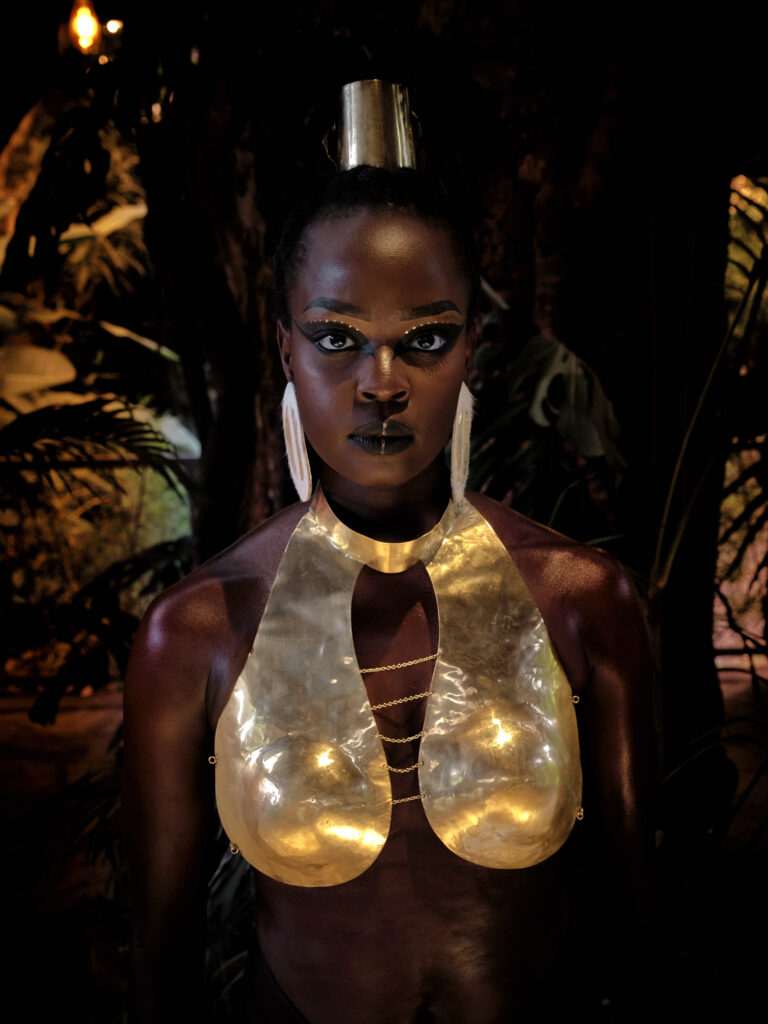
Gandani Carlton: I’ll answer that and then return briefly to the colonialism question. My journey with brass started simply because it was the most accessible material to me. It was everywhere. Walking through Kenyan markets, I saw women I admired—like Orie Rogo Manduli—wearing bold, chunky brass jewellery. That visual left a mark on me. Even before beadwork became central to Maasai adornment, brass was key. It was the first reference point I had for what ornamentation could be.
But we’re not confined to brass. We’re now experimenting with other materials, beadwork, cowhide, and elements traditionally used by the Zulu, Swati, and Maasai communities. Brass was just the beginning.
Returning to colonialism, part of that indoctrination was making us believe that whiteness equated to superiority. So today, people take pride in speaking the most polished English while shaming those who speak their mother tongue. At our company, we challenge that. We name almost everything in Swahili—our show notes, our presentations—it’s all Swahili. It’s our way of keeping culture alive. We’re showing that luxury doesn’t need to be imported. We already own it.
Recommended For You
Pride Collections Growing in Popularity
Roses Are Red, Violets Are Blue; Put It All Away And Love You Too
FAB: Is there a difference between wearing jewellery and embodying jewellery?
Gandani Carlton: Absolutely. There’s a profound difference. My work isn’t designed to empower, but it often becomes empowering. Each piece is a reflection of my own journey, especially my healing. And what’s beautiful is how deeply people resonate with that. My healing becomes a shared experience. It travels beyond me and ends up empowering others.
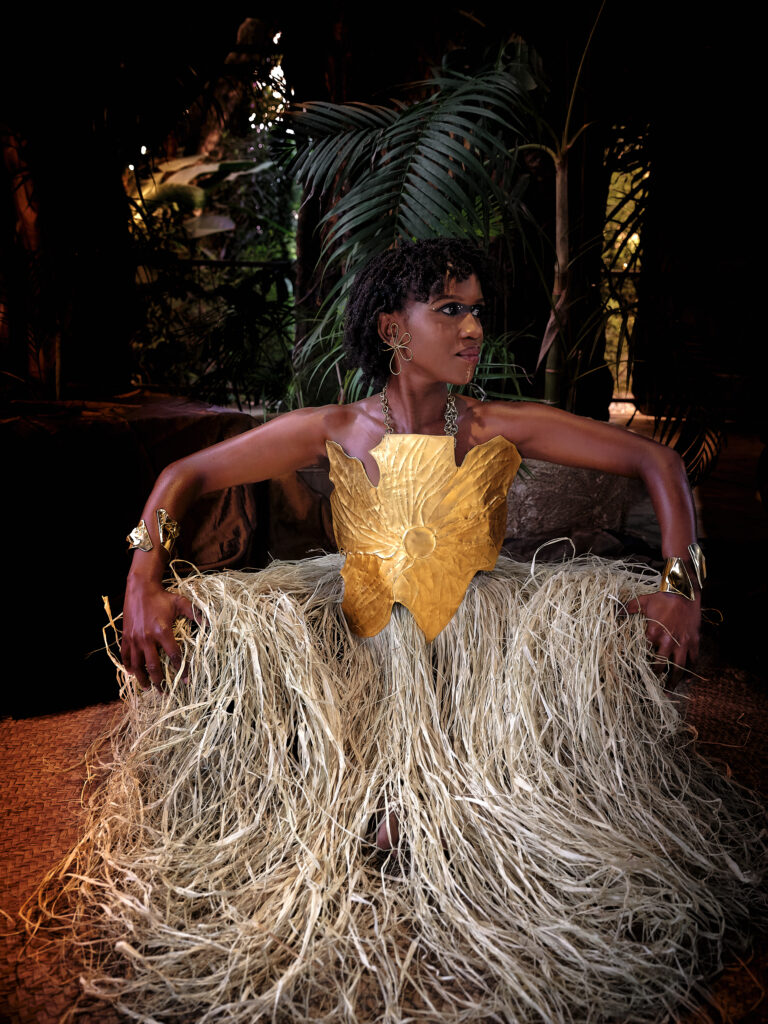
We don’t use conventional models in our runway shows. We don’t call up agencies asking for size 8 Sudanese models. No, we cast everyday people. People who may not typically see themselves in jewellery like ours. That representation matters. When someone who looks like you wears something powerful and feminine, you begin to see yourself in it too. It becomes more than adornment. You feel seen. In a way, I think our pieces choose their wearers.
Here’s an example. At our last show, we had this intricate flower bra, originally made for a musician. It was so complex that we didn’t finish it until the morning of the show. The assigned model saw it and said, “I don’t want to walk barefoot. I only wear heels.” But the story we were telling required bare feet; it symbolized life back home.
That same morning, a close friend showed up just to support me. She brought me a milkshake, gave me a hug, and reassured me. I looked at her and said, “Beautiful, I need you to walk into that bathroom, undress, and wear this bra.” And she did. She walked the runway barefoot.
Later, she told me she’d always been insecure about her breasts, but wearing that piece made her feel powerful. That bra wasn’t made for her. She wasn’t meant to model. But in the end, it was hers. That moment helped her reclaim her body and her story. That’s what I strive for with my work: to create space for people to see themselves, to feel whole again.
The Future of Ethical African Design According to Gandani Carlton
FAB: What’s one traditional African adornment practice the world needs to know and preserve?
Gandani Carlton: More than anything, we need to preserve our techniques, our craftsmanship. If you look at Maasai beadwork or brass work in Kenya, the methods are incredibly intricate and deeply rooted in tradition. Yet many jewellery brands abroad, produce about a big percentage of their pieces here in Kenya. Ironically, most Kenyans still don’t understand the technical side of jewellery-making because it’s not something that’s taught.
I’m actually launching jewellery-making classes in the near future, taught by traditional artisans. This kind of knowledge shouldn’t be limited to elders who’ve been doing it for decades. It should be accessible to everyday Kenyans to help them reconnect with their cultural identity. Right now, if someone wants to start a jewellery business, they usually rely on older men in markets to bring their designs to life. But imagine if this knowledge were taught in schools—if metalwork and beadwork were part of the curriculum, just like we learn about the Portuguese explorers or Bernoulli’s principle. I believe we’d take more pride in our heritage. And when we do, we become less susceptible to cultural erasure.
FAB: We’ve been all serious; let’s have some fun. If Ngamani were a song, what genre would it be? A soft ancestral hum, Afro-futurist ballad, Afro-pop? Maybe Afro-jazz or Afro-soul? Or would it be… Afro-opera?
Gandani Carlton: Definitely not futuristic. Ngamani would be Afro-house, with a hint of dancehall. I’m known for how I blend house music with everything, so that’s fitting. You’d hear echoes of old-school dancehall, rhythms from Afrobeat… all woven into a unified beat. So yes, Afro-house, but layered with many sounds that move together in rhythm.
FAB: What’s the most unexpected item or motif you’ve ever turned into jewellery?
Gandani Carlton: I once cut out my hands in brass and made them into a bra.
FAB: What?
Gandani Carlton: I’ll send you photos! I made a bra called Keep Your Hands to Yourself. It’s a statement piece against gender-based violence. It features two brass hands positioned over the chest, symbolizing ownership and consent. The message is simple: “These boobs are mine. Unless I give you permission, don’t touch.”
It sounds a bit wild, but hilariously, it’s one of my bestsellers. People are instantly drawn to it. It’s bold, sexy, full of innuendo, and sparks conversation. Folks come by my stall, see these random brass hands, and ask, “What are these?” Then I hold them up to their chest, and they’re like, “Aha!” Watching their reactions never gets old.
FAB: If Ngamani were displayed in a museum 100 years from now, what message would you want its pieces to carry forward?
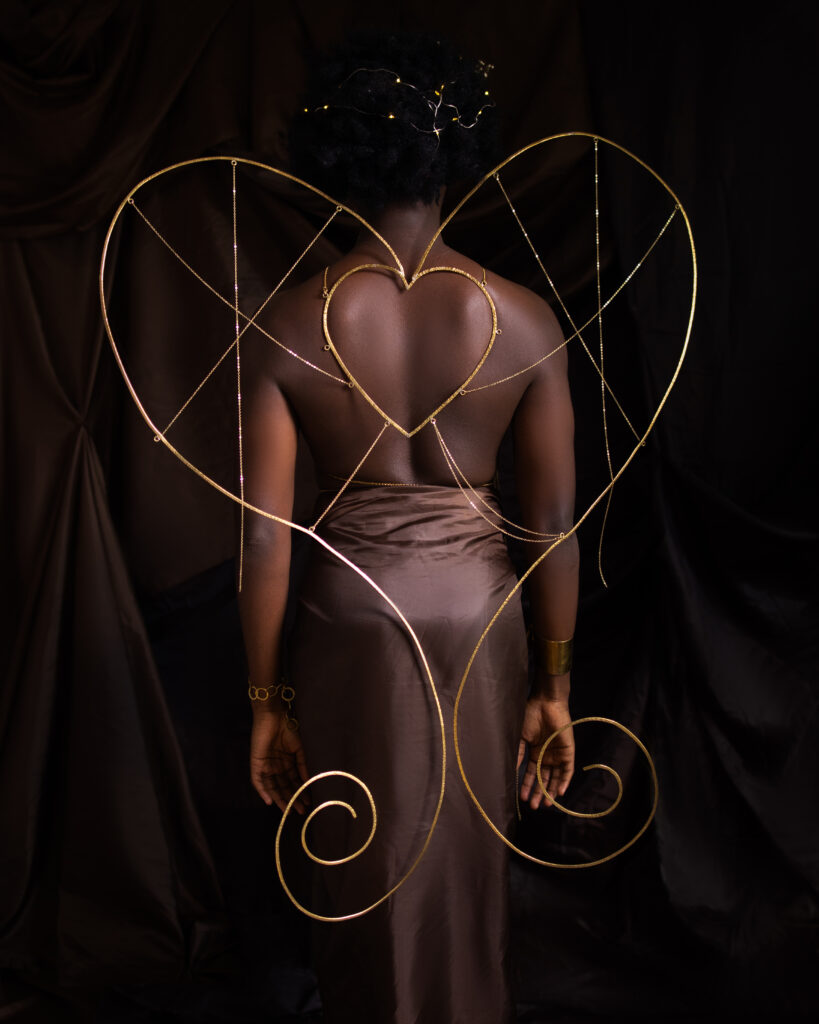
Gandani Carlton: Magnify Grandiose. That’s our slogan, and it still rings true. I want people to know they’re free to be loud, bold, fabulous, and unapologetically themselves. Every part of you the world once called “too much”? That part deserves space. Just be.
FAB: Many of our readers are fashion lovers and collectors who care deeply about impact. How can people support ethical, culturally grounded African design beyond simply purchasing collections?
Gandani Carlton: Look beyond the product; look into the people. Ask yourself: What’s the vision behind this brand? Why do they create what they do? When you understand the purpose, not just the aesthetics, the art becomes more meaningful.
And once you connect with the story, you’re more likely to share it with others. For instance, someone might hear my brand’s story and think of a friend who’s expressive or needs to express themselves more. That connection happens because someone took the time to understand our “why”. So yes, do your research. Sit with the art. And when you talk about it, talk about it often and with intention.
FAB: For people outside the continent, what’s the most misunderstood thing about queerness and cultural expression in Africa?
Gandani Carlton: One of the biggest misconceptions is the idea that queerness is un-African, unnatural. I don’t want to get too deep into religious debates, but let’s be real: much of Africa’s resistance to queerness is rooted in imported religious ideology. Hate is taught. Systematically taught, accepted, and perpetuated to uphold homophobia. I don’t believe a child wakes up one day and chooses to hate.
I remember back in 2023, when the National Gay and Lesbian Human Rights Commission of Kenya won the legal right to association, not to marry, just to register their organization with the words “Gay and Lesbian”. Despite that small win, homosexuality is still criminalized here. Protests broke out all over. In one of them, I saw a child—maybe six years old—on his father’s back, facing a mob and saying, “When we find these people, we will beat them. We will kill them.”
That child didn’t come up with that hate on his own. He was taught. And it made me think: if we taught love with the same intensity that we teach hate, the world would be so different. If your actions come from a place of love, violence would never be your first response.
FAB: Ngamani is not just jewellery; it’s ____.
Gandani Carlton: It is a protest.
Gandani Carlton: It is a protest. And that goes back to the citation I mentioned earlier about my Vurumai collection, even our presentation is a powerful act of rebellion and resistance against our erasure. Our very existence is a protest. And our pieces represent that.
Fun Zone: #FabFastFive
FAB: If you were a dish, what would it be called?
Gandani Carlton: Lemon and herb chicken glazed with honey
FAB: If your wardrobe had a theme song, what would it be?
Gandani Carlton: Dressed in Black by Sia.
FAB: What is one fashion item you can’t live without?
Gandani Carlton: Fedora Hats
FAB: A film you wish you had designed a wardrobe for?
Gandani Carlton: Black Panther.
FAB: Gold or silver accessories?
Gandani Carlton Gold