


“Am I eating enough protein?” One Saturday morning, a friend of mine called in a mild panic. He had just started a new fitness program and was obsessing over one question: “How much protein should I really eat?” He had read different blogs, each with conflicting answers about how much protein you should eat each day. Even so, he skipped breakfast since he wasn’t sure if two eggs were “enough” and watched two fitness influencers swear by completely different numbers.
If you are like most people trying to stay healthy, build muscle, or just avoid the mid-afternoon crash, you have probably asked yourself the same question. Protein is everywhere right now. TikTok fitness coaches talk about it. Nutritionists swear by it. Your gym buddy can’t stop telling you how he downs 40 grams of whey after every workout. But how much protein do you actually need every day? Is there a magic number, or is it just another wellness trend that social media has hyped up?
Protein isn’t just for bodybuilders or gym rats. It fuels almost everything your body does. A clinical nutritionist explains it simply: “Protein gives your body the building blocks it needs to function. Without enough, you’re basically asking your system to create without materials.” The body uses protein for almost everything, repairing muscles, supporting hormones, building enzymes, and even keeping our hair from falling out. However, the exact amount you need depends on more than just hitting an arbitrary number; it depends on your body, your lifestyle, and your goals.
First, Let’s Get the Basics Right

Most nutrition experts agree on one foundation: your protein needs are linked to your body weight. The Recommended Dietary Allowance (RDA) suggests 0.8 grams of protein per kilogram of body weight per day. That’s roughly 56 grams for men and 46 grams for women on average.
That means:
- A 70 kg person (about 154 lbs) should get 84–140 grams daily if active.
- A 90 kg person (about 198 lbs) needs roughly 108–180 grams daily.
Sounds simple enough, right? Except it gets complicated once you factor in your activity level, age, and fitness goals.
For example:
- If you’re sedentary, the RDA works fine.
- If you exercise regularly, you might need 1.2 to 2.0 grams per kilogram.
- If you’re building muscle or training intensely, aim closer to the upper end of that range.
- If you’re over 50, your body becomes less efficient at processing protein, so you may need slightly more to maintain muscle mass.
In other words, your “ideal” number isn’t fixed. It flexes with your life.
Protein Requirements Per Day by Weight & Activity Level
I once met a young creative entrepreneur in Nairobi who lived on energy drinks, noodles, and late-night shawarma. He was constantly fatigued and thought he needed more caffeine to stay productive. It turned out he was severely under-eating protein.
When he adjusted his intake—even just adding a chicken breast, Greek yoghurt, and a handful of almonds daily—his energy levels stabilized. The science explains why: protein isn’t just about building muscle; it’s about staying alert, focused, and emotionally balanced. Without enough protein, your body slows down repairs, pulls from its reserves, and leaves you feeling weak, foggy, and cranky.
Best Protein Sources: Animal vs Plant-Based
There’s another misconception floating around social media: that one source of protein is better than all others. In reality, your body thrives on variety.
Some solid options to mix into your week:
- Lean meats: chicken, turkey, beef
- Fish: salmon, tuna, sardines
- Plant-based proteins: lentils, chickpeas, tofu, edamame
- Snacks: Greek yoghurt, cottage cheese, nuts, protein bars
Mixing sources gives you a more complete amino acid profile, keeps meals interesting, and fits a wider range of budgets and lifestyles.
Must Read
Nutritional Tips for a Balanced Diet for Men
Strength Training Tips for Women: Build Muscle and Burn Fat in 2025
Signs You’re Not Getting Enough Protein Daily

It often creeps up slowly:
- You feel drained even after resting.
- Your workouts plateau.
- You’re constantly hungry.
- Your hair, nails, and skin lose their glow.
Practical Tips to Hit Your Protein Goals
Here’s a simple framework to keep things practical:
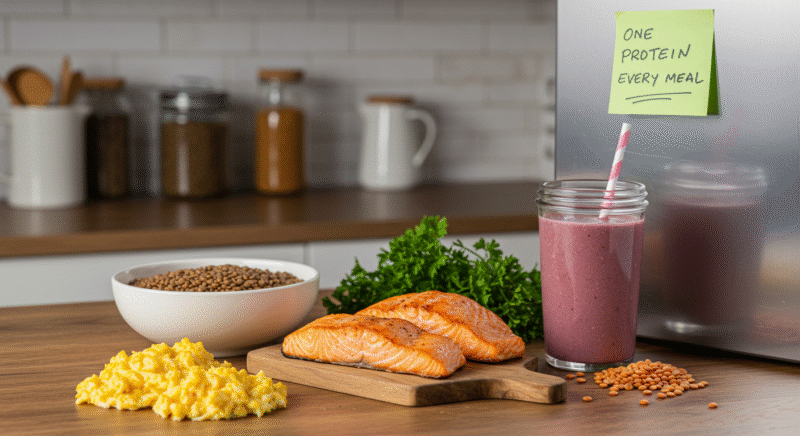
- Start with one protein-rich food per meal. Eggs at breakfast, chicken or beans at lunch, and fish or tofu at dinner.
- Keep healthy snacks nearby. A small handful of almonds or a protein smoothie can save you from a 4 p.m. energy crash.
- Don’t ignore drinks. A good-quality protein shake can help, especially on busy days.
- Listen to your body. Hunger, fatigue, and irritability can all signal low protein intake.
No spreadsheets, no obsessing over macros, just smarter choices, meal by meal.
How to Calculate Your Daily Protein Needs Easily
Protein isn’t complicated, but the internet has made it confusing. Most adults do well within a range of 0.8 to 2.0 grams per kilogram of body weight, depending on activity and goals. What matters most is consistency and variety, not perfection.
Quick Protein Calculator
Multiply your weight (kg) × 1.6–2.0 = recommended range if you’re active or building muscle.
Multiply your weight (kg) × 0.8 = minimum grams of protein per day.
FAQs About Daily Protein Intake
How much protein should I eat to lose weight?
If weight loss is your goal, aim for 1.2–1.6 grams of protein per kilogram of body weight per day. This keeps you fuller longer and helps preserve muscle while in a calorie deficit.
How much protein do I need to build muscle?
Most athletes and weightlifters need 1.6–2.2 grams of protein per kilogram of body weight daily to optimize muscle growth and recovery.
Do I need protein shakes?
Protein shakes aren’t mandatory, but they’re convenient. Whole foods like chicken, lentils, and yoghurt should be your main protein sources, while shakes help fill gaps.