


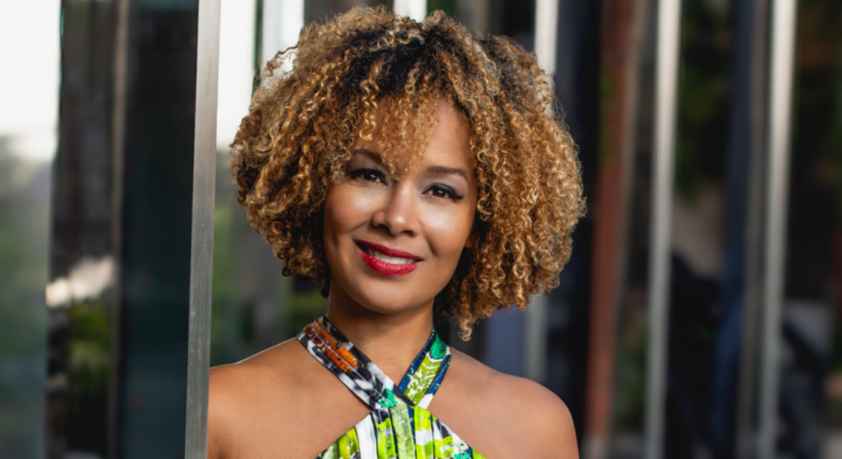
As Hazel Eki Osunde says of silk, “it is a canvas for memory,” and it is from here that we can see that her fashion label, Hazel Eki Silk, is not just about clothes, but about a cultural imperative. Born in a small German town just outside of Switzerland, raised in the rich musical heritage of Nigeria, and currently based in London, Hazel’’s life is a journey in itself. But no matter the location, there is one thing that holds her work together: Africa. “There’s just something about landing on African soil,” she says with a soft smile. “It brings up the best kind of nostalgia.”
This nostalgia has translated into a business of contemporary storytelling. Hazel Eki Silk, her high-end silk fashion label, gives a new, global twist to traditional African fabrics. Her designs are a form of storytelling, chock-full of meaning and done with a keen sense of ethics. “I’ve never thought of myself as a fashion aficionado,” she says with a laugh. “But I have always known how to tell a story through prints.”
FAB: Congratulations on an absolutely radiant show at Lagos Fashion Week. I was seated right in front, and I was truly wowed.
Hazel Eki: Thank you.
FAB: Now that the applause has settled, how are you feeling?
Hazel Eki: I feel relieved. This collection was deeply personal to me. It felt like a letter to my dad, to my late father. I felt his presence throughout the entire journey, from the initial ideas and inspiration to the final moment on the runway. Right now, I feel whole. I feel wonderful.
FAB: Lagos Fashion Week has marked its fifteenth year, and you have been part of this journey. You belong to a generation redefining what African luxury means. What does it mean for you personally, and for your brand, to present on this runway at this moment?
Hazel Eki: Things have changed dramatically since I started. Back then, we were often marginalised and labelled as ‘exotic’ or simply ‘African’. Now, everyone wants to be part of Lagos Fashion Week. Just before travelling to Lagos, someone from an international model agency told me their models had walked an entire year of Fashion Weeks and were begging to be part of Lagos Fashion Week.
FAB: Really?
Hazel Eki: I thought, wow. This speaks to what Omoyemi Akerele and her team have achieved. They raised the bar and elevated the standard of Lagos fashion to sit alongside other major fashion weeks. It is undoubtedly the biggest fashion week in Africa.
I see a clear shift. People want to embrace African fashion and understand the diversity within Africa. It is no longer limited to zebra prints or Ankara. The focus is now on creativity. There is real thought and craftsmanship behind the work. The finishing has improved significantly. African fashion now exists on the global stage, whereas before it was treated as something niche and pushed to the margins.
For me, one of the most meaningful moments was having my friends there. Usually, a few attend, but this time my entire circle showed up. They all wore Hazel Eki pieces they had purchased. Seeing them in the audience, dressed in my work, meant so much to me. That moment felt incredibly special.
FAB: You were born near the Swiss border in Germany, raised in Nigeria, and now live in London. That is quite a cultural journey. How has this shaped the way you see beauty and design?
Hazel Eki: I draw heavily from the multicultural experiences of my life. Living in different countries has shaped my creativity, but Africa remains my primary source of inspiration. I tell stories inspired by nature, travel, and culture, always from an African perspective.
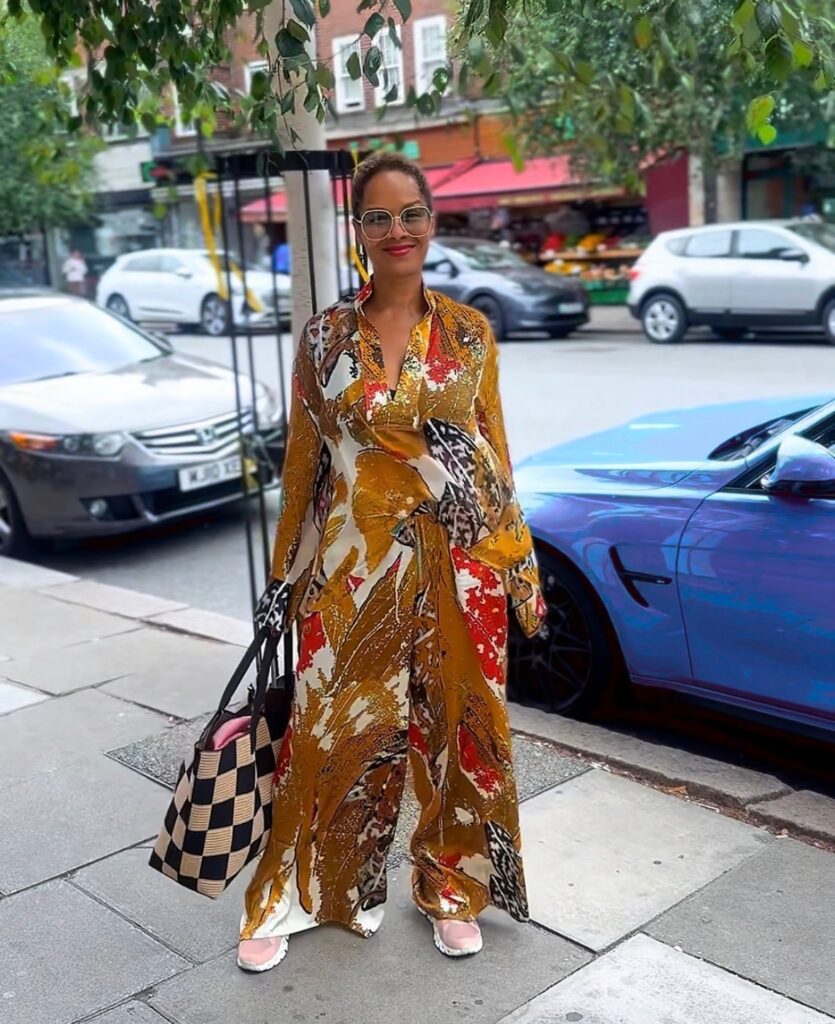
Many of the fabrics we wear and are accustomed to calling African, are owned by Europeans or Asian companies. With Hazel Eki, I wanted to narrate stories through the lens of an African and owned by a local. Africa appears in subtle ways through the prints I design. The work feels global. The fabrics also support this idea. They are wearable, adaptable, and translate well across regions and styles.
FAB: Your designs are global and wearable anywhere. However, Africans are often associated with bold, maximalist aesthetics, while Europeans tend to prefer more restrained styles. How do you balance this contrast?
Hazel Eki: This balance has been one of my biggest challenges. My work is elegant and sophisticated, but also simplistic. The prints may be bold, but the silhouettes are minimalist. That is my personal style. I lean toward classic designs rather than flamboyance.
Designing for audiences in both Africa and the West has required careful consideration. In Africa, my work can sometimes appear too understated. In the West, it can feel too colourful. Finding the middle ground is not easy, but I have learnt that you cannot please everyone. I focus on my niche. People who appreciate bold prints paired with clean silhouettes connect with my work. I do not try to cater to everyone.
FAB: You describe Hazel Eki Silk as wearable storytelling. Can you walk us through your process of translating emotion and cultural ideas into prints?
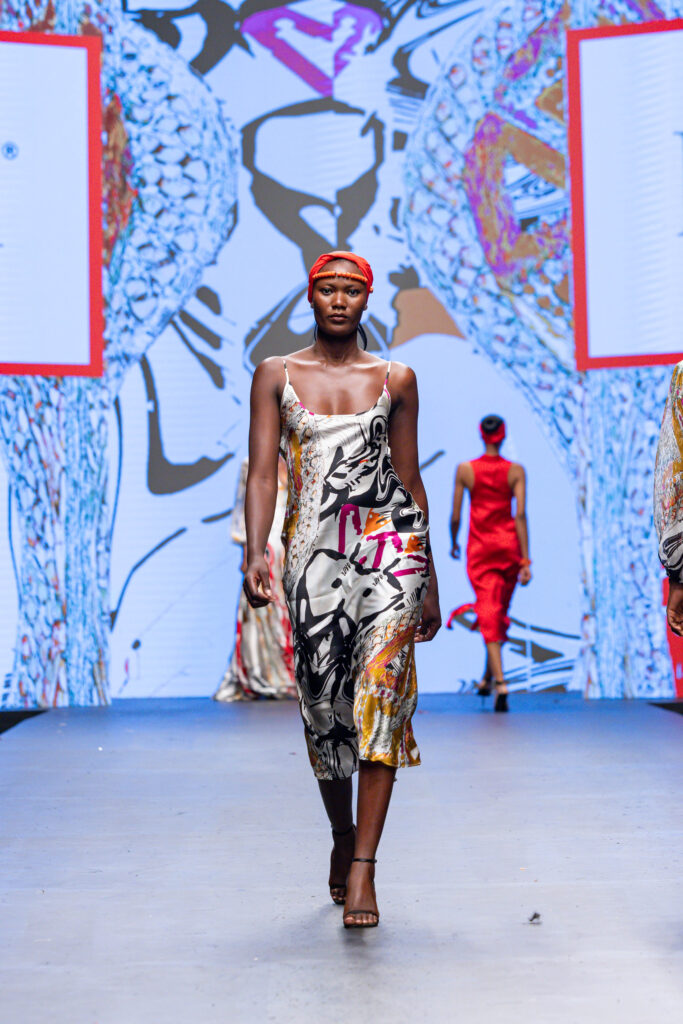
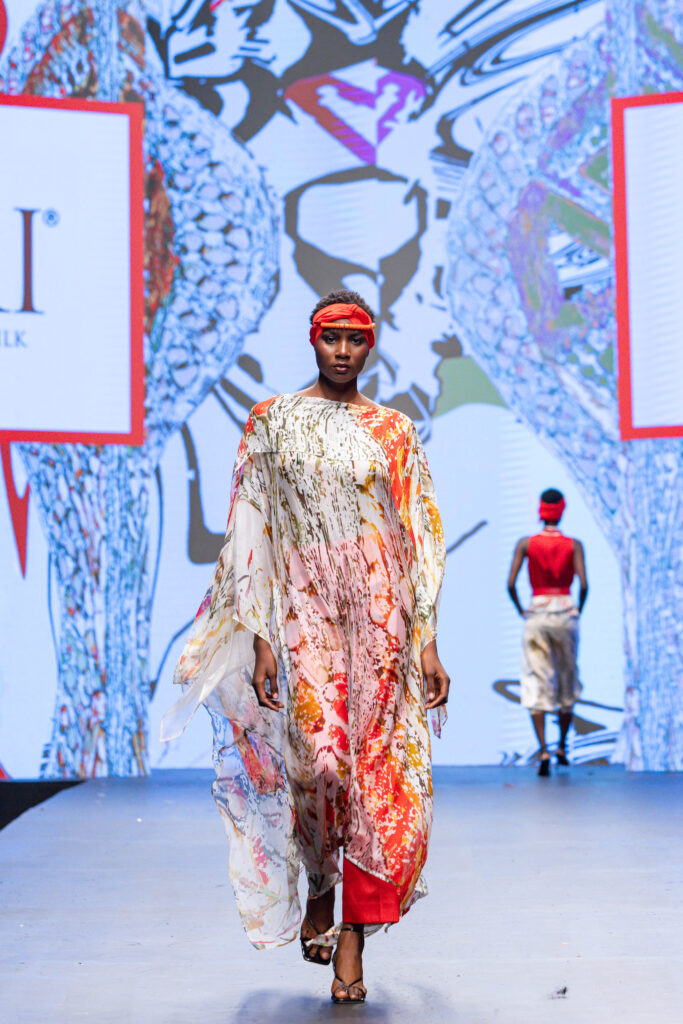
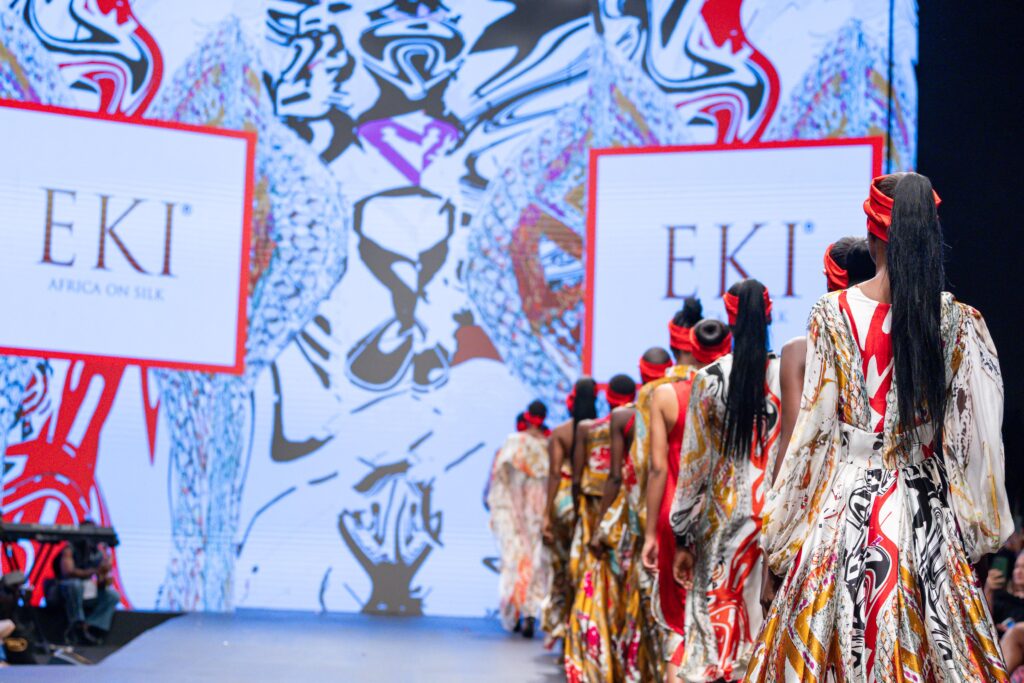
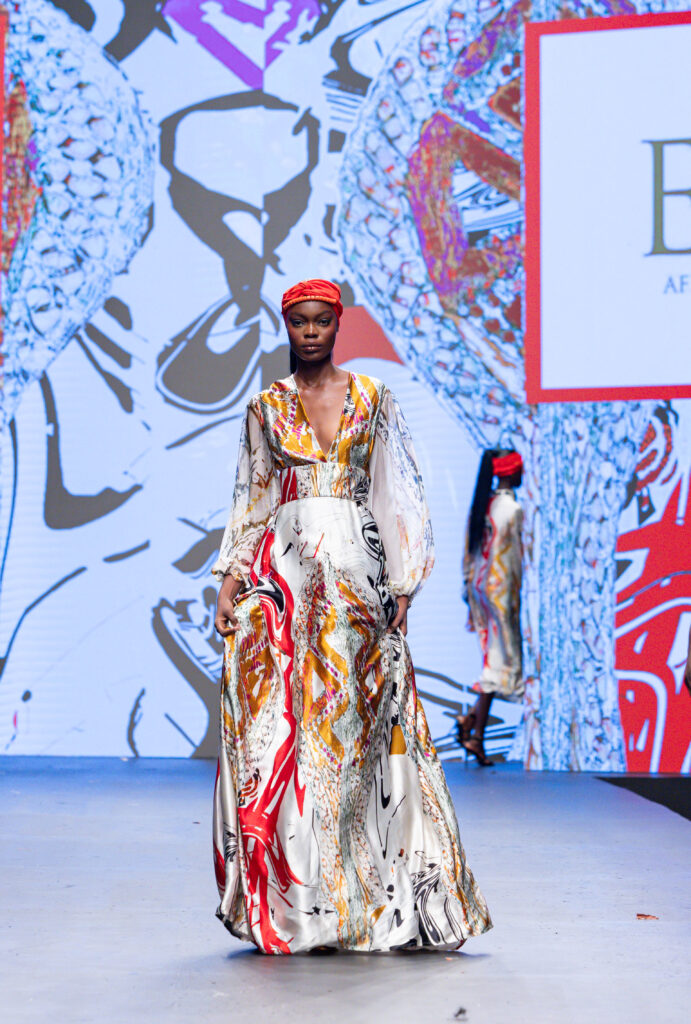
Hazel Eki: My process is very personal. I interpret cultural references and present them in an abstract form. Someone can wear a piece without knowing its meaning, but if you look closely, you might notice a Benin sword printed on each side.
The sword plays a role in royal ceremonies within Benin culture. I selected colours traditionally associated with Benin, red and white, and added gold to reflect royalty and ceremonial symbolism. While Benin culture often features coral beadwork, I chose not to use actual beads. Instead, I translated those elements into silk prints.
My goal is to take something historic and make it contemporary. The silhouettes are loose and fluid, allowing the fabric to move freely. As the wearer moves, the silk comes alive. The story unfolds through motion. That sense of movement and storytelling is what I wanted to bring into this collection.
FAB: You have always done this remarkably well. When I look at your collections, even on the runway, there is often a burst of orange or fuchsia in your pieces. You touched on this briefly earlier.
Hazel Eki: This collection did not feature as much of that. It leaned more toward red. I consciously left orange out this time. As much as I love fusion and orange is usually my signature, this collection needed to stay true to Edo culture. Red is the principal colour, and it is very dominant. That is why it had to be red. There is a slight hint of fuchsia within the orange tones, but red remains the most prominent colour.
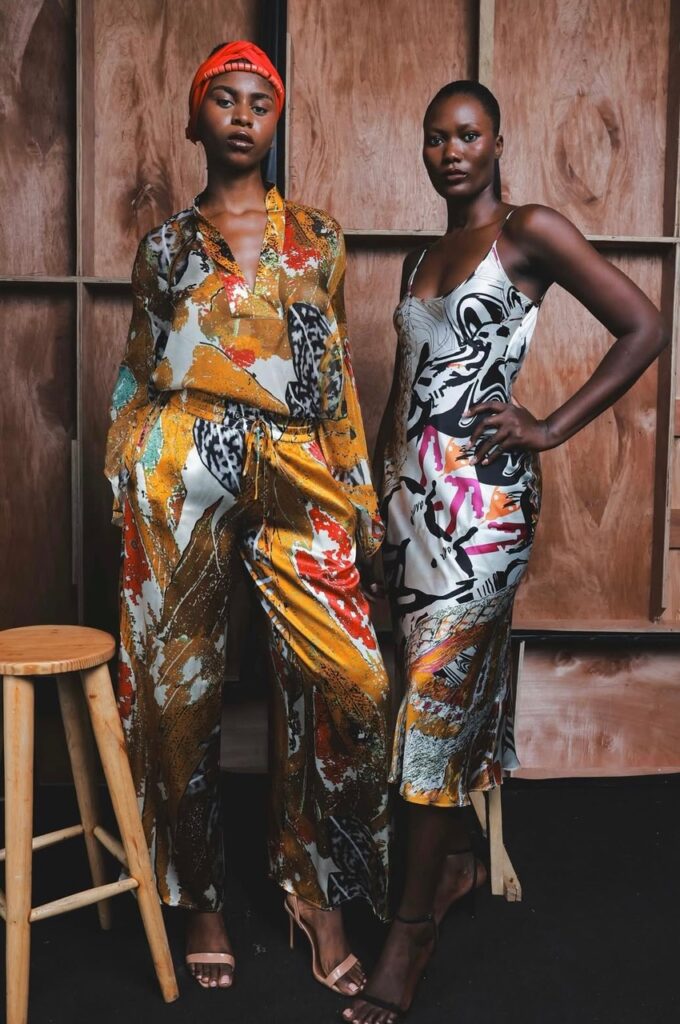
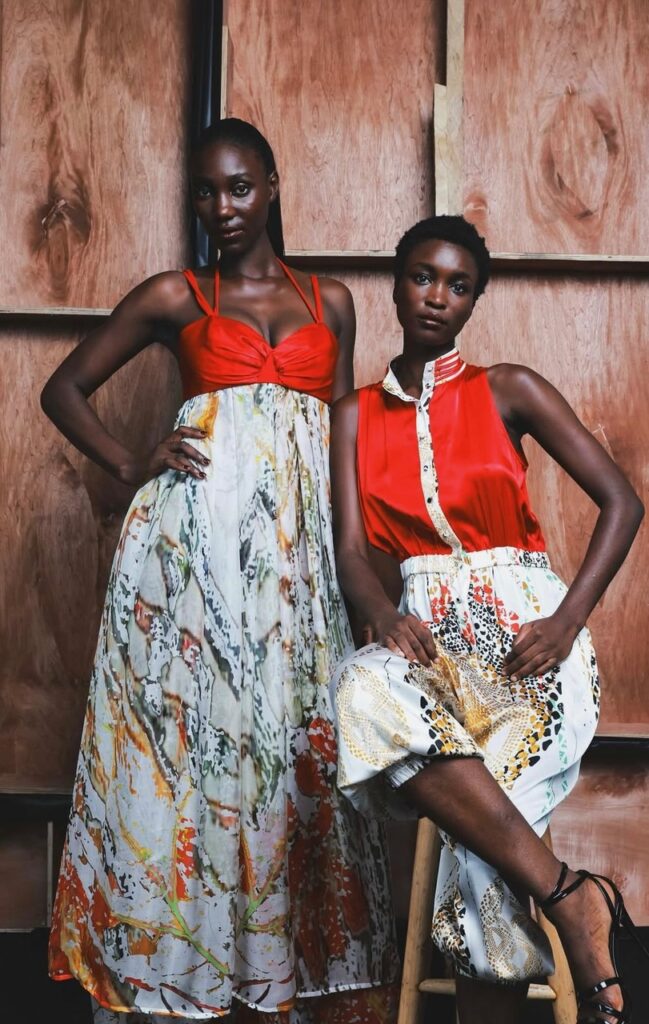
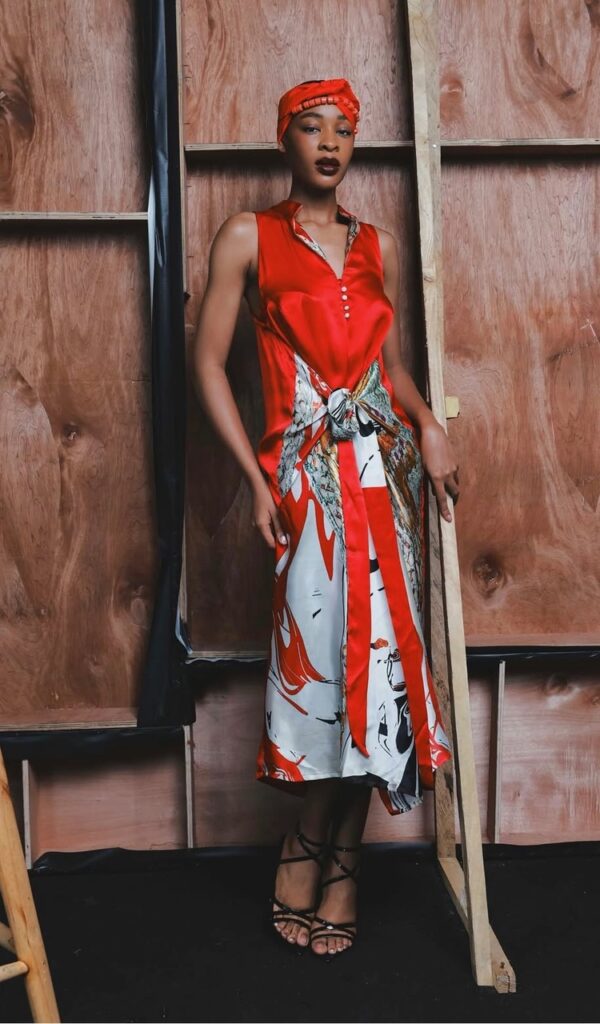
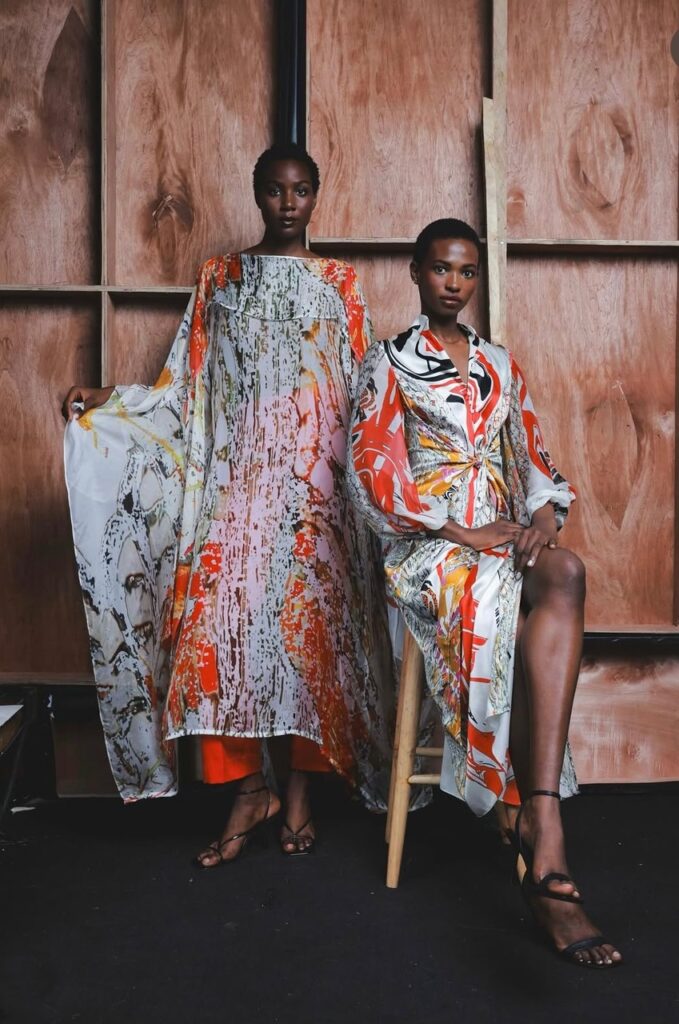
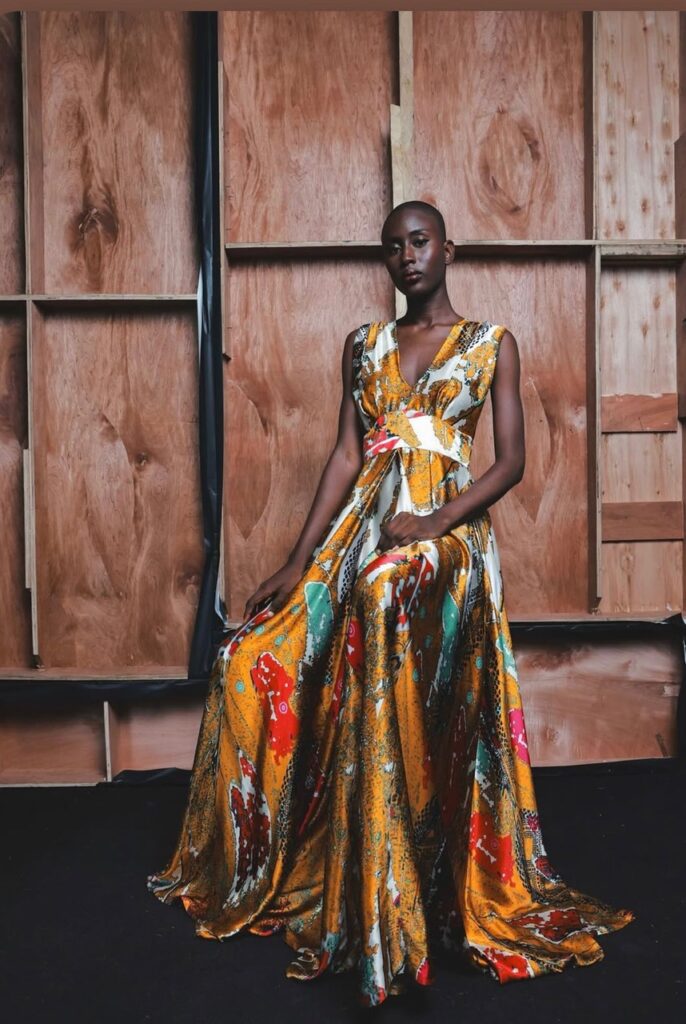
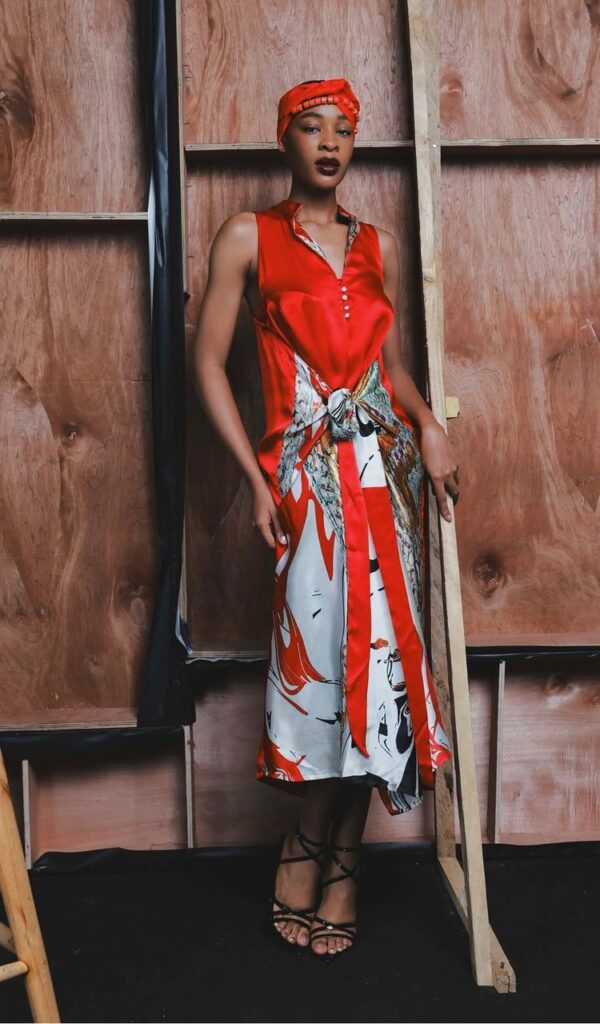
Photo Credit: Adedamola Odetara
FAB: How did that signature colour become part of the brand’s DNA?
Hazel Eki: I think it comes from earthy tones. Burnt orange reminds me of sunsets. When I think of Africa, I think of orange, the sand, and the atmosphere. There is something very warm and grounded about it. Pink is simply a colour I love. Orange and pink have always been one of my favourite contrasts, so I naturally brought that into the brand. But at its core, orange represents African soil to me.
FAB: You use digital printing to reduce water and ink consumption. Can you talk about that choice and how it shapes both creativity and conscience?
Hazel Eki: Sustainability is part of Hazel Eki’s DNA. The studios I work with reflect that mindset. One of my London studios operates as a no-waste studio. Nothing gets thrown away. We keep remnants and repurpose them into scrunchies, pillow fillers, or other items. That ethos of not discarding materials guides everything we do.
We use natural fabrics, which are biodegradable, and I consider my work to be slow fashion. That philosophy runs through every part of the process. Our runway collections are intentionally small to reduce excess. We also focus heavily on cutting techniques to avoid fabric waste.
Digital printing plays a key role as well. It uses significantly less water than traditional printing methods. Every decision is about minimising impact across the production chain. Sustainability also extends beyond the studio; it’s a lifestyle. I walk instead of driving, I use tote bags, and I avoid plastic. It is not just a design choice. It is a lifestyle and a mindset that feeds directly into the collections.
FAB: You worked in banking before fashion. Looking back, what business lessons from that world have helped you most as a creative entrepreneur?
Hazel Eki: I did not attend fashion school, so I came into fashion with a corporate mindset. That gave me a different perspective. I do not follow trends, and I tend to be very organised, which is not always common in creative spaces. My time in the corporate world taught me structure, and I carried that structure into my creative practice.
Because I did not learn fashion through formal schooling, I never followed prescribed methods for finding inspiration. I approached everything intuitively. I created from the heart, and it felt natural. That difference sets me apart. I would say the biggest lessons I brought with me are structure, discipline, timeliness, and the ability to view creativity through a different lens.
FAB: Starting your brand as a self-funded project must have been both exciting and terrifying. What was the turning point when you realised this was more than a hobby and could become a global brand?
Hazel Eki: For a long time, I did not consider myself as a fashion designer because my main focus was prints but over time, I realised that fashion has many entry points. You can be a fashion designer through prints and collaborate with a team for the rest. Accepting that took time.
The real turning point was gaining credibility through Lagos Fashion Week. This platform gave me validation. It showed me that I could stand alongside other designers and be seen as legitimate. That credibility made me believe this could work as a business.
After that, many things followed. We stocked at Selfridges. I met Prince Charles at the time. I remember thinking, is this really my brand? Those moments confirmed that I belonged in those spaces. They made me fully embrace my identity as a designer.
FAB: You also touched on an important point earlier. Even for people who have gone to fashion school, they do not have to limit themselves to being tailors. They could become business managers or take on other roles within the industry.
Hazel Eki: Fashion has many different elements, and no one can master all of them. Very few people do everything. It took me time to accept that I could call myself a designer.
FAB: Building on that, coming from banking and starting your brand as a self-funded project, what was the hardest conversation you had about that shift, either with yourself or with someone close to you?
Hazel Eki: At the time, the industry was not really established. To be fair, I did not completely quit banking. I was still doing it alongside fashion. The hardest conversation was with myself. I kept asking, Are you mad? Why are you doing this?
But when I immersed myself in design, I felt genuine joy. It never felt like work. I could spend hours creating without noticing the time. Life is short, and even though I earned less than I did in banking, I was happy to take that step back to do something I truly loved. I was my biggest critic. The people around me supported me, but the real challenge was quieting that inner critical voice.
FAB: Shifting gears, as a designer operating across continents, what are the biggest challenges of running a borderless African brand?
Hazel Eki: There are many challenges. Finance is one. Publicity is another. When I am in Nigeria, networking happens naturally. You are visible, you attend events, and you meet people. When I return to the UK, I am a mom first. I do not get to go out as much, and I miss out on networking opportunities.
That has been a challenge for me. My children are getting older, so I know that will change with time. In the UK especially, networking plays a huge role in collaboration and growth. Thankfully, social media has made it easier to stay connected. You do not always have to be physically present. That has helped bridge some of the gap.
FAB: You mentioned losing momentum when you return to the UK because of motherhood, which is beautiful in itself. Have you ever considered moving to Nigeria?
Hazel Eki: I would love to. For me, my children need to be settled first. But I truly love it here. I have been in and out, and Lagos remains my favourite city in the world. I have travelled extensively, but nothing compares to Lagos. It is the energy, the people, the vibe.
FAB: You have also spoken about limited networking opportunities abroad. What kind of cultural exchange would you like to see more of between African designers and global institutions?
Hazel Eki: I would love to see more collaborations. Western designers working with African designers. Artists wearing African prints in Hollywood films and styling African brands in global productions. When influential figures wear African designers, it places those brands on the global stage.
That kind of visibility matters. It opens doors and shifts perception. More collaboration like that is what I hope to see.
FAB: How do you view collaboration among African creatives themselves? Someone once said it is easier to ship something to London than to send it to Uganda.
Hazel Eki: There is definitely work to be done there. That challenge ties directly into collaboration within Africa. There are so many ways creatives can work together. Installations in galleries, fashion intersecting with visual art, shared platforms. The industry is still very young. Because of that, and because we have seen the mistakes made in the West, we have the opportunity to do things differently.
We are sustainable by default. We do not rely heavily on wholesale models or mass retail. Many pieces are made to measure, which reduces excess and waste. The youth of the industry gives us power to shape it intentionally. That is exciting. It is encouraging to see policymakers beginning to take fashion seriously. When the Lagos State governor speaks about fashion, it signals progress. We are moving in the right direction.
FAB: Lagos is positioning itself strongly around tourism and the arts at the moment.
Hazel Eki: Beyond Detty December, we still have a lot of work to do. Nigeria has so much to offer, but infrastructure remains a major barrier. We are excellent at hosting parties in December, but tourism should go beyond that.
There are incredible places outside Lagos that deserve attention. Poor roads and limited infrastructure make access difficult. Places like Abraka, with its turquoise blue water, are stunning. Tourism needs real investment. We have rich landscapes, culture, and history. We offer more than nightlife.
Music has already taken off globally. Now arts and fashion need to rise together as a collective. One step at a time.
FAB: You work with silk. What draws you to that fabric in particular, and what are both the challenges and the rewards of working with silk?
Hazel Eki: My choice of silk goes back to the very beginning of the brand. When I looked at the fabrics commonly used here, I saw a lot of cotton and lace. I wanted to do something different. I did not want to use the same materials everyone else was using, so that curiosity initially pulled me toward silk.
I already owned a few silk pieces and loved how they felt. Then I began to understand the fabric better. Silk is breathable, biodegradable, and the colours appear incredibly vibrant on it. It is also luxurious. We have such beautiful prints in Africa, and I kept asking myself why those prints should not live on silk. That idea became the driving force behind my work.
The biggest challenge with silk is cost. People often ask why I do not produce larger collections, and the answer is simple. Silk is expensive. You pay more upfront, but you get a piece that can last for years. With proper care and dry cleaning, you can wear it repeatedly. I would rather invest in one or two pieces that last than buy many items, discard them, and keep replacing them.
Another challenge is production. Silk is difficult to work with because it moves a lot. It drapes beautifully, but it is not easy to sew. Many studios avoid it for that reason. I would love to produce in Nigeria. I know silk is being worked with here now, but for quality control, I would need to be physically present. That is something I hope to explore in the future.
FAB: In a past interview, you advised young designers not to overstretch themselves financially, which is such practical wisdom.
Hazel Eki: I spent far too much money. Far too much.
FAB: Beyond that, what other truth about the fashion business do you wish you had known at the beginning?
Hazel Eki: If I could start again, I would not launch with a full collection. I would focus on one or two signature pieces and perfect them. I would make sure the fit, style, and execution were right, then build from there.
Look at brands like Diane von Furstenberg. She became known for the wrap dress. It was the same silhouette presented in different prints, rather than a wide collection of unrelated styles. It takes time to refine a piece and get it right. When people know a design fits well and looks great, they come back, even if it is the same style in a new print.
You do not need a full collection when you are just starting out. You also do not need to be on the runway immediately, even though many people feel that pressure. With social media, you can build a brand online. You can become known for kaftans, wrap dresses, or one signature piece, then grow from there. Spending heavily on a full collection before knowing whether it will sell is a mistake I wish I had avoided.
FAB: When we think of William Shakespeare, Whitney Houston, or Michael Jackson, there is a clear legacy attached to their names. 200 years from now, when people think of you, what do you hope history will say?
Hazel Eki: I would love to be known as the woman who brought African prints onto silk and introduced that idea to the world. I want to be remembered for how African stories were told through silk. That is my entire narrative, and that is what I would like to leave behind.
FAB: Beautiful. So what is next for you? Are there any dream collaborations, exhibitions, or destinations on your creative radar? We now have bamboo silk as well.
Hazel Eki: I would love to explore that. I have already started learning about how it is made and the different types of silk available. On a bigger scale, my dream is to bring silk production to Africa.
I have been researching where mulberry plants could grow on the continent, since mulberry silk depends on silkworms that feed on those plants. It is a complex process, but it excites me. Right now, I source silk from China because of its long history of silk production. Still, my dream is to eventually move that entire process to Africa. It would complete the story.
In the more immediate future, my focus is on continuing to build Hazel Eki Silk. I want more people to wear it, talk about it, and connect with it. There are moments when I feel exhausted and wonder if I can continue, but something always pulls me back. Whether it is faith or the universe, something reminds me to keep going.
For now, the goal is simple – keep the momentum, keep the conversation going, and keep creating FOMO (Fear of missing out) around Hazel Eki Silk pieces.