

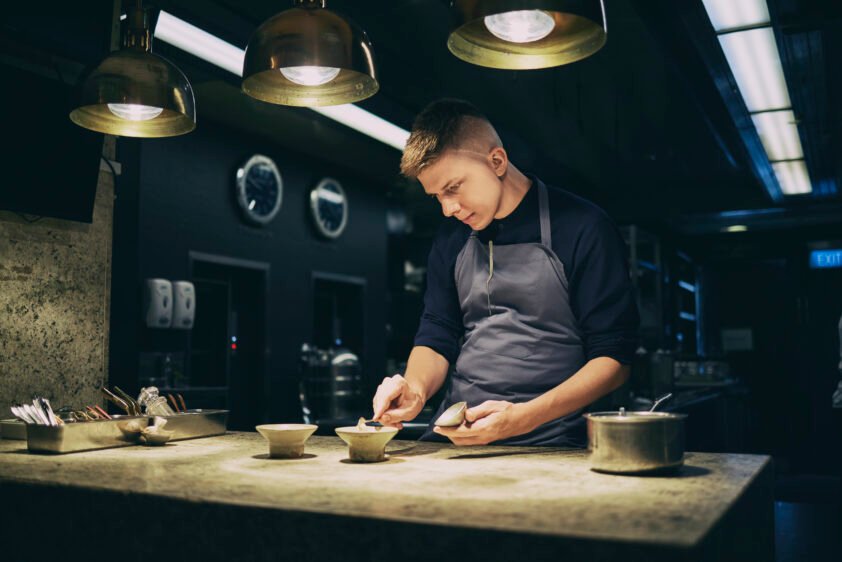
Chef Martin Öfner is an Austrian fine dining chef known for his work at Zén Singapore and leading Michelin star kitchens across Europe, where fermentation, Nordic philosophy, and ingredient driven cooking define his culinary identity. Before the stars. Before the awards. Before the precision that characterises three-Michelin-star restaurants. There was rhythm. Snow-covered Tyrolean winters. A grandmother who cooked with passion, not ambition. Chef Martin Öfner operates in some of the most precise culinary settings in the world, from Geranium to De Librije and from Frantzén to Zén in Singapore, where the Nordic notion of restraint, the French concept of discipline, and the Japanese ideal of purity come together with almost surgical precision.
In an era where fine dining threatens to become a circus, Öfner embodies a different kind of authority – one that is not based on excess but on listening. To ingredients. To microorganisms. To rhythm. This conversation follows the path of a chef who thinks that precision without soul is meaningless and that true greatness is not about mastery but about collaboration with nature itself.
FAB: You grew up in Tyrol, surrounded by nature, seasonality, and strong food traditions. What early memories still shape the way you cook today?
Martin Öfner: I wouldn’t try to compare those two worlds too closely – my childhood and the life I live now are just too far apart for that. But I loved my upbringing, and if I had to pick values I still carry from it, probably humility, respect, and an instinctive sense of rhythm and season.
FAB: You’ve spoken about your grandmother’s nose-to-tail cooking influencing you at a young age. How did those domestic experiences translate into a career in some of the world’s most precise kitchens?
Martin Öfner: I think a lot of kids are influenced by their grandmothers – but not so much because of technique or skill. It’s because the food was made with love, and you could taste it.
That’s what stuck with me. Cooking personally, cooking with intention, and reminding the team to stay generous and passionate whenever they touch the food. Precision is important, of course – but without heart, it’s just cold perfection. And there’s already plenty of that.
FAB: Austria was where you began, but you chose early on to leave. What did leaving home teach you about discipline, humility, and ambition?
Martin Öfner: First of all, it forced me to grow up quickly and take responsibility for my own life. That early maturity helped me focus on what I truly wanted to achieve – which, at that point, was very clear: to cook for the best of the best. I had a strong sense of ambition and, honestly, quite an iron will to make it happen.
FAB: Your time at Restaurant Rosengarten introduced you to fermentation and preservation seriously. When did you realise these techniques would become central to your identity?
Martin Öfner: I really enjoyed Chef Taxacher’s cooking and his approach – classical French foundations, Alpine influences, nature-driven cuisine, and a subtle Nordic touch brought in by Thomas Piplitz back then.
It was also when vegetables started appearing in desserts and boundaries for plated pastry were being pushed. Looking back, I realise that if I had stayed in Austria, I would have naturally followed that rhythm. From a quality and integrity perspective, but also because it’s fun to cook that way.
FAB: Copenhagen and Geranium marked a shift – from mountains to sea, from Alpine thinking to New Nordic philosophy. How did that change your relationship with ingredients and restraint?
Martin Öfner: It didn’t really change my relationship with ingredients, but it made the bond stronger. Nordic elements became more pronounced with simplicity, which was refreshing.
At Rosengarten, a plate could have eighteen components. At Geranium, maybe three or four. And everyone who worked there remembers the massive work behind that simplicity. It was tough, but it was also a lot of fun. You could work like a dog and still have fun like one at the same time.
FAB: At De Librije, you were immersed first in pastry, then fermentation. How did that reshape your understanding of how far an ingredient can be pushed?
Martin Öfner: De Librije felt like putting a magnifying glass on nature. Of all the places I worked, what I learned most from Jonnie, the head chef, was the way he connected to ingredients and to nature itself.
It wasn’t just about understanding produce; it was as if he genuinely spoke with it. He would get excited like a child when handling ingredients, and that energy was contagious. Working in pastry and then in fermentation under that philosophy reshaped my understanding of how far an ingredient can be pushed, not by forcing it but by listening to it.
Looking back, he showed us every day that nature is the true artist, and our role is to collaborate with it and highlight its potential through preparation. That idea still captivates me today.
So, cheers to you, Jonnie.
FAB: Your move to Frantzén feels pivotal, both professionally and personally. What made that kitchen a place you could truly grow?
Martin Öfner: When I first arrived, the food was laser-sharp and incredibly expressive. Everything clicked – team, cuisine, service, rhythm of work. I had worked extremely hard for years, but here it felt different. The food felt from another planet, and chefs weren’t burning out one after another. That balance made it a place I could really commit to.
FAB: Spending four years at a three-Michelin-star level requires endurance as much as talent. What did that environment teach you about leadership, pressure, and consistency?
Martin Öfner: Pretty much everything you can imagine about those three words and a bit more on top.
FAB: Zén became Björn Frantzén’s first international restaurant, and later your own next chapter. What did Singapore unlock for you culturally and creatively?
Martin Öfner: With Singapore, it felt almost like a walk through the park: clear structure, great infrastructure, English everywhere, food safety, and stability. And that stability was key professionally. It allowed me to focus and really engage at my job: structuring a diverse team, writing menus, creating dishes, working with suppliers 24/7, and building industry relationships, all in a way that encouraged creativity.
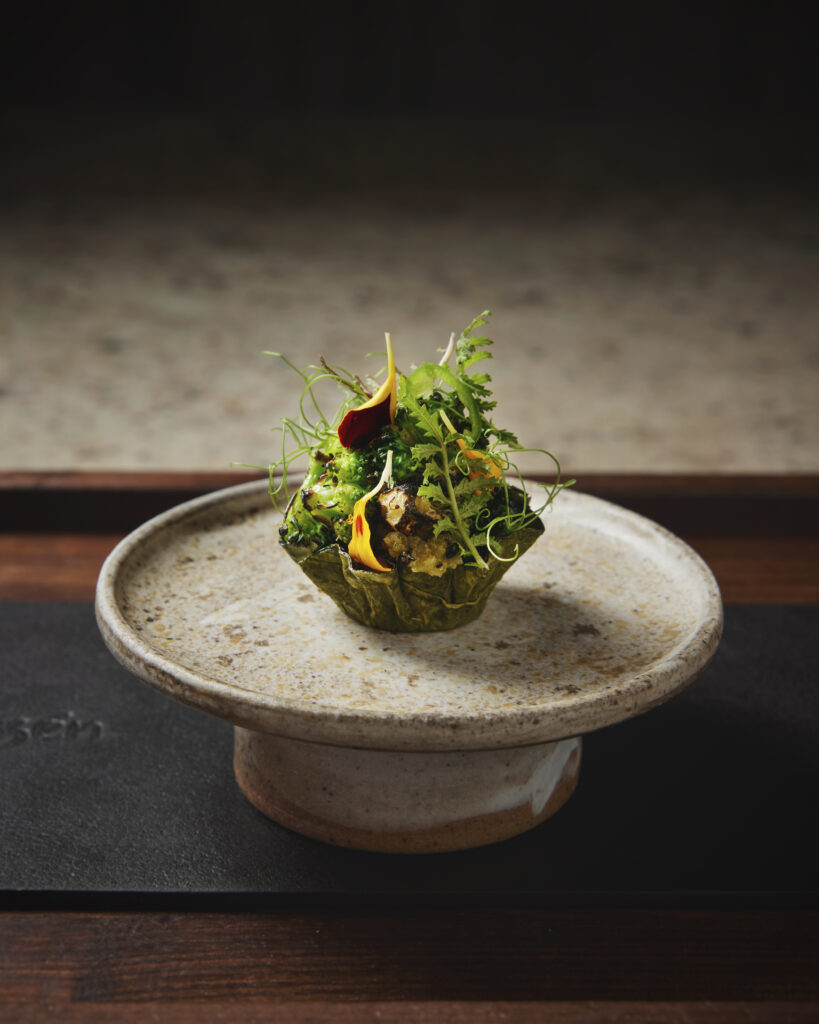
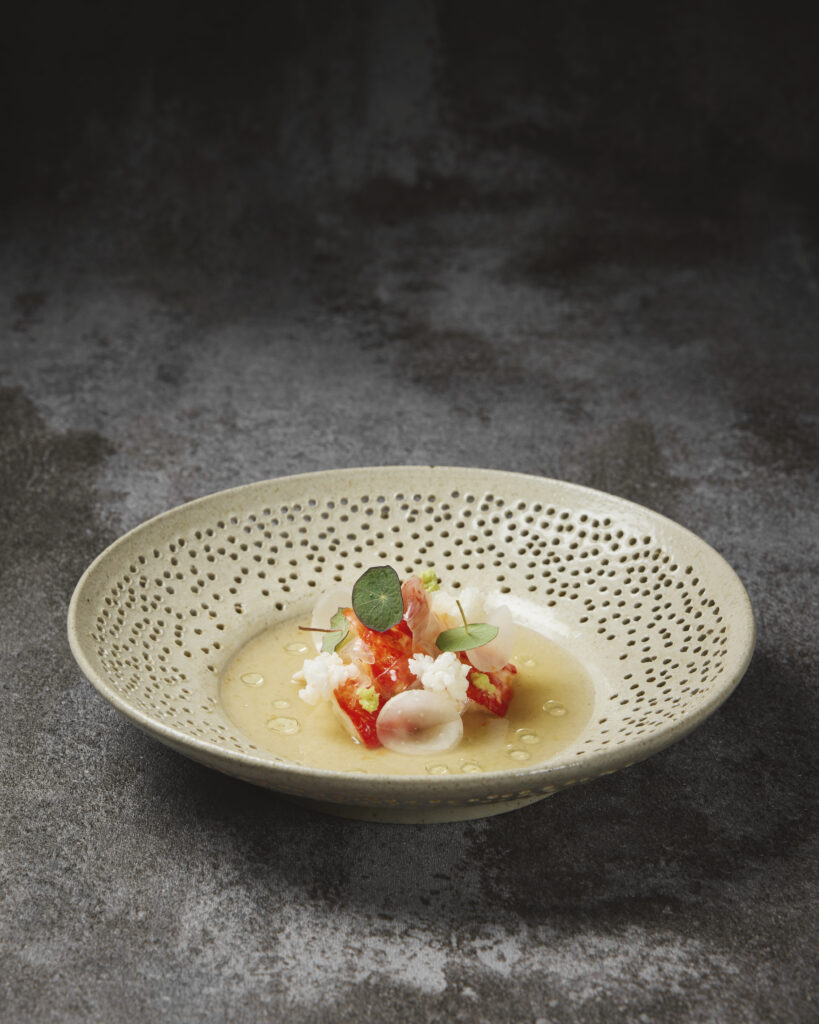
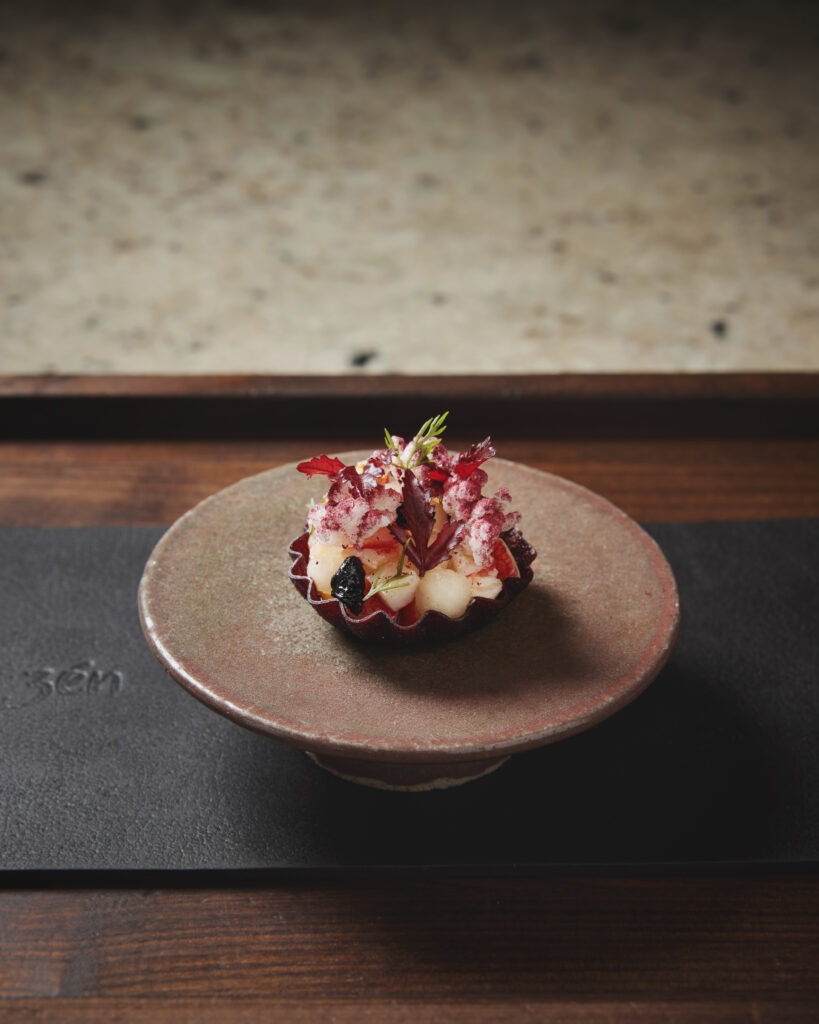
Martin Öfner: Think of it like creating your own language. You already speak some words from different languages, and you build vocabulary, practice it, and live with it. Over time, you get confident enough to combine them, and eventually, you create your own language. It’s actually quite fun.
FAB: Fermentation plays a key role at Zén, in both the kitchen and beverage programme. Why is it such a powerful tool for expressing harmony and depth?
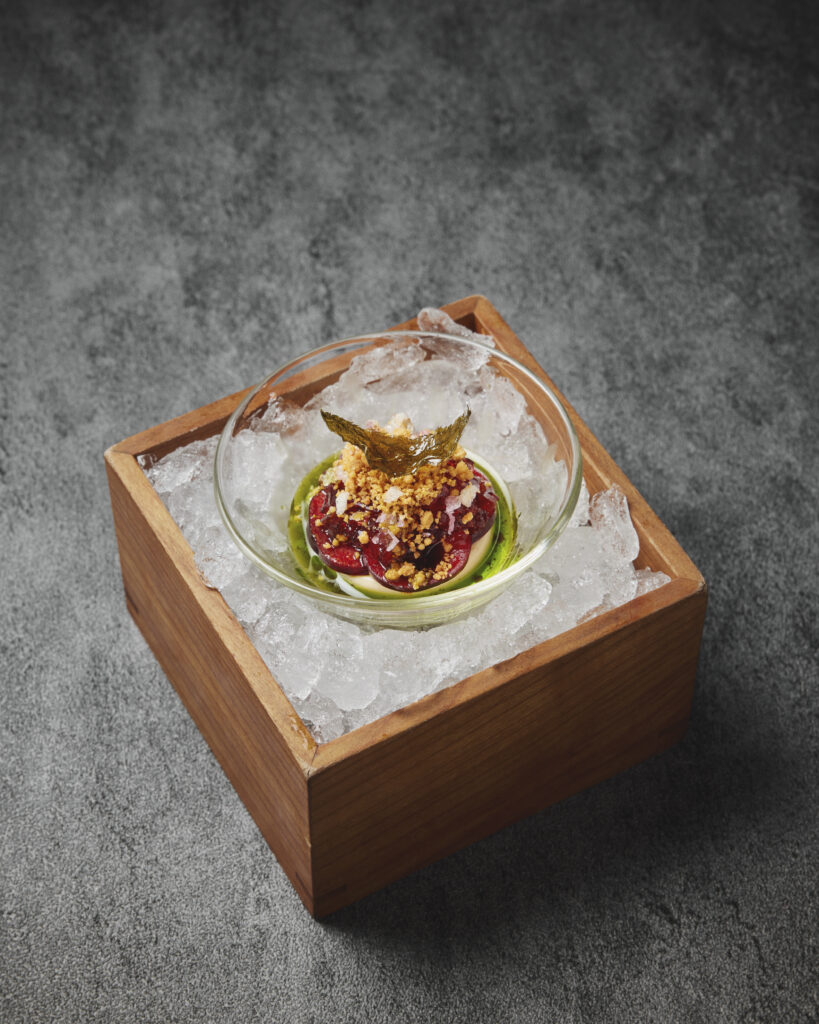
Martin Öfner: I think it’s because fermentation has always been there. Long before it became a talking point, it was already shaping how we eat and drink – from winemaking and brewing to preserving foods for centuries. It’s all driven by microorganisms, and they’re everywhere. So for us, it’s not really about fermentation as a concept, but about understanding and working with microorganisms as a whole. They were there at the beginning, and they’ll still be there long after we’re gone. At Zén, fermentation isn’t used as a headline. It’s a natural tool we use to build harmony, depth, and complexity without heaviness. When it’s done right, it just makes things taste complete.
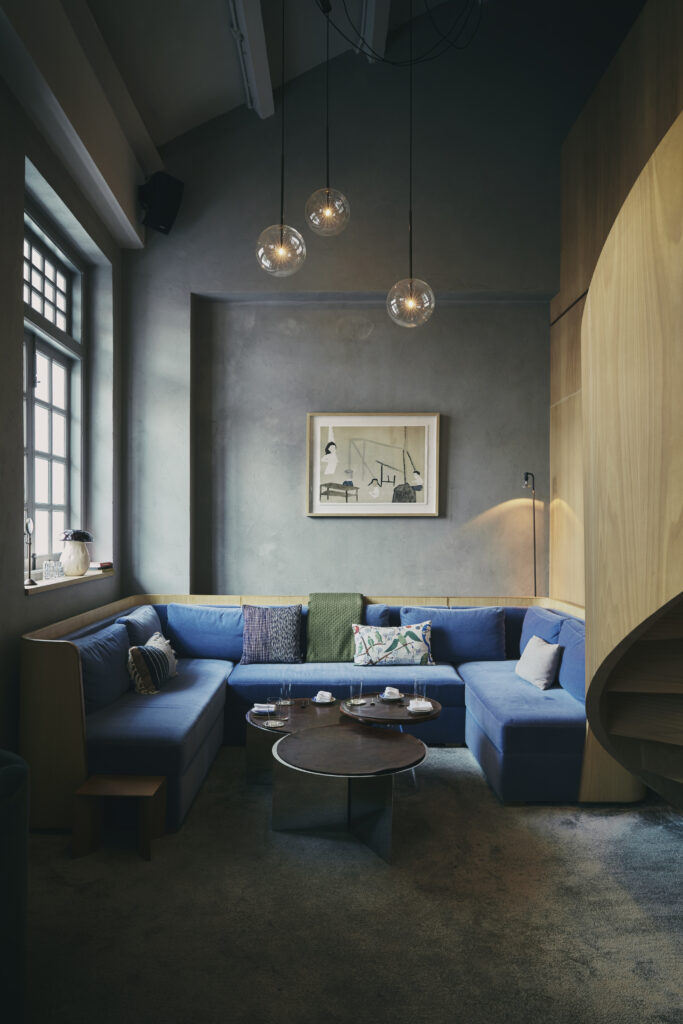
FAB: The Zén experience is structured like entering a home — kitchen, dining room, living room. How important is emotional storytelling in fine dining today?
Martin Öfner: It’s important – but only if it’s honest. Storytelling works best when it’s lived, not constructed. For us, the story comes naturally from how we work: spending time in the fields, visiting farmers, and sharing meals and drinks with the people behind the ingredients. Those experiences shape the food without forcing anything. If the emotion is real, guests will feel it – no explanation required.