



The world has long admired Ghana’s Kente cloth, a bold tapestry of silk and cotton strips that is much more than just a fabric. It is a philosophy, a history book, and a statement of profound cultural pride woven into every thread. Yet, for decades, this cultural treasure has faced an onslaught of mass-produced, factory-printed imitations. These fakes flood global markets, diluting its sacred meaning and, more critically, stealing the livelihood and recognition from the very artisans whose families have guarded its traditional secrets for centuries.
Now, a historic shift has occurred. Ghana has officially been granted Geographical Indication (GI) status for Kente, a powerful declaration that forever links this magnificent textile to its authentic origins. This momentous decision means that, just as Champagne must come from the Champagne region of France and Parmigiano-Reggiano cheese from a specific area in Italy, only cloth handwoven in certified Ghanaian communities can legally be marketed and sold as “Kente.” This is not merely a bureaucratic process; it is a profound act of cultural, economic, and intellectual justice.
The Threads of Royalty and History
To truly grasp the significance of this move, one must first appreciate the spirit of Kente itself. The cloth’s origins are deeply rooted in the Ashanti and Ewe traditions of Ghana, with the most famous center being Bonwire in the Ashanti Region. Legend tells the enchanting tale of two hunters, Kurugu and Ameyaw, who were so captivated by the intricate web of a spider, Anansi, that they sought to replicate its beauty with woven thread. They presented their creation to the Asantehene, the Ashanti King, who instantly decreed it the “cloth of kings.”
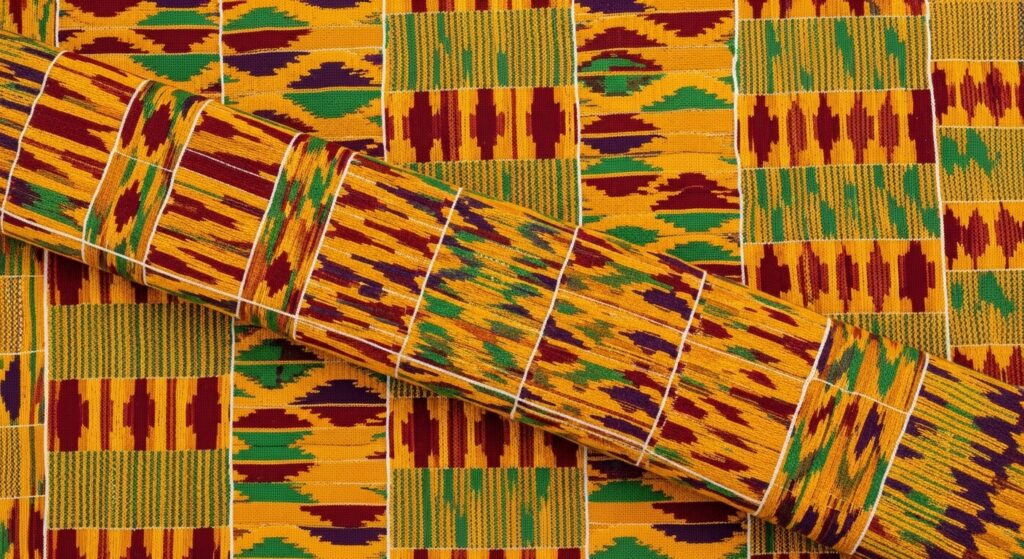
Kente, which derives its name from kɛntɛn, meaning “basket” in the Akan language, was traditionally reserved for royalty and important ceremonial occasions. Every color and every pattern is a carefully chosen visual proverb, an ethical principle, or a historical record.
- Gold symbolizes royalty, wealth, and spiritual purity.
- Green represents vegetation, growth, and spiritual renewal.
- Black signifies maturation, spiritual energy, and the spirits of ancestors.
When a Ghanaian adorns themselves with Kente, they are literally wearing history, philosophy, and a profound connection to their heritage. It is a garment of deep spiritual and social weight, far beyond its material value.
The Day Ghana Said ‘No More’
For too long, the narrative of Kente has been hijacked. The global fashion world, a $1.8 trillion market, has readily borrowed, often without permission or payment, from this rich tradition. Fast fashion outlets and luxury brands alike have produced cheap, digitally-printed knockoffs, stripping the cloth of its soul and undermining the tireless work of master weavers. The impact on Ghanaian artisans has been devastating. They face stiff, unfair competition from cheap imports, leading to decreased profits and the potential loss of intergenerational weaving knowledge.
The granting of GI status, formally announced in collaboration with the World Intellectual Property Organization (WIPO), is the legal shield that changes everything. It is a powerful affirmation of Ghana’s sovereign ownership over its traditional cultural expressions. This legal protection has been a long time coming, building upon earlier frameworks like the Copyright Act of 2005, which recognized Kente and Adinkra designs as protected expressions of Ghanaian folklore.
Empowering the Hands that Weave
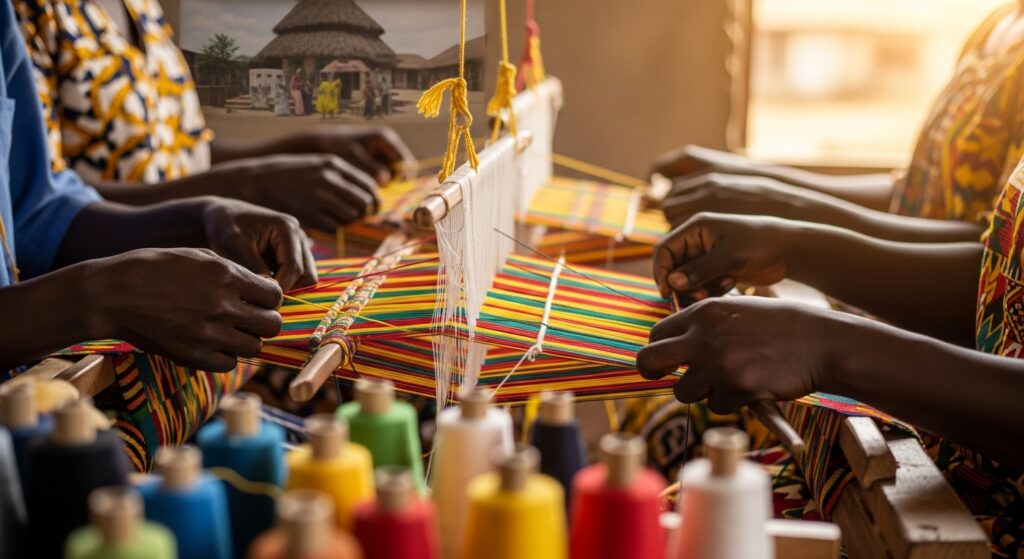
What does this legal victory mean in practical, human terms? For the weaving communities—places like Bonwire, Adanwomase, Kpetoe, and Agbozume—it means a direct pathway to greater economic prosperity.
- Fighting the Fakes: The GI status acts as a global legal weapon against the mass-produced imitations. Consumers seeking genuine Kente now have a globally recognized standard of authenticity.
- Increased Value: Authentic, certified Kente will command a higher price point on the international stage. This directly translates to better income protection for the artisans who adhere to the strict quality and traditional standards.
- Global Market Access: The certification opens doors for registered Ghanaian weavers to connect directly with international buyers, fashion houses, and luxury markets, reducing reliance on exploitative middlemen. This is about transforming Kente into a premier heritage industry, a key driver of export revenue and sustainable local economies.
This is a win for artisans who have previously struggled to compete with the sheer volume and low cost of factory-made prints. It allows the financial benefits to flow back to the source, to the families who have perfected this craft over 400 years.
From Appropriation to Appreciation
The conversation around Kente has often been tangled up with the concept of cultural appropriation. The use of Kente-inspired patterns by Western politicians or major European fashion houses, such as Louis Vuitton’s use of Kente-like patterns in a 2021 collection, ignited fierce debates about the difference between appreciation and appropriation.
The GI status provides a crucial framework to navigate this sensitive territory:
- Appreciation: Wearing authentic, handwoven Kente, such as a Kente stole at a graduation ceremony, is generally seen as a sign of appreciation and connection to the African diaspora and its heritage.
- Appropriation: Using the Kente name or its distinct patterns for commercial, profitable gain without permission or partnership with the Ghanaian custodians is what constitutes cultural appropriation.
Ghana’s move does not shut the door on the world; it opens it with a clear set of rules. International brands are now encouraged to partner legally with registered Ghanaian producers. This licensing system is the practical and ethical solution, allowing for global collaboration that respects the source, provides fair compensation, and promotes authentic craftsmanship. This signals a shift toward a model of “cultural finance,” where heritage is both preserved and made profitable for its rightful owners.
Recommended For You
How the Government Must Build on This Momentum
Ghana has secured Geographical Indication (GI) status for Kente cloth, a major step in protecting this cultural asset. However, the true value of the GI depends on effective follow-through. Here is an overview of the essential next steps for Ghana to support local weavers, promote authenticity, and enforce the Kente GI in international markets, along with the challenges that must be addressed.
1. Operational & Institutional Next Steps
The immediate priority is to build the operational framework that translates the legal GI status into market reality.
- Establish a Digital Tracking and Traceability System:
- Implement QR-Coded Labels: The core of the new system is the use of QR-coded authenticity labels on every piece of genuine Kente cloth. This allows consumers and customs officials worldwide to verify the product’s origin and weaver at the point of purchase, directly combating counterfeit products.
- Create a Public Registry: A public, up-to-date registry of approved weavers and certified weaving communities (like Bonwire, Adanwomase, Agotime Kpetoe, and Agbozume) must be maintained to provide transparency and legal clarity for international buyers.
- Enforce Quality Standards and Licensing:
- Book of Specifications and Code of Practice: The “Book of Specifications” and “Code of Practice” (which define the required quality and manufacturing techniques) must be rigorously applied. Only licensed artisans who meet these national standards can market their cloth as authentic Kente.
- Training and Inspection: Implement a system of regular training and inspections to support weavers in compliance, maintain high quality, and ensure the credibility of the GI mark.
- Set up Legal & Market Surveillance Bodies:
- Designate specific agencies (GHIPO, Customs, etc.) to actively monitor both domestic and international markets (including e-commerce platforms) for unauthorized use of the “Kente” name.
- Establish a simple licensing system that allows global fashion brands to legally partner with Ghanaian Kente producers, ensuring that profits flow back to the origin communities.
2. International Market Promotion & Development
To maximize the economic benefits, Ghana must actively promote the new certified product on the global stage.
- Global E-commerce Integration: Actively plug authentic Kente into global e-commerce channels, allowing direct orders from certified weavers to international buyers.
- Branding and Diaspora Collaboration: Develop a verified “Made in Ghana” seal or campaign that global shoppers can trust. Collaborate with African diaspora designers to make authentic Kente a centerpiece of mainstream luxury fashion.
- Advocacy and Trade: Position Kente under the African Continental Free Trade Area (AfCFTA) as a flagship African GI to open up new continental trade opportunities and ensure its protection in trade agreements.
3. Key Challenges to International Enforcement
While the GI status provides a strong legal basis, enforcing it against infringement in foreign markets presents significant hurdles.
| Challenge Category | Description | GI Impact & Proposed Mitigation |
| Institutional Weakness | Lack of Capacity and Resources: African developing countries often face weak institutional structures, lack of capacity, and insufficient resources for the sustained management and promotion of GIs internationally. | Mitigation: Secure long-term WIPO/international partnerships and funding to build the capacity of the Ghana Industrial Property Office (GHIPO) and customs agencies for continuous market surveillance and legal defense. |
| Co-existence with Trademarks | Prior Rights: The GI may face challenges in international jurisdictions where the name or similar names are already registered as a trademark by a third party. | Mitigation: Proactive legal monitoring and litigation to resolve conflicts with pre-existing trademarks in key export markets. |
| Consumer Information Asymmetry | Counterfeiting: The ease of producing and selling cheaper mass-produced imitations and factory-printed fakes makes it difficult for consumers abroad to distinguish genuine Kente. | Mitigation: The QR-code and digital traceability system is the direct countermeasure, providing an immediate, verifiable proof of authenticity for consumers. |
| Legal Divergence | Differences in GI Laws: International protection is complicated because the level and nature of GI protection varies between countries (some may only protect GIs under trademark law). | Mitigation: Register Kente under international systems like the WIPO’s Geneva Act of the Lisbon Agreement and pursue bilateral agreements with major trading partners to ensure robust legal recognition. |