



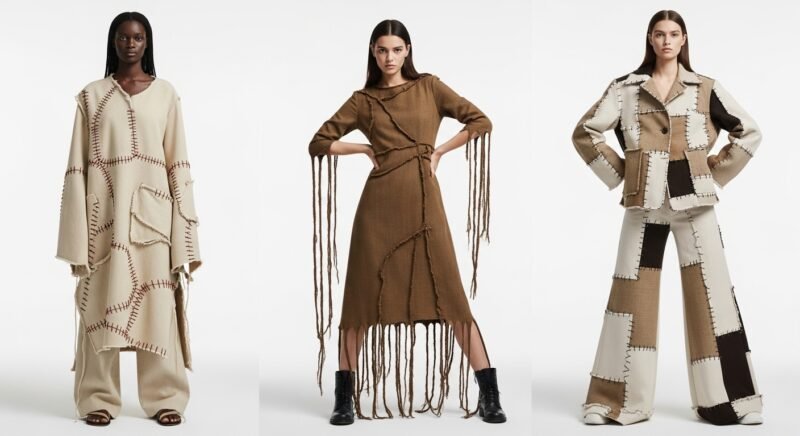
We’ve all seen it. The activist uniform has become predictable. It’s a garment that looks deliberately unfinished, probably beige or earth-toned, often featuring visible patchworking, raw hems, or clumsy hand-stitching. It signals virtue instantly: “I care about the planet, and this is my visual proof.”
This aesthetic, which we can call “Activism-Core,” originated from noble intentions. It was a necessary rebellion against the hyper-polished, disposable perfection of fast fashion. It celebrated repair, rejected waste, and wore its scarcity proudly. However, this visual language has now become so repetitive, so codified, that it has reached a dangerous tipping point: monotony. When the visual language of rebellion becomes a predictable uniform, it ceases to be radical and begins to look like just another trend—and a limiting one at that.
Fashion is fundamentally about desire, novelty, and the articulation of complex identity. If sustainability is to move from a niche movement to the dominant industry standard, it cannot afford to be aesthetically boring. We urgently need designers to move beyond the beige and the patch to create a new visual language for a truly ethical future, one that merges radical ethics with irresistible beauty.
The Pitfalls of Repetitive Virtue Signaling
The current aesthetic of sustainability, dominated by earth tones and the “upcycled aesthetic,” faces three major pitfalls that threaten to stall the broader movement.
1. The Trap of the “Shabby Chic” Ceiling
The visible signs of repair—the exposed seams, the deconstructed look, the raw edges—carry a certain aesthetic baggage. They often communicate scarcity, austerity, or even poverty. While celebrating repair is crucial, elevating the aesthetic of distress can inadvertently make sustainable fashion feel like a sacrifice of luxury and refinement.
The irony is that many of these deliberately “shabby” garments are sold at luxury prices, using the visual markers of frugality to justify a high-end ethical label. This alienates the mass consumer who seeks aspirational, technically polished design. When Activism-Core becomes the only recognized look for sustainability, it creates a ceiling for the movement, limiting its appeal to a specific, already converted, consumer base. We need sustainable fashion that is coveted not despite its ethics, but because it is technically and visually superior.
2. The Homogenization of Innovation
Imagine the incredible, groundbreaking material science happening right now: leather grown from mushrooms, silk spun by yeast, textiles dyed with zero water. These innovations are invisible to the naked eye. Yet, designers often feel compelled to slap a visible patch or a rough stitch onto these technologically advanced garments just to signal their ethical credentials.
This aesthetic dependency masks true innovation. It suggests that sustainability is only valid if it looks like a protest, rather than if it performs better, lasts longer, and integrates perfectly into a circular system. The uniform forces all ethical clothes to look the same, stifling the rich diversity of visual expression that should accompany such a revolutionary shift in production.
3. Exclusion and Class Anxiety
The Activism-Core aesthetic, particularly the emphasis on visible repair, can create an uncomfortable layer of class signaling. Historically, visible repairs were simply a necessity for lower-income people. When wealthy consumers adopt the patched look as a fashionable choice, it can feel like a commodification of austerity or “poverty cosplay.”
This dynamic makes the entire ethical fashion space feel exclusive and judgmental. It suggests that if your clothes are not visibly “sustainable” (i.e., obviously hand-repaired or made from visible scraps), you are not a part of the club. We need a visual language that is inclusive and democratizing, one that celebrates durability and quality across all aesthetic styles, from maximalist glamour to minimalist tailoring.
The New Visual Lexicon: Beauty as the Ultimate Activism
The next frontier of fashion activism must be about making ethical design irresistible by expanding its visual language. True sustainability is not just about reducing harm; it is about maximizing beauty, ingenuity, and longevity.
1. Invisible Ingenuity and Radical Monofiber
The most sustainable designs of the future will not announce their ethics with a protest sign; they will announce them with impeccable structure and lasting quality.
- Design for Eternity: The focus must shift to designing for repair and eventual, seamless disassembly. The aesthetic might look perfectly tailored, sharp, and modern, but its sustainability lies in its monofilament construction (made of only one type of fiber) which guarantees full recyclability, or in the seamless integration of bio-based materials. The activist act is the durability, the invisible guarantee that this garment will not harm the Earth when its life is over.
2. The Return of Rich Color and Sensory Experience
The dominance of beige and gray must end. The rich colors of the world can be achieved using non-toxic, botanical, or closed-loop dyeing processes (like waterless CO2 dyeing). The new visual language should celebrate the vibrant, sensory experience of clothing.
- Imagine a collection of brilliant, saturated hues achieved using only natural indigo or cochineal, dyes that connect the garment not to a factory, but to a botanical history. This moves sustainability from an aesthetic of denial to an aesthetic of natural abundance and artisanal excellence.
3. Technology as the New Hand-Stitch
Instead of relying on visible hand-stitching to signal authenticity, designers should use advanced technology to create new, visually stunning aesthetics that are inherently ethical.
- 3D Printing and Zero-Waste: Utilizing technology like 3D printing allows designers to create complex, bespoke geometries with zero material waste. The aesthetic of a 3D-printed garment is radically future-forward, signaling that the highest ethics are achieved through cutting-edge science, not just nostalgia for the past. This redefines “craft” as mastery over modern tools for maximum efficiency.
The ultimate challenge for the fashion world is this: Can we make a garment so well-designed, so beautiful, and so ethically sound, that no one would ever want to throw it away? That is the real activism. We need to stop equating good intent with rough finish. It is time for sustainability to put its best clothes on.
The Psychological Barrier: Why “Ugly” Doesn’t Sell Virtue
The aesthetic monotony of Activism-Core—that deliberately “ugly,” often distressed, earth-toned look—has created a significant psychological barrier between the consumer and the ethical choice. We cannot ignore the emotional core of fashion: people buy clothes to feel good, to feel aspirational, and to define themselves. When sustainable clothing only offers the visual language of austerity, it fails at this fundamental human requirement.
The Desire Deficit
For most consumers, the first point of interaction with any garment is desire. This is the impulse that makes us click “add to cart” or pull out the wallet. Desire is driven by beauty, aspiration, and the promise of a better self. The current sustainable aesthetic often triggers the opposite: feelings of denial, sacrifice, or even mild shame.
- The “Good Girl” Syndrome: Wearing the uniform of sustainability can feel less like a bold fashion choice and more like a required ethical homework assignment. It’s the sartorial equivalent of eating your vegetables. While that may satisfy the intellect, it rarely fuels the excitement needed for repeat, mass-market consumption.
- Aspiration is Absent: Fashion is inherently linked to social mobility and success. If the most visible ethical choices look inherently unfinished or shabby, they risk being relegated to a moral niche, divorced from the glamour and polish that drives the mainstream. Consumers struggle to reconcile their ethical commitment with their deep-seated need for aspirational design. They ask: Can I be ethical and still look powerful, elegant, or sexy? If the answer, visually, is always “no,” they will choose fast fashion perfection every time.
The Cognitive Burden
The “ugly” aesthetic places an undue cognitive burden on the consumer. They are constantly forced to justify their choice: “Yes, this shirt looks like a patched sack, but it’s ethical.” The sustainability of the garment becomes a constant, necessary excuse for its lack of conventional beauty. This fatigue leads to a simple, psychological retreat: choosing the beautiful, effortless, yet unsustainable item.
The visual language should be so compelling that the consumer is drawn in by the design first, and only then delighted by the ethical framework. When we make ethics look like a compromise, we inadvertently tell the consumer that sustainability is not truly desirable.
The Path to Psychological Adoption: Aesthetics as Integrity
If we are to achieve mass adoption of ethical practices, we must make sustainability synonymous with the highest possible standards of beauty and integrity.
- Integrity is Invisible: The true sustainable statement should be in the quality, the longevity, and the fit—the invisible integrity of the garment. This aligns with the psychological need for items that are built to last, reflecting the consumer’s desire for stability and permanence in a chaotic world.
- Emotional Durability: Sustainable design needs to evoke a strong emotional durability. When a garment is beautiful and flawlessly constructed, we develop a deeper emotional attachment to it, making us less likely to discard it. The mental effort shifts from justifying the garment’s ugliness to cherishing its timelessness.
The psychological impact of current sustainable aesthetics is a stark reminder: we cannot moralize consumers into new purchasing habits. We must design them into it. The future of ethical fashion is not found in the sacrifice of aesthetics, but in the relentless pursuit of irresistible, ethical beauty.