

Until the lion learns to write, every story will glorify the hunter.” — African Proverb. Esther Omowumi Omotunde is one of those rare lions who has picked up the pen, or in her case, the paintbrush, to tell stories that challenge the gaze of the oppressor. A Nigerian conceptual visual artist with a deep love for colour, culture, and community, Esther began her creative journey as a child fascinated by patterns, before evolving into a powerful voice using visual art to tackle social issues like sexism, poverty, and mental health. Her philosophy is rooted in healing through heritage, often mixing African motifs and local materials into works that feel both ancestral and urgent. In this soul-baring conversation, Esther opens up about the cost of being a female truth-teller in Nigeria’s art world, why she’s unafraid to make people uncomfortable with her art, and the silent battles she fights behind her brushstrokes. What happens when your art becomes your protest… and your healing? Keep reading.
FAB: Could you tell us about the moment you realized art was more than just aesthetics to you?
Esther Omotunde: Creativity has always come naturally to me, even before I fully understood what it meant. Growing up, I was always involved in creative activities, often without realizing their significance.
One memorable experience was in secondary school when a classmate, who was confident in her drawing skills, believed she was the best. Something in me felt challenged, so I proposed a drawing contest. Interestingly, we were both science students at the time. We chose the great Prof. Wole Soyinka’s portrait as our reference. When we finished, my drawing bore a strong resemblance to the iconic figure, even though I had no formal knowledge of art or any idea that it could be a profession.
Another instance was when I organized the first cultural display at my school. I selected a group of interested students and taught them Urhobo and Isoko songs—languages I had learned while living in Delta State. My goal was to add excitement to our school event and entertain our parents. Additionally, I started a reading club where I engaged senior students in writing, and we even published our first magazine. Though the printing turned out poorly (it looked more like a pamphlet, lol), it was still an accomplishment. I also remember a group project where I took charge of decorating the principal’s office using tissue paper and ribbons.
At the time, I didn’t know these experiences were shaping me for a career in the arts. I was simply creating, unaware that a profession could be built from it. It was during my preparation for tertiary education that I met my mentor, Gbolade Omidiran. His cousin had invited me to his studio for a birthday photoshoot, and that visit changed everything. I found myself returning every day, mesmerized by his work.
One day, he asked if I was interested in painting. I shared my secondary school drawing competition experience with him. He listened, then handed me his catalog and asked me to sketch something. I drew a portrait of him and attempted a landscape based on one of his works—though my perspective was off. Yet, he saw something in me that I hadn’t recognized in myself.
He then asked if I would like to become his apprentice. Later, he offered me a role in his studio, where I could work, develop my skills, and carve a path for myself. Without hesitation, I accepted. That moment marked the beginning of my journey as an artist.
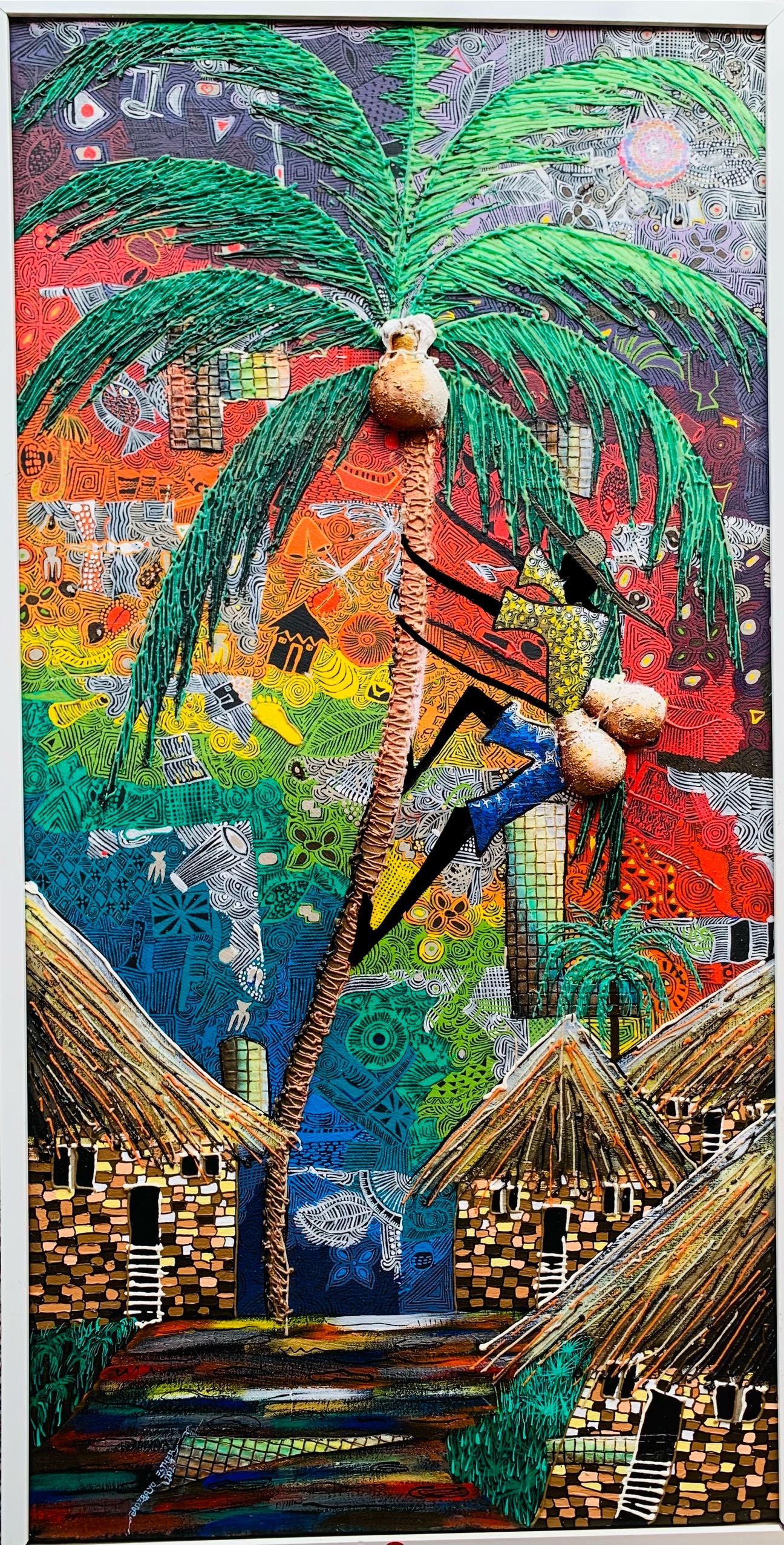
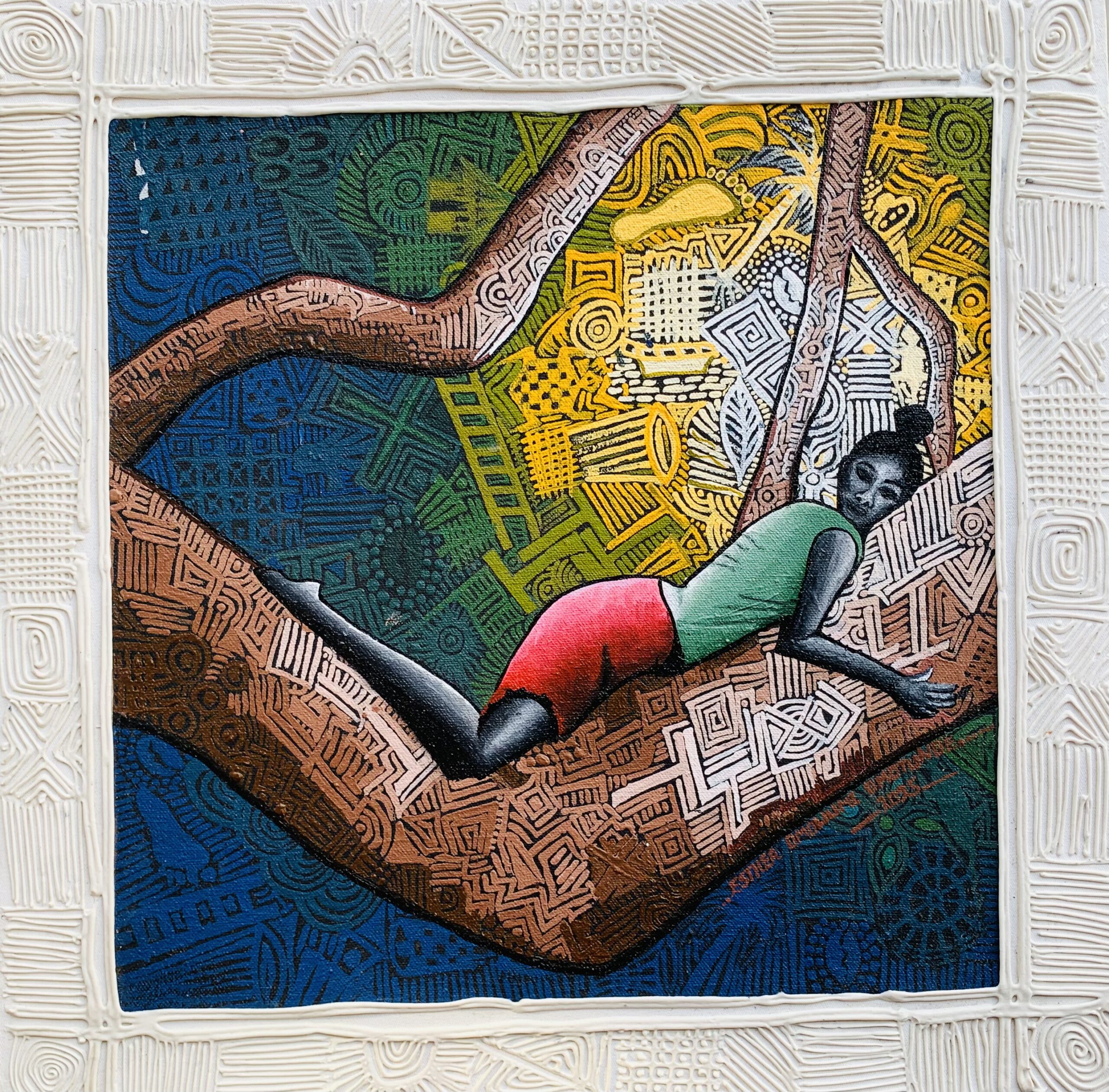
Esther Omotunde: Life is a teacher, and the way its lessons unfold—whether in classrooms or through lived experiences—shapes not just our background but also our journey and path.
I was born into a humble yet loving family. My father was a hard-working man, providing for us the best he could, while my mother struggled with mental health issues—something we never truly addressed. As the first child, I naturally took on a leadership role from an early age. By the time I was six, I was already responsible for looking after my family while my father worked to bring in money. I can hardly recall anything I didn’t do to support us because I simply couldn’t stand by and watch as life drained the strength from our home.
These experiences shaped me in profound ways. At times, they made me feel disconnected from traditional notions of womanhood. I often thought and acted in ways society typically associates with men—self-reliant, daring, and unafraid to go after what I wanted without considering gender-based barriers. This mindset is likely why I never saw art as a profession meant for men alone.
However, these traits have also led to discrimination, especially in spaces where women are expected to be quiet or submissive. I have often found myself standing apart from what is traditionally expected. But my background, though challenging, has deeply influenced my perspective and continues to shape the themes of my artwork.
FAB: Your goal is to revive forgotten aspects of African cultural heritage. What parts of African culture do you feel are most in need of preservation?
Esther Omotunde: The Anthropocene era has ushered in rapid changes, and as a result, we are gradually losing our culture and heritage. In southwestern Nigeria, greetings and respect have long been defining aspects of our identity. However, many parents today no longer teach their children the traditional ways of greeting in Yoruba land.
Greeting and respecting elders are fundamental parts of our culture. They reflect politeness, good manners, and a deep sense of community. For instance, the Yoruba language uses vowels like “o” and “e” to indicate the age or status of the person being addressed. Similarly, customs dictate that a girl kneels to greet her parents, while a boy prostrates or lies flat on the ground when greeting elders.
These traditions do more than uphold cultural values—they strengthen relationships and foster unity within the community. A society where respect and connection thrive naturally leads to a healthier and more harmonious community. By practicing and passing down these customs, we not only celebrate our heritage but also ensure its survival for future generations.
FAB: How do you incorporate African motifs and local materials into your pieces? Do you have any favourite materials or symbols?
Esther Omotunde: I source materials that best capture the feeling I’m aiming to express. Often, I encounter material that inspires me in unexpected ways. I don’t have any favourite materials or symbols yet, but I’m confident I’ll develop preferences over time. Right now, I’m in an exploratory stage, enjoying the process of experimenting with different materials and motifs. Although each symbol carries its own meaning, I tend to generalize their usage, drawing on their African origins.
Esther Omotunde: I have never viewed my identity as a woman as a disadvantage in my career—this is both my passion and my profession, so I pursue it wholeheartedly. There have been instances where I was turned down for collaborations because more was expected from me. However, these challenges have never been barriers; rather, my intuition pushes me to break boundaries.
Joining FEAAN was a blessing in disguise. It marked my first real exposure to the art world, shaped my career, and clarified my goals. Through FEAAN, I held my first exhibitions, appeared on television shows and in newspaper interviews, and met my first curator—who not only facilitated sales but also organized my first solo exhibition, “CULTURE CLASP.” Additionally, FEAAN has opened doors for me to participate in exhibitions both locally and internationally, including the Nafest Adjudicator 2021.
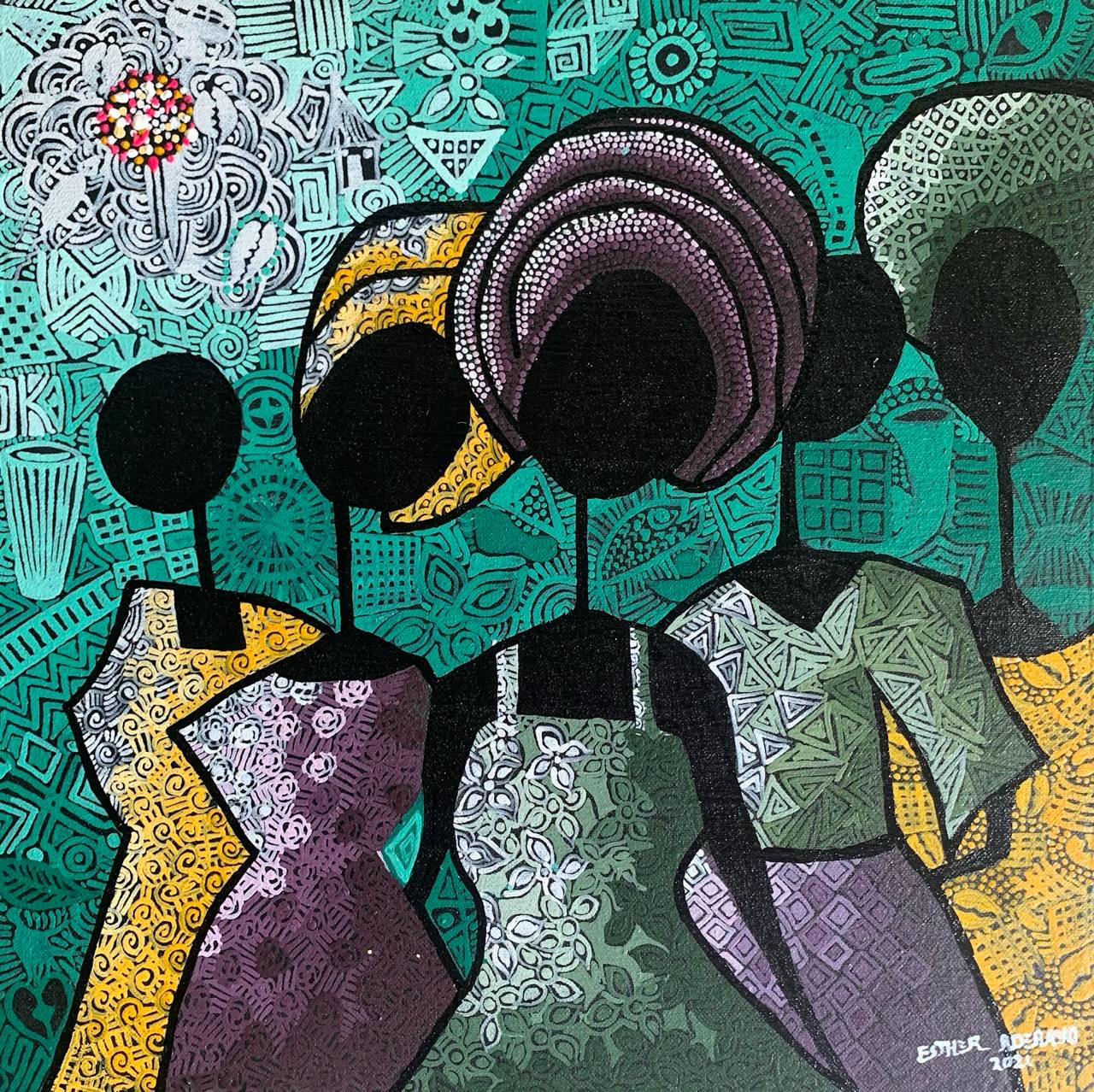
FAB: You founded the Kakaaki Art Gallery and curated the “Her Vim” exhibition. What inspired you to take on such a leadership role?
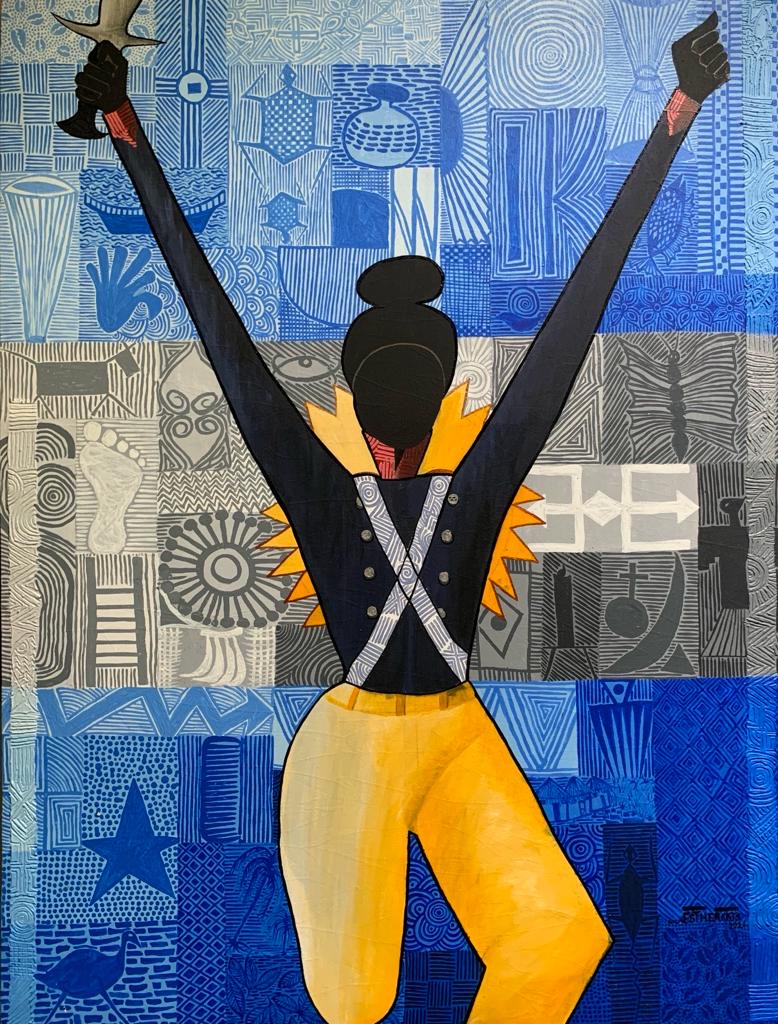
Esther Omotunde: Kakaaki Art Gallery was born out of a deep commitment to preserving and showcasing African culture and values through paintings, sculpture, and design. It also aims to highlight the challenges faced by female artists in the art market. The “Her Vim” exhibition, my first curated show, was organized free of charge to foster collaboration among female artists and make a significant impact in the art market. We are proud that this exhibition marked the first breakthrough sale for one of our female artists.
FAB: When you’re curating or participating in exhibitions, what message do you hope resonates most with your audience?
Esther Omotunde: When participating in exhibitions, I love embracing identity. My goal has always been to celebrate the rich culture and heritage embedded in Nigerian traditions, while also conveying the message each work is meant to portray to its audience.
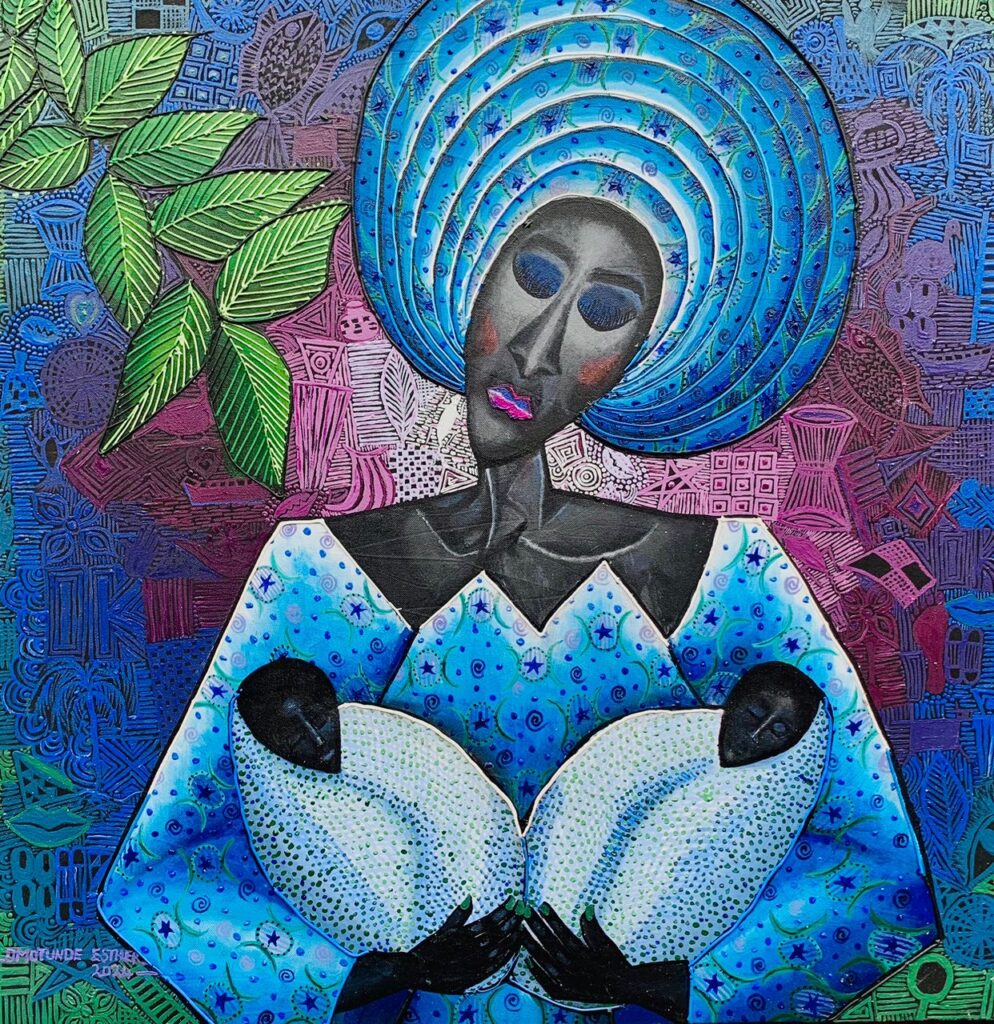
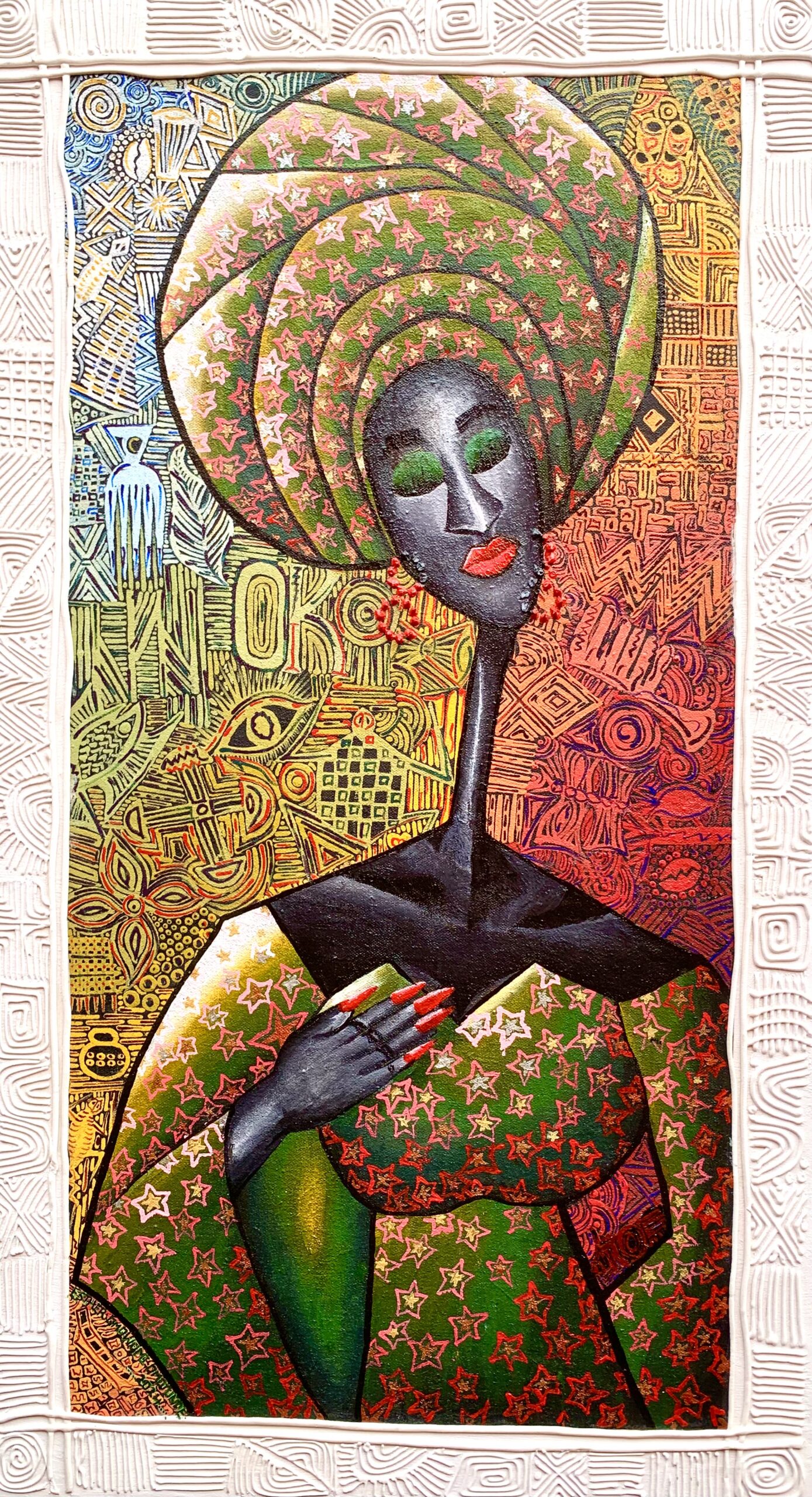
Esther Omotunde: The piece is titled Ìyangàn, Medium: Acrylic on canvas, Size (in inches): 36 by 24 inches. It is a Yoruba word that means pride (dignity). It is a story of an African woman blessed with natural beauty and a very kind heart. She is elegant and has a keen sense of style, which is depicted by her classic head tie, her detailed make-up, and her choice of jewellery that is associated with royalty. She became a mother at a young age due to the traditions in her village, yet neither the challenge of being one of several wives nor the burden of raising kids stopped her from being particular about her beauty standards.
The day came when that composure was threatened. Four ‘classy’ women had come from the city as tourists, displaying the model’s gait and flaunting audio success, as seen in the background showing four sexy women figures in different postures. The sight affected her esteem and lost pride in all her sense of beauty and splendour. She had never traveled outside her village.
Her facial representation signifies her illuminations about life in the city and how majestic it must have been, just like paradise. The looks and charisma of the women must have meant they had it better. Her innocent ignorance had created a utopian view of the city and what that life could have meant for her. It never occurred to her the struggles of the city; the struggles, the smoke, and the space. She read the book by the cover and allowed that mirage to impact her serenity.
If she had a context to appreciate her inward beauty and the many victories in her charge, her strong intuition that had helped her as a mother, and the pride and satisfaction when the children call her mom and smile at her. If she had known that variety is the spice of life and acceptance and pride in our identity and heritage can be used for education and networking, the interaction would have ended up empowering and uplifting, and everyone would have learned something.
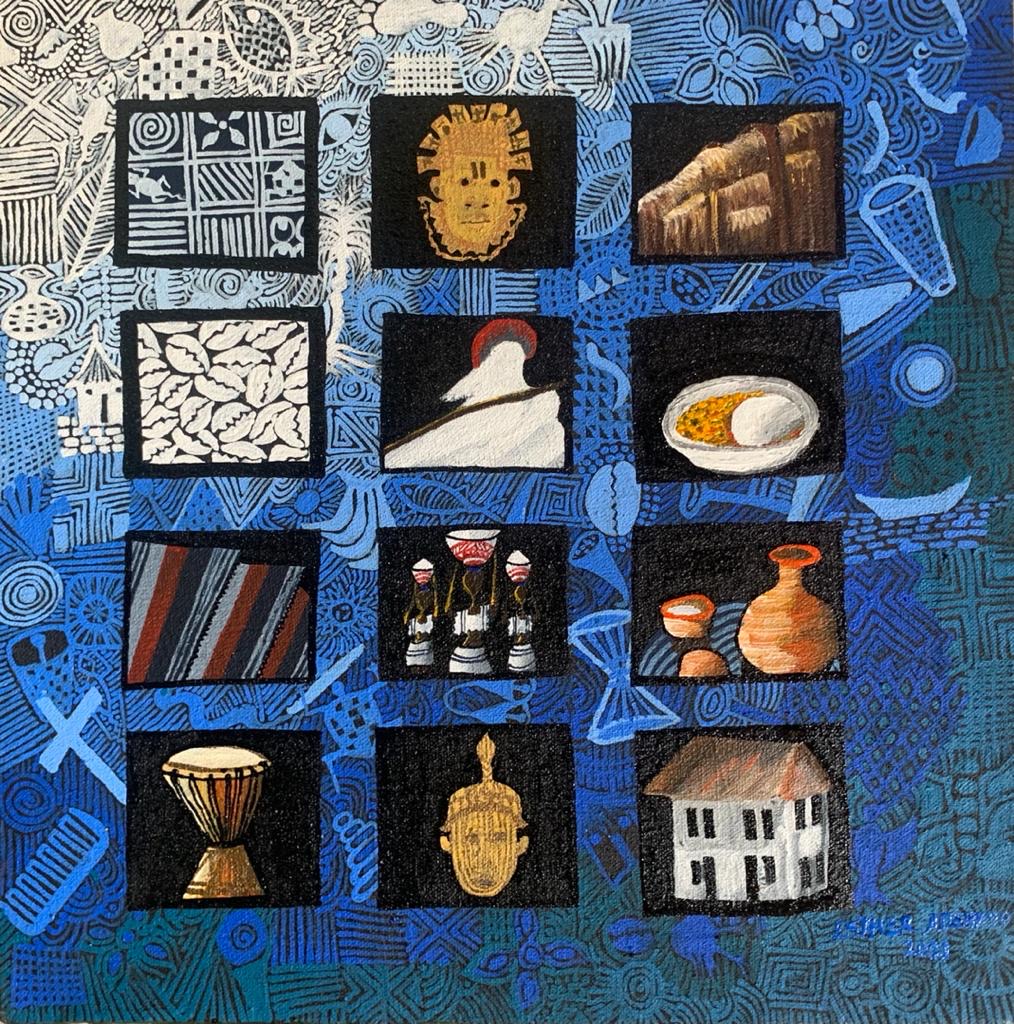
The African motifs in the background symbolize the location of the story, the artist’s traditional background, and her love for exploring African motifs.
FAB: Having showcased your work in spaces as diverse as the China Cultural Center in Abuja and the Argentine Embassy, how do different cultural spaces influence your creative process?
Esther Omotunde: Exhibiting in diverse spaces such as the China Cultural Center in Abuja and the Argentine Embassy has affirmed that my work is both unique and highly appreciated. This recognition continually motivates me to push further. As I gain exposure in these cultural venues, I find myself diving deeper into knowledge and exploring greater depth in my artistic style.
Orkideh Daroodi’s Gallery in Times of Political Upheaval
From the Birth of Venus to Las Meninas: Explore the World’s Greatest Artworks in these Museums
FAB: How did your involvement with the National Festival for Arts & Culture in Ekiti impact your understanding or vision of Nigerian arts and culture?
Esther Omotunde: Participating in the National Festival of Arts and Culture in Ekiti was an experience I am deeply grateful for. As a Nigerian, I had the opportunity to immerse myself in the diverse cultures and heritage of all 36 states—insights books may not fully capture. The dancers, drummers, flutists, costumes, crafts, home decorations, and motifs were not only entertaining but also intentional and creative. Each element spoke volumes about the rich value embedded in our culture.
As an artist whose style and purpose are rooted in cultural expression, this experience broadened and diversified my understanding of Nigeria. It has inspired me to work towards a deeper exploration of the traditions from all states.
FAB: Mental health is a recurring theme in your work. How do you express this subject visually, and what response have you noticed from your audience?
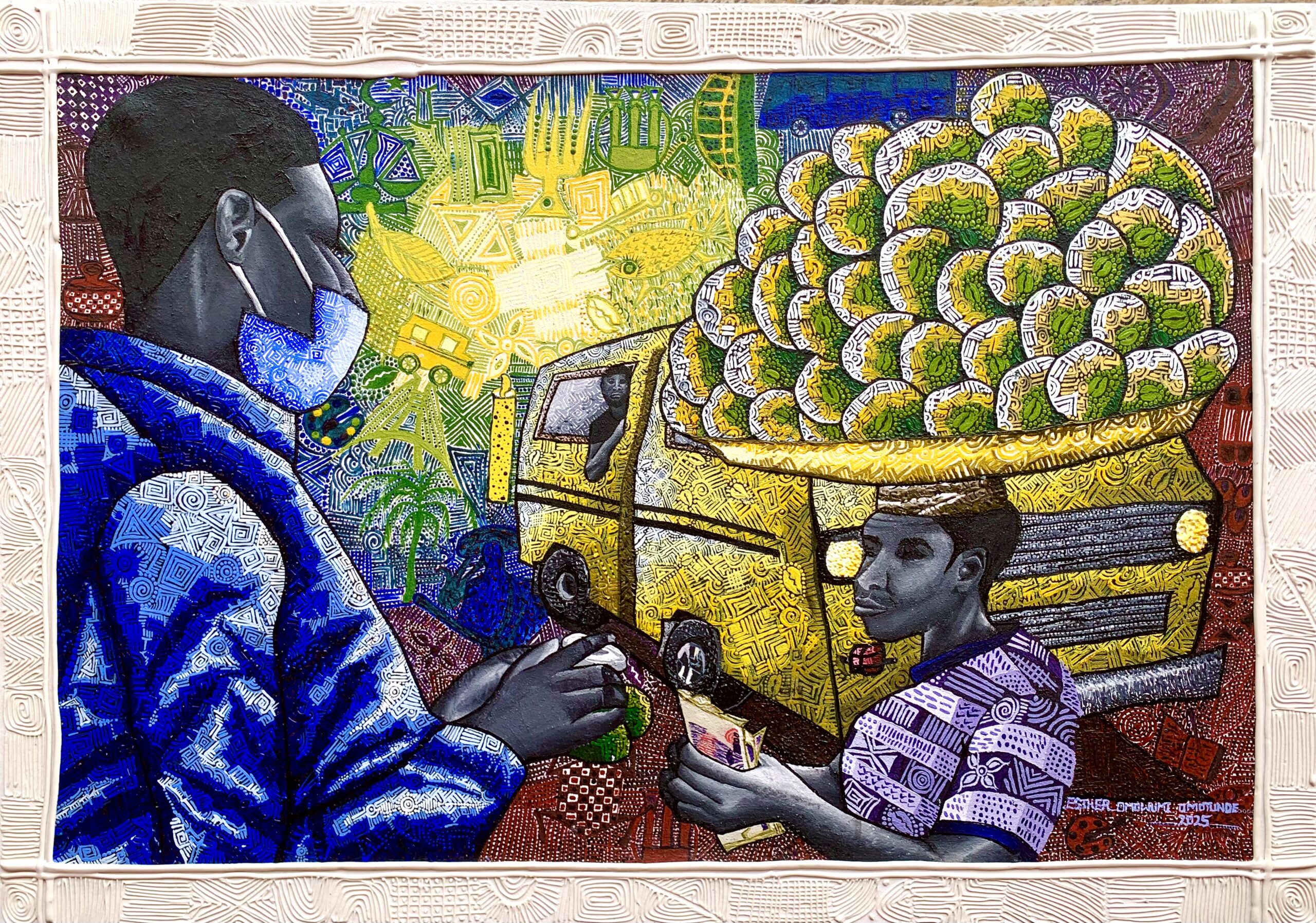
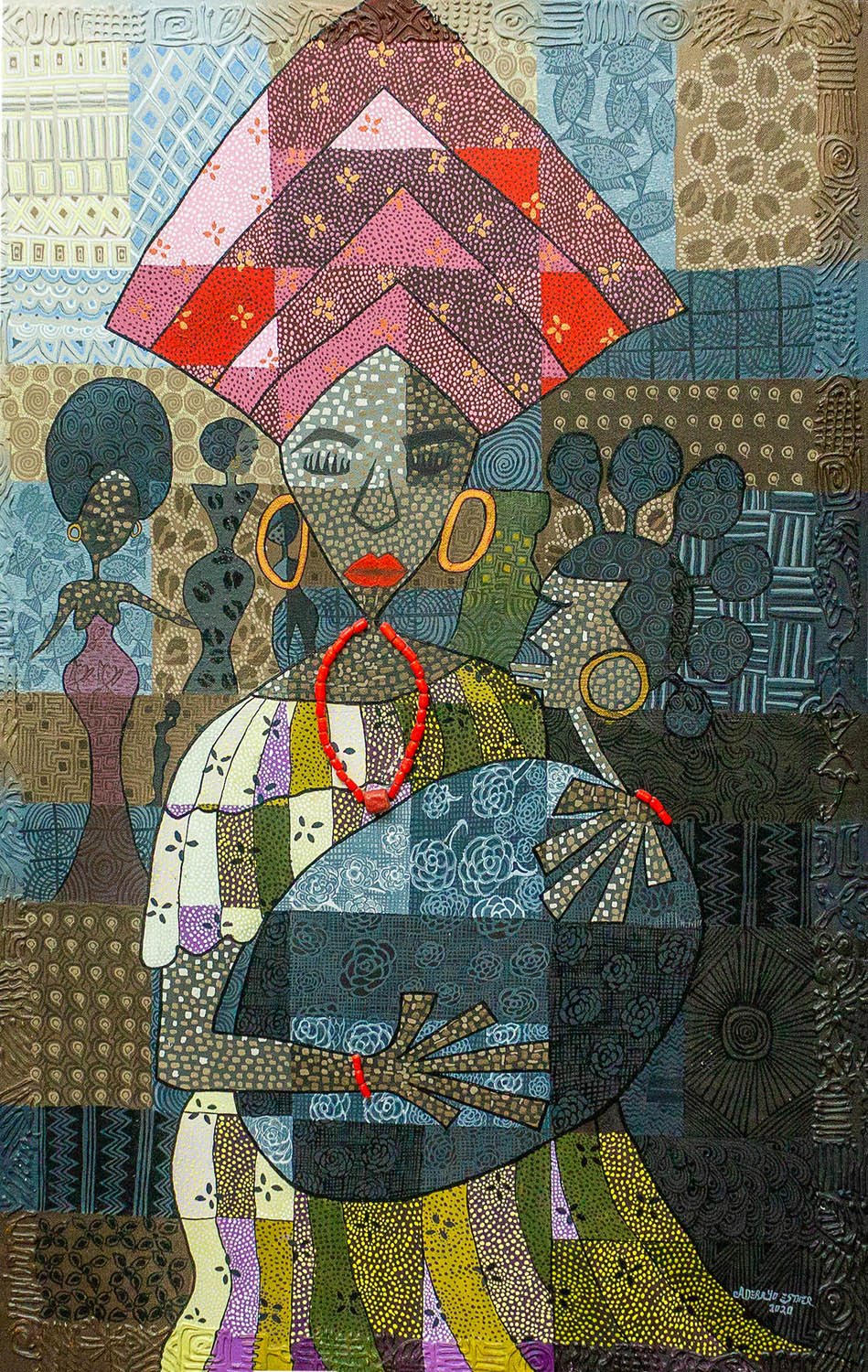
Esther Omotunde: I am still in the early stages of my career and have not yet engaged my audience as much as I would like on this theme. For now, I consider myself to be in an exploratory phase. The expressions on the figures in my artwork often reflect different states of mental health.
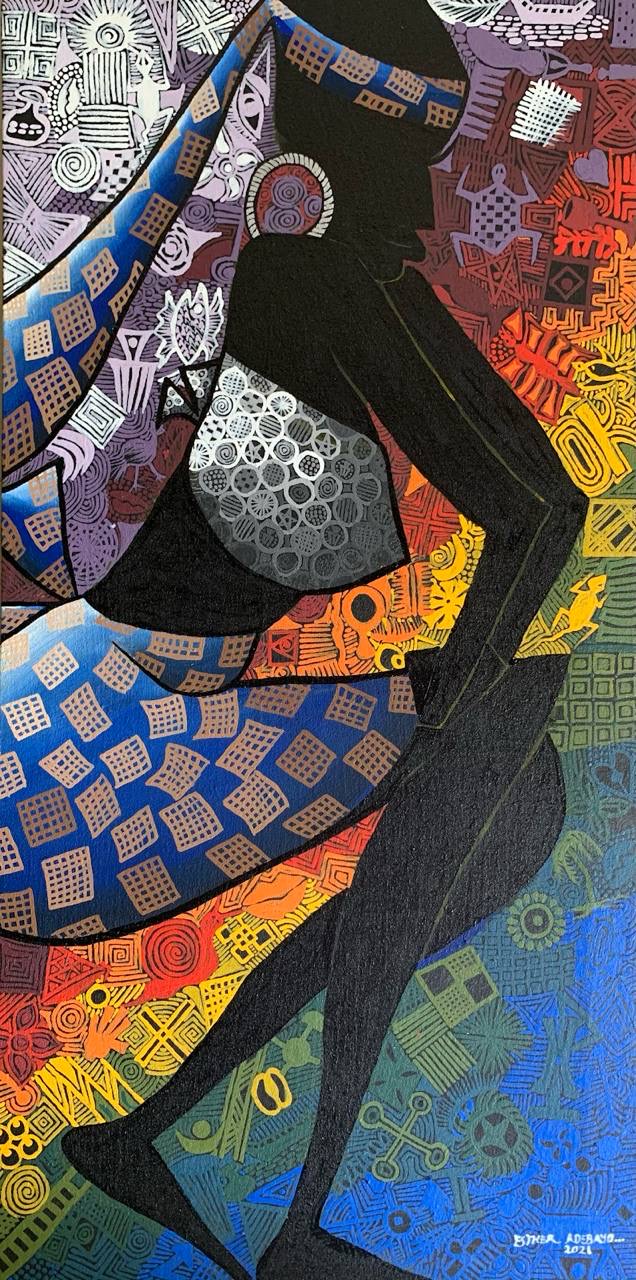
Take, for instance, my piece Delight in the Moment. It tells the story of an elegant, beautiful African woman carrying twins, wrapped in the form of a cowry. Despite holding this bundle of joy, her facial expression reveals that she is not happy—she is lost in thoughts about the responsibilities ahead. What she doesn’t realize is that the twins wrapped in cowries symbolize wealth, meaning she already possesses everything she needs.
The background and color choices in the piece represent a conducive and productive environment. If only she could embrace the present, be calm, and fully live in the moment, she would see that everything she needs to care for them is already within her reach. This idea extends beyond the artwork—it reflects life itself. Sometimes, we are so consumed by worry that we fail to recognize the opportunities, ideas, or positioning that could carry us forward. Every phase in life unlocks the next.
Esther Omotunde: Lately, I find myself exploring more, and I’ve realized there is so much I want to delve into. During this phase of exploration, my goal is to discover a grounded artistic path that will define my lifelong journey. However, at the core of it all, my work will continue to celebrate culture and heritage while addressing societal issues.
Everyday life reveals the challenges people face, and as an artist, my work serves as a voice to express these emotions and realities. I am committed to using my art to highlight societal issues and contribute to making the world a better place. My audience can look forward to more innovative, creative, and thought-provoking pieces from me.
EXHIBITIONS
- Member: Rights, Equality and Employment; International Women’s day Female Artists Association of Nigeria in collaboration with Nike Art Gallery. Nike Art Gallery Abuja, 2025.
- Artist: Mother Dearest; Anode to Motherhood. Nike Art Gallery USA, 2024
- Artist: China Cultural Center Exhibition. China Cultural Inn Abuja, 2023
- Exhibitor: Hotel Expo Nigeria; Innovation meets opportunities. Landmark Lagos, 2024
- Artist: Womanhood. Nigerian Health Watch, Abuja 2023
- Curator: Her Vim, Kakaaki Gallery with Hotel Lacour, Ikoyi Lagos 2021
- Artist: Culture Clasp, First Solo-Exhibition Curated by Susa Garrido (Agama Art Pub.), Abuja 2021
- Artist: My View of the Other Side. Spain Embassy, Abuja 2021
- Artist: Argentina Celebrates African Culture & Afro-descendants. Argentine Embassy, Abuja 2021
- Artist: Omidan Oju’nu, Tunde Art Gallery, Ibadan 2020
- Artist: ArttalentsAfrica Virtual Contest. South Africa & Abuja 2020
- Artist: Arts Meets Tech, Impart. Eko Atlantic 2019
- Artist: Irish Embassy Art Exhibition, Abuja 2019
- Artist: Balance for Better: Women Unite. Nike Art Gallery, Lagos 2019
- Artist: Uncovered, FEAAN &Agama Arts. British Village Inn Abuja 2019
SHOWS
- Curator: Her Vim, Kakaaki Art Gallery– https://youtu.be/-hQ6M9cF0PE
- Channels: Female Artists Assoc Of Nigeria Organises Exhibition |Art House| https://m.youtube.com/watch?v=iUpr2V6CxD8
https://youtu.be/-hQ6M9cF0PE
Artists: The TCTK London Business Show 62 / DJ Mr.P – Wed 5th June 2024 / https://www.mixcloud.com/TheDJMrP/the-tctk-business-show-62-presented-by-dj-mrp-on-kbit-play-wed-5th-jun-2024-7-8pm-gmt