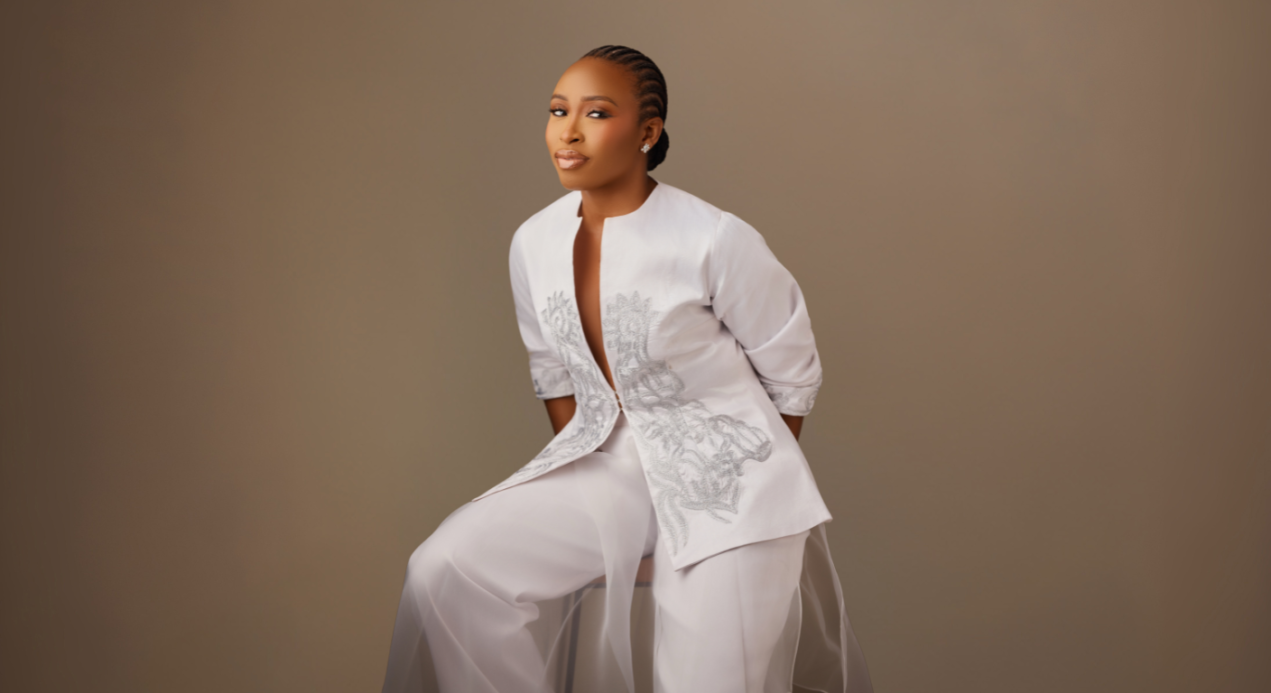
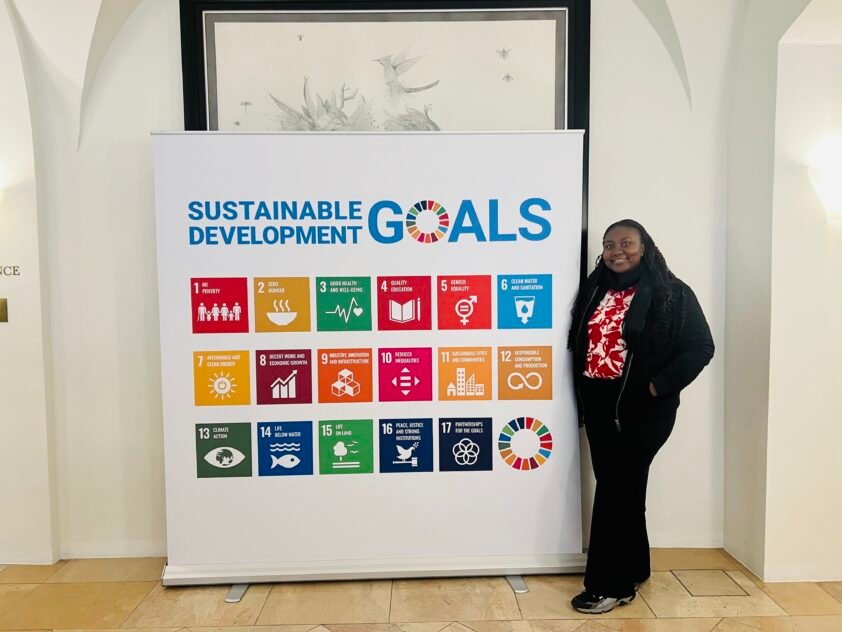
If you’ve ever felt like you’re starting late… read this. They say when a child knows where the rain began to beat them, they will know where to begin to dry their body. For Benedicta Apuamah, that knowing did not come as a grand revelation, but as a quiet, stubborn hunger for “something more” that refused to be silenced. From the red earth of Obiaruku in Delta State to lecture halls at Delta State University and onward to new beginnings in Europe, her journey reads like a familiar African story told with uncommon honesty. It is a story of carrying many names at once: pharmacist, mother, migrant, storyteller, and still, a woman in the making.
In this deeply reflective conversation, Apuamah speaks with clarity and conviction about identity, migration, motherhood, and the quiet courage it takes to continuously reinvent oneself in pursuit of impact.
FAB: What’s your story? Where are you coming from? Who are you? How did you get to where you are right now?
Benedicta Apuamah: So, who am I? I’m Benedicta Apuamah, a pharmacist. Yes, I’m originally Nigerian. I’m just a young woman who found a dream and has followed that dream up until now. I realised later on that people like me are described as “ambitious”. I think I like that tag, and I have been running with it.
I was born and raised in Delta State, Nigeria, in a town called Obiaruku. Most of my life was there. I attended secondary school in Delta State, and my first degree was also there. I studied pharmacy at Delta State University, Abraka.
Somewhere around my third year, I realised there was something more that I wanted. I did not know exactly what it was, but I knew there was something more. When people asked me, “Where do you see yourself in five years?” The only way I could express it then was that I wanted to be an outstanding pharmacist. I wanted to be sought after. That was the language I had at the time.
It was not until my final year, 2015 to 2016, when I attended a conference at the University of Nigeria, Nsukka, that things began to shift. Someone spoke about community development, the Mandela Washington Fellowship, and the Young African Leaders Initiative (YALI). It felt like a lightbulb moment. It was very humbling. I found myself asking, “What is this?” and I became interested.
I started taking courses and learning as I went. When I began to say I wanted to do something in my community, in Obiaruku, I approached people, and they told me, “What you are describing is an NGO.” I knew the term, but I did not understand it beyond that. Still, I followed through. I kept learning and exploring this quiet desire for more.
That is how I got here. I just kept learning. I am very happy that I am still driven. I am not comfortable yet, even though I have come far from where I started. I am glad that the hunger is still there.
Just a few days ago, I had a conversation with an older friend who also mentors me. I realised, more deeply than before, how much I have applied myself to constantly reinventing who I am. That is really it. I hope I did not talk too much.
FAB: When you look at your journey, what part of it feels the most emotional to revisit?
Benedicta Apuamah: I would say the moment I began to feel that quiet desire for more. If I had seen a clear picture of where I was going, I might have been more relaxed. I probably would not have worried as much.
But I think the curiosity and even the worry played a role in bringing me here. Maybe I would have started earlier, I do not know.
There was a time I wondered, “Okay, God, if you did not want me to practise pharmacy…” because pharmacy is one of those professions in Nigeria that people really admire. You grow up with that idea. Your teachers and lecturers reinforce it. You expect that when you graduate, people will admire you for being a pharmacist.
So it came as a shock when I graduated and realised that people were not impressed in that way. Instead, they asked, “Yes, you are a pharmacist, but what else can you do?”
I remember a friend telling me, “Can you stop introducing yourself only as a pharmacist? Beyond that, what else can you do?” He pointed out that even though I was academically strong, I still needed to develop other skills, like writing strong application essays.
Maybe if I had seen where I am now, I would have started earlier. But I do not think I am late. I am grateful for where I am and how far I have come.
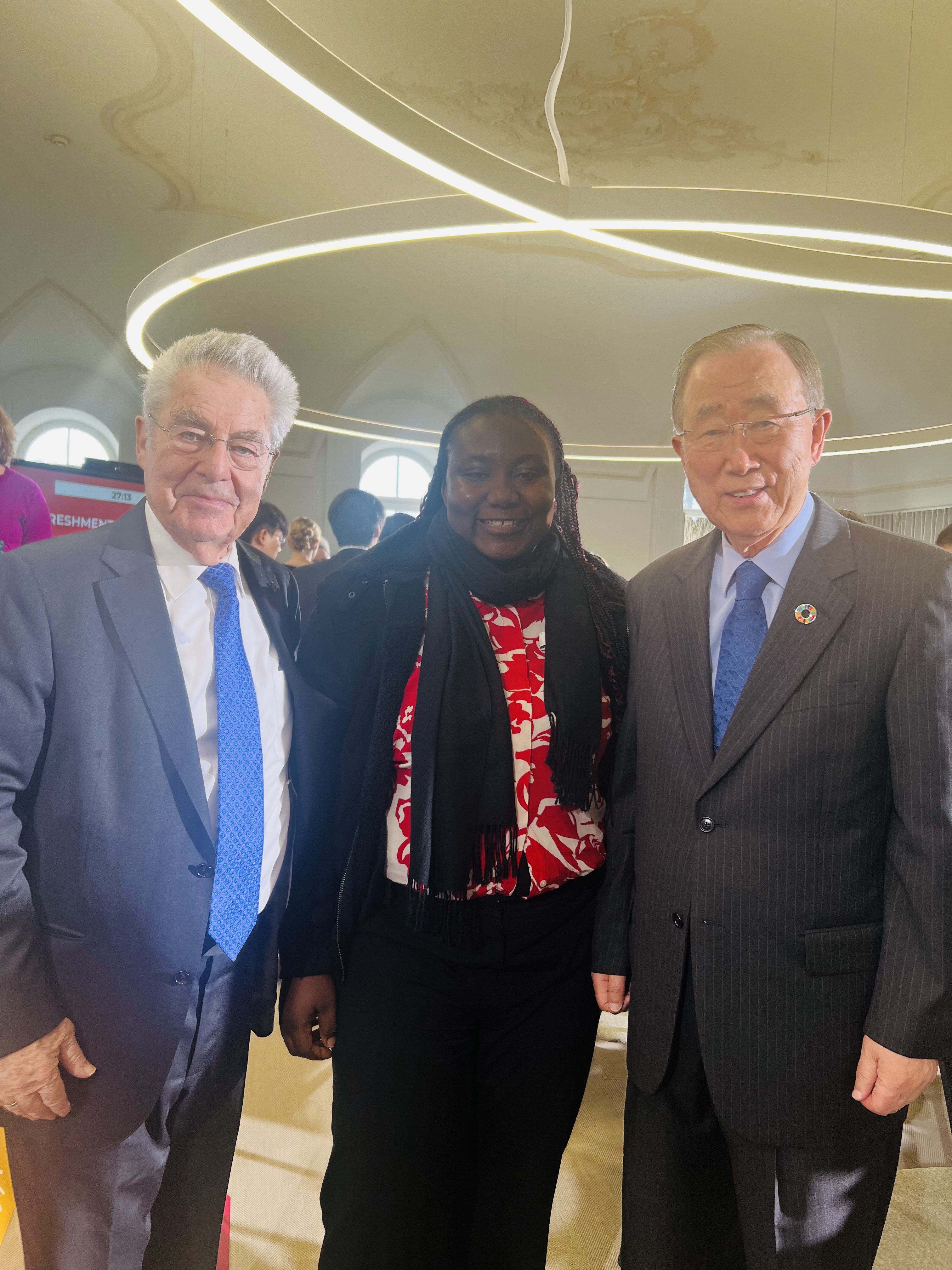
FAB: Living between cultures can be enriching and also disorienting. You are from Nigeria and now living in Vienna. Where do you feel most at home?
Benedicta Apuamah: That is a difficult question. For over four years now, Austria has been home. I have lived in different parts of the country, including Vienna. Since I moved here, I have not been back home.
But Africa, and Nigeria in particular, remains the core of my identity. Wherever I introduce myself, I make that clear. I do not want there to be any confusion about who I am.
I sometimes find it interesting when people who look like me identify only with where they were born or raised, without referencing their roots. Maybe that is just my own perspective, but for me, it matters. No matter where I find myself, I say clearly that I am Nigerian. Even if my passport or nationality changes in the future, that core part of me will not change.
I stay connected in simple ways. Most of the food I cook is Nigerian. It keeps me grounded. Even at social gatherings, I am quite particular about that.
Moving here was not easy. I relocated at about 27 for my master’s degree, with a young child. I was the only student in my class with a baby. I had to balance motherhood with studying, sometimes even bringing my child into that space.
I also had to learn a new language. At the time, I believed that because I had earned a scholarship, I would easily find opportunities. But I quickly realised that language was a barrier.
I would not say I have a natural ear for languages, but I kept pushing myself to learn. It has been a journey. What carried me through was resilience, trust, and strong faith in God. At the end of the day, I feel at home in who I am. And who I am is Nigerian. Always.
FAB: Let me pick up on that question of womanhood and motherhood. Interestingly, we just celebrated International Women’s Day. How has your understanding of yourself as a woman evolved over the years?
Benedicta Apuamah: That’s a tricky question, but since I have the mic, I will say what I want to say. It doesn’t matter whether people agree or not.
I grew up in spaces where I was often the youngest. I’m a firstborn, by the way, but I still found myself in rooms where I was the youngest. So sometimes it surprises me that I am now the one with two children calling me “mommy.” I still feel like I am figuring out how to take care of myself, so I ask myself, is this really me? How did I get here?
I am also very blessed to be married to a man who truly embodies what the HeForShe idea represents. Yes, women are strong and can do many things, but I have never tried to fit into the rigid idea of what an African woman should be. That expectation of being limited to certain roles or confined to a box does not define me. It does not mean I cannot cook or take care of my home, because I can. But I have also been supported by someone who sees my dreams clearly and pushes me to grow.
Living abroad also changed my perspective. You might assume that these expectations are different in the West, but when you interact with women here, you realise that the same pressures exist. Society still creates boxes for women, and gender roles still shape expectations.
At the same time, community still plays a role. Among Nigerians and Africans here, you find familiar structures through church and social networks. These spaces help you stay grounded, but they can also carry expectations. People may question whether your husband is doing too much or whether you are fulfilling certain roles as a woman.
The truth is, a woman’s role is multifaceted. One day you are an entrepreneur; the next day you are a mother, a wife, or something else entirely. You are constantly shifting between roles.
Because of that, I believe women deserve more grace. We deserve more understanding and more support.
Recommended For You
FAB: You are deeply committed to women’s health and gender equity. What is one uncomfortable truth about women’s health that is still not being addressed openly?
Benedicta Apuamah: I would say this: availability does not always equal access.
Coming from Nigeria, a developing country, and now living in Europe, I have seen this clearly. I am particularly interested in sexual and reproductive health, especially menstrual health and now pregnancy, as a mother.
In many developing contexts, people assume the main issue is a lack of facilities. Sometimes that is true. Facilities may not exist, or they may be far away and difficult to reach. Even when they exist, access to proper guidance, information, or supportive spaces can still be limited. You may only get that interaction when you visit a hospital, and even then, time is often short and the system feels stretched. Youth-friendly centres exist, but they are not common.
Now, when people look at Europe, they assume everything works perfectly. Yes, the services are available. Hospitals exist. Systems are in place. But that does not mean access is guaranteed.
My research focused on the acceptability of sexual and reproductive health services among refugee women in Tyrol, where I live. Many of these women come from conflict zones or areas affected by crisis.
What I observed, both personally and through my research, is that language becomes a major barrier. So yes, services are available, but can people actually use them?
You may have health insurance, but if you cannot speak the language, you may not even be able to book an appointment. That is a real barrier.
Even when translation services are arranged, they do not always work effectively. These are sensitive conversations. If a woman wants to speak with a female translator and a male translator shows up, she may not feel comfortable continuing.
There are also structural issues. In some systems, doctors work within a model where they are paid based on the number of patients they see. Waiting for translation takes time, and that time could have been used to see several other patients. So the system does not always support the depth of care needed in these situations.
All of this shows that availability does not automatically mean accessibility. There are deeper factors that often go unaddressed. It is not just a global South issue but a global conversation.
FAB: You combine data with storytelling. Why is storytelling essential in global development?
Benedicta Apuamah: I like this question because, on my way home, my family picked me up from work and we were talking about how, when I started out, I did not know storytelling would become one of my strengths.
I published my first book last September, about six or seven months ago. It is a memoir titled Biking Through Africa & Beyond, and copies are available in Nigeria. When I started, I did not plan to go into storytelling, but I have come to see how deeply it resonates.
I will give a simple example. Just two days ago, my mentor & sister asked me, “How did you learn to cook as a Nigerian woman?” I said, “My mum taught me.” That is storytelling. That is how beliefs, culture, and knowledge were passed down long before modern technology. From oral traditions to writing, and now to media, storytelling has always shaped how we understand the world.
So why did I write my story? Because it touches real experiences. It speaks to gender equity, for example. I do not fit into the idea of the “perfect” African woman who ticks all the boxes society has created. In many ways, I have taken a different path.
I come from a middle-class background. My parents could send us to school, we had food, and we had basic needs met. I shared how I moved from that reality into global spaces and platforms where I now work.
What I find interesting is that many of the experiences in my book connect directly to global conversations like gender equality and the UN SDGs. But I do not present them as policy. I present them through real human lives.
It is easy to talk about big frameworks like the UN SDGs or the AU 2063 agenda. But how does a young person apply them? In my community, girls my age faced early pregnancy, dropped out of school, or did not see how education could transform their lives. My story speaks to those realities.
So in a way, storytelling translates these global ideas into something relatable. It brings them down to a level where people can see themselves in the narrative.
I also realised something recently. Someone at the university where I work read my book and described my storytelling style as “non-colonial”. That comment stayed with me. It made me reflect and research how storytelling can also serve as a tool for decolonisation.
Another person told me, “You have no idea what you have done by writing this book.” Even my dad, who is a professor, asked what my book was about when I mentioned it was about my journey, he giggled. I found that interesting. Why should someone in their early thirties write an autobiography? But that is exactly the point.
We often present perfect role models. For example, as a pharmacy student, people would say, “You can be like Dora Akunyili.” But for a student struggling through exams, how do you translate that into a real path?
That is where my story comes in. It offers practical steps and skills. I even created a workbook to accompany the book. So beyond reading and feeling inspired, you can start your own journey. You can identify problems in your community, write them down, and think about solutions.
So storytelling is not just about sharing experiences. It is a tool for development and empowerment. When people feel empowered, that impact spreads. It creates a ripple effect that continues to grow.
FAB: Your book blends personal transformation with leadership lessons. In a few words, what do you hope institutions and leaders take away from your story?
Benedicta Apuamah: There are many lessons, but I would say this: real community development becomes possible when leaders invest in people in a meaningful way.
My book shows my journey, the challenges I faced, and the opportunities that helped me grow. When we talk about opportunity, it should not be abstract. It should be something people can see and relate to.
It is one thing to create strong policies, but how do they translate into real impact for young people, especially at the grassroot level? How do they connect with their realities? Storytelling can help bridge that gap. It allows young people to see others they can relate to.
Empowerment also needs to go beyond one-off events. It requires continuous effort. I have been in rooms where programs are designed for young people without their input. That approach does not work. Do not design programs and hand them over. Create them with us. Let there be true collaboration.
Africa, in particular, has a powerful demographic advantage. The African Union recognises the diaspora as part of its sixth region, and that is important. If we co-create with young people, we can achieve the kind of development we are aiming for.
FAB: You speak about building fairer societies. What does fairness look like in practice?
Benedicta Apuamah: I see fairness as equity. There is an example that has always stayed with me. Imagine two people trying to watch a football match over a fence. One is shorter; the other is taller. If you give them the same height to stand on, that is equality. But it does not guarantee that both of them will see the match clearly.
Equity means giving each person what they need to see. The shorter person may need more support, while the taller person needs less. So fairness is not about giving everyone the same thing. It is about giving each person what they need to have the same opportunity.
FAB: If the systems you are working to change became just and equitable, what would that future feel like for people?
Benedicta Apuamah: I think it would be beautiful. It would be a world where people can live the lives they are meant to live. I know people often say life is not fair or that change is impossible. But I believe progress is possible.
If our systems become fair, just, and equitable, everyone benefits. That is the kind of future I believe in.