

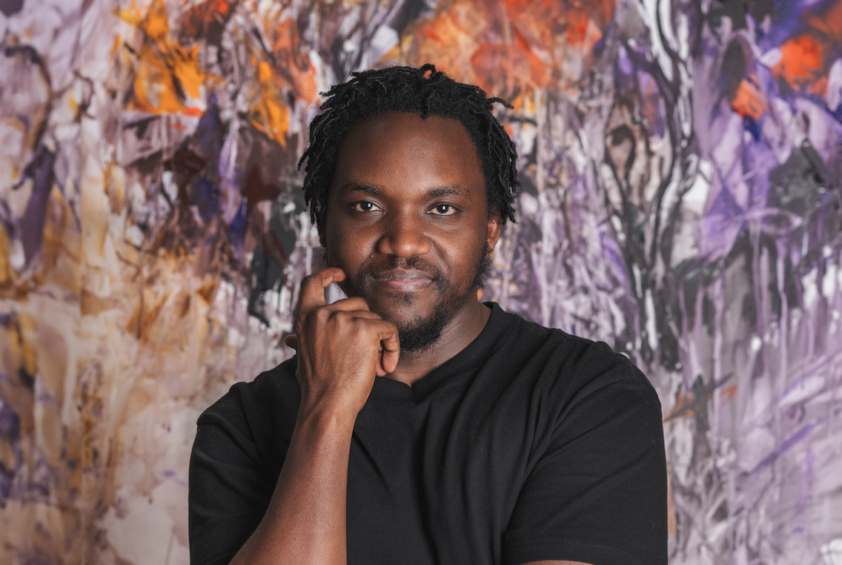
For Mande, art is less about representation than revelation. The Ugandan-born painter, now based in Tyrol, Austria, creates works that draw viewers inward, inviting them into conversations about emotion, identity, movement, and connection. His canvases are rich with colour and life, yet what lingers most is not what they show but what they make you feel. Between stories of Kampala, Vienna, and the Austrian Alps, Mande has built a practice influenced by curiosity, strength, and an enduring belief in the emotional power of visual storytelling. In this intimate conversation with FAB L’Style, Mande discusses the evolving meaning of home, the challenges of sustaining a creative life, and the belief that art’s greatest power lies not in what it explains, but in what it awakens.
FAB: Let me start with this question, which is, if I walked into your studio on a random day like this, what would I see?
Mande: You would find it organised. Unless I’m in the middle of painting, you might see some colours or palettes on the table, but in general I make sure everything is put away once I’m done. That’s important to me not only because I sometimes get unexpected visitors, but also because of how it affects my mindset.
When I walk into a clean, organised studio, I feel more focused and ready to work. For me, the space I work in directly influences how I think and create, so starting in a clear environment helps me begin with a clear mind.
FAB: I guess everyone has their own formula, because some artists would say they like to leave things the way they are so they don’t lose the flow.
Mande: Yes, everyone has their own way of working. For me, it depends on the situation. If I’m working late into the night and plan to continue after a few hours, I might leave things as they are so I can pick up where I left off.
But in general, once I finish painting, I clean up, put my colours away, and wash my brushes. Coming back to a reset space helps me start again with a clear mind.
FAB: Let’s talk about your journey. You’ve lived between Kampala, Vienna, and where you’re living right now, Tyrol. Where does home feel most real to you today?
Mande: For me, home is something you create. It is where you make it feel like home. Because of that, every place I’ve lived has felt like home at different stages of my life. Kampala was home, Vienna was home, and now Tyrol is home as well. Each place has its own meaning, but for me, the feeling of home comes from the connection you build with it.
FAB: Moving from Uganda to Europe, I’m sure that must have been a big shift, not just geographically, but emotionally. What changed in you the most during that transition?
Mande: It was definitely a big decision, but not entirely unfamiliar, because I had already been travelling for exhibitions. From a young age, I always had the desire to explore, to move, experience different cultures, and share my work beyond where I started. So in many ways, the transition felt like a continuation of a dream I had been carrying for a long time.
What changed in me the most was my mindset. I stopped thinking only about where I come from and started thinking more globally, about how my work can connect with people from different cultures. I also realised that not everyone has the opportunity to experience places like Uganda or Africa directly, so travelling and relocating became a way for me to bring my work closer to them.
For me, it also became important to share my work fully before I leave this world. That sense of purpose is what continues to drive me forward.
FAB: And was there ever a moment you thought, “This might not work”?
Mande: Yes, there is always a moment where you think about turning back. But for me, whenever those moments come, especially when things get difficult, I choose to stay grounded, grateful, and positive. I look at where I started and where I am today, and that keeps me moving forward.
Those moments still come, but I’ve learned not to stay in them. In everything we do, there is always a point where you decide whether to stop or continue. Over time, I’ve become stronger, so now when those moments come, I go through them and keep moving.
I also see those moments as part of the journey. They remind me why I started and help me grow. Each time I push through, I come out stronger and more certain that I’m on the right path.
FAB: When did painting move from something you just liked doing to something that became a career for you?
Mande: It was not an overnight decision. While I was still at university, I sold small black-and-white artworks to African craft shops, which resold them. At the same time, I also began supplying galleries with coloured artworks. This helped me cover my living expenses and even support others.
Over time, both the craft shops and galleries continued selling my work. By 2017, with both that financial support, the feedback from people about how my art touched them, and the encouragement I received from galleries, I realised it was more than something I simply enjoyed. That’s when I fully committed to painting as my career.
FAB: When one looks at your work, it carries a lot of colour and movement. What are you usually trying to capture?
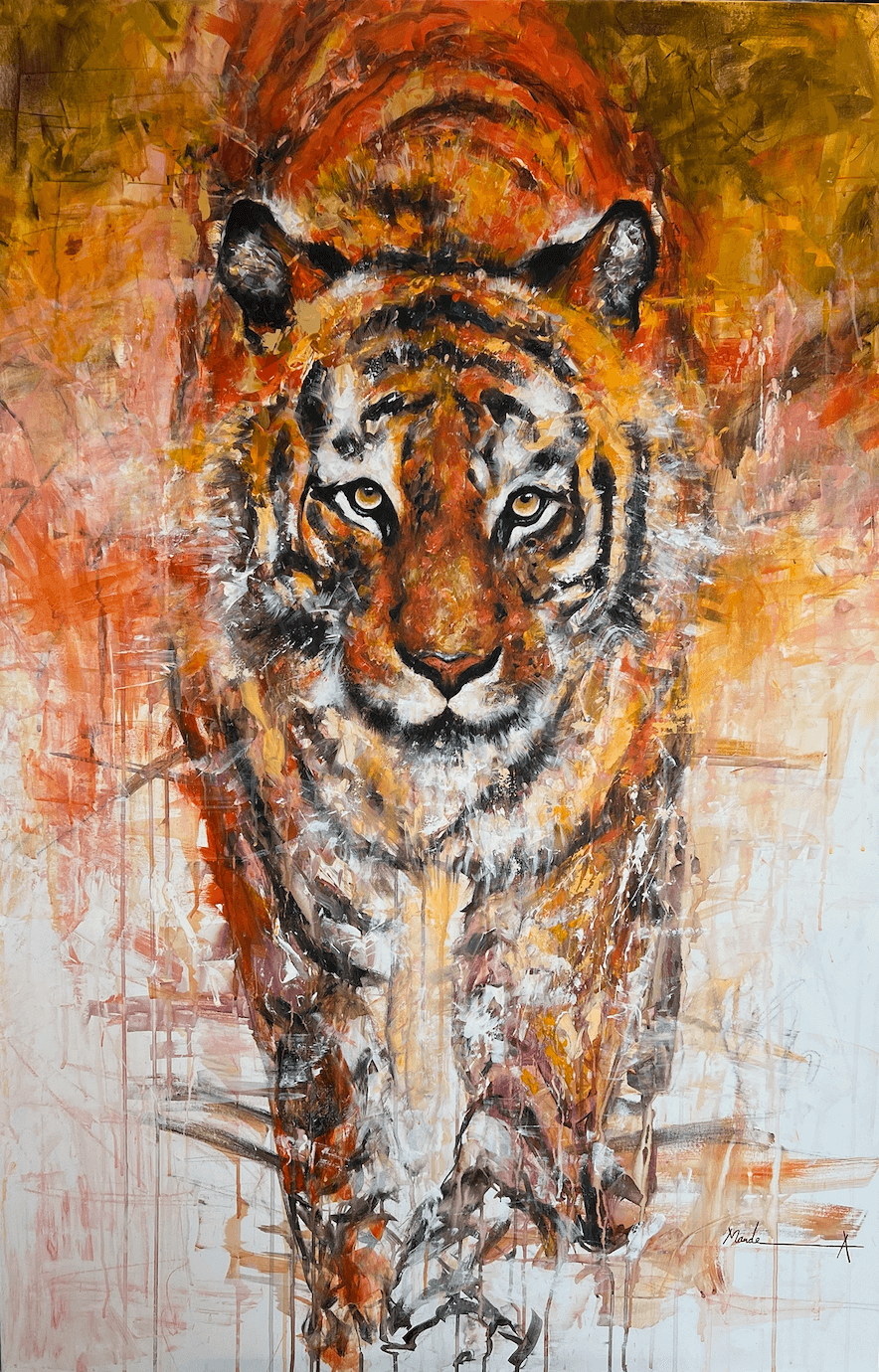
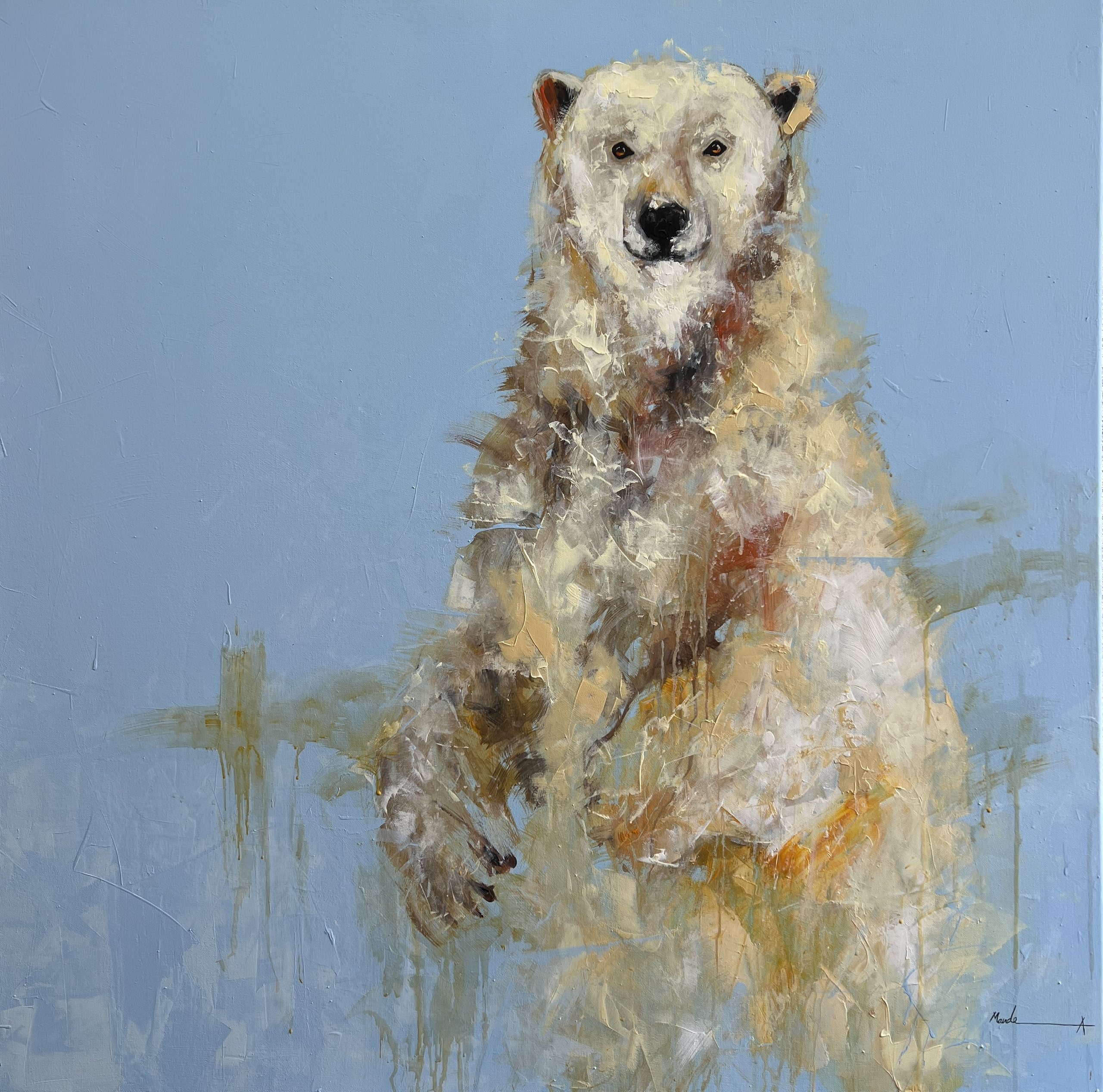
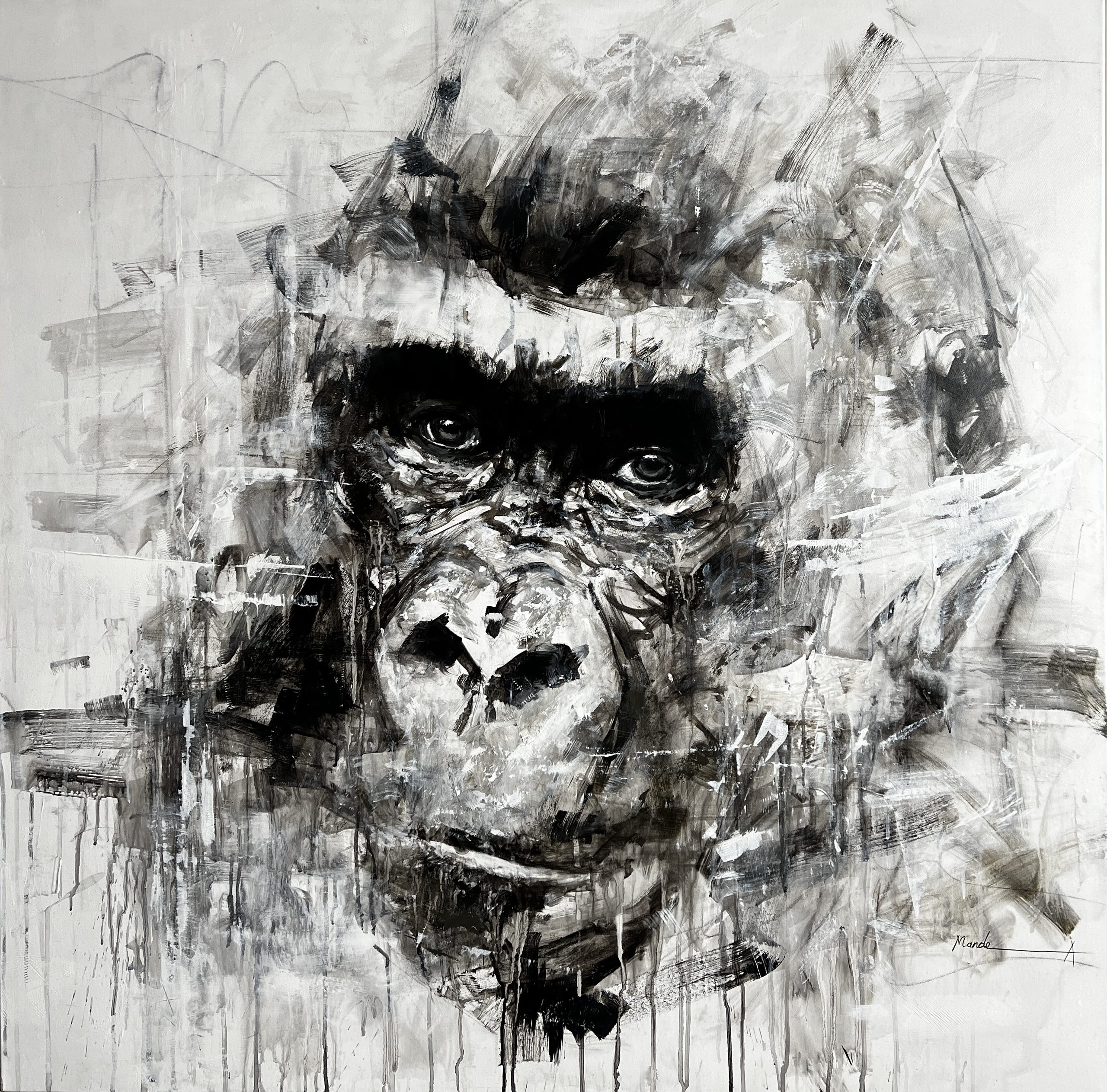
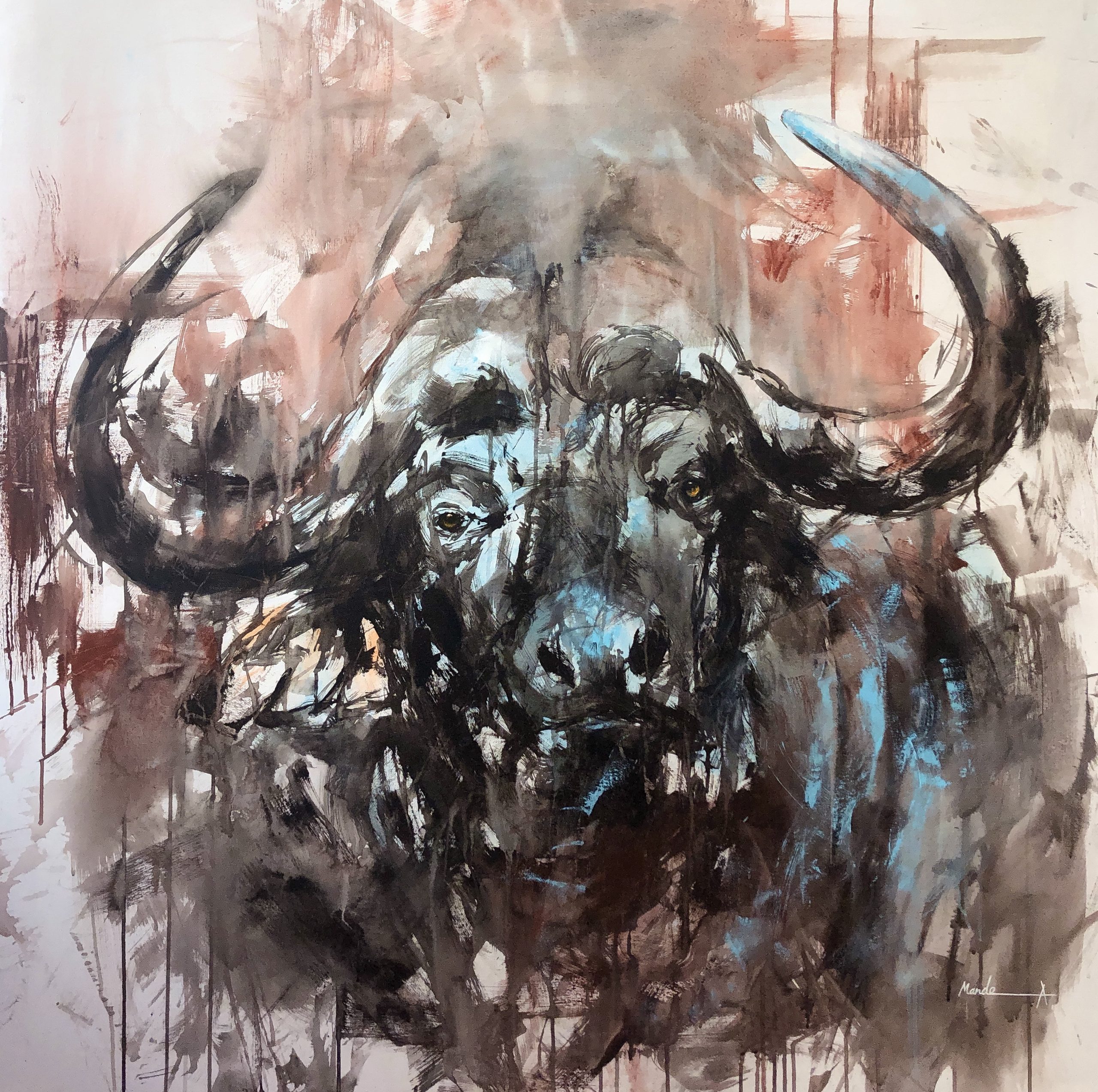
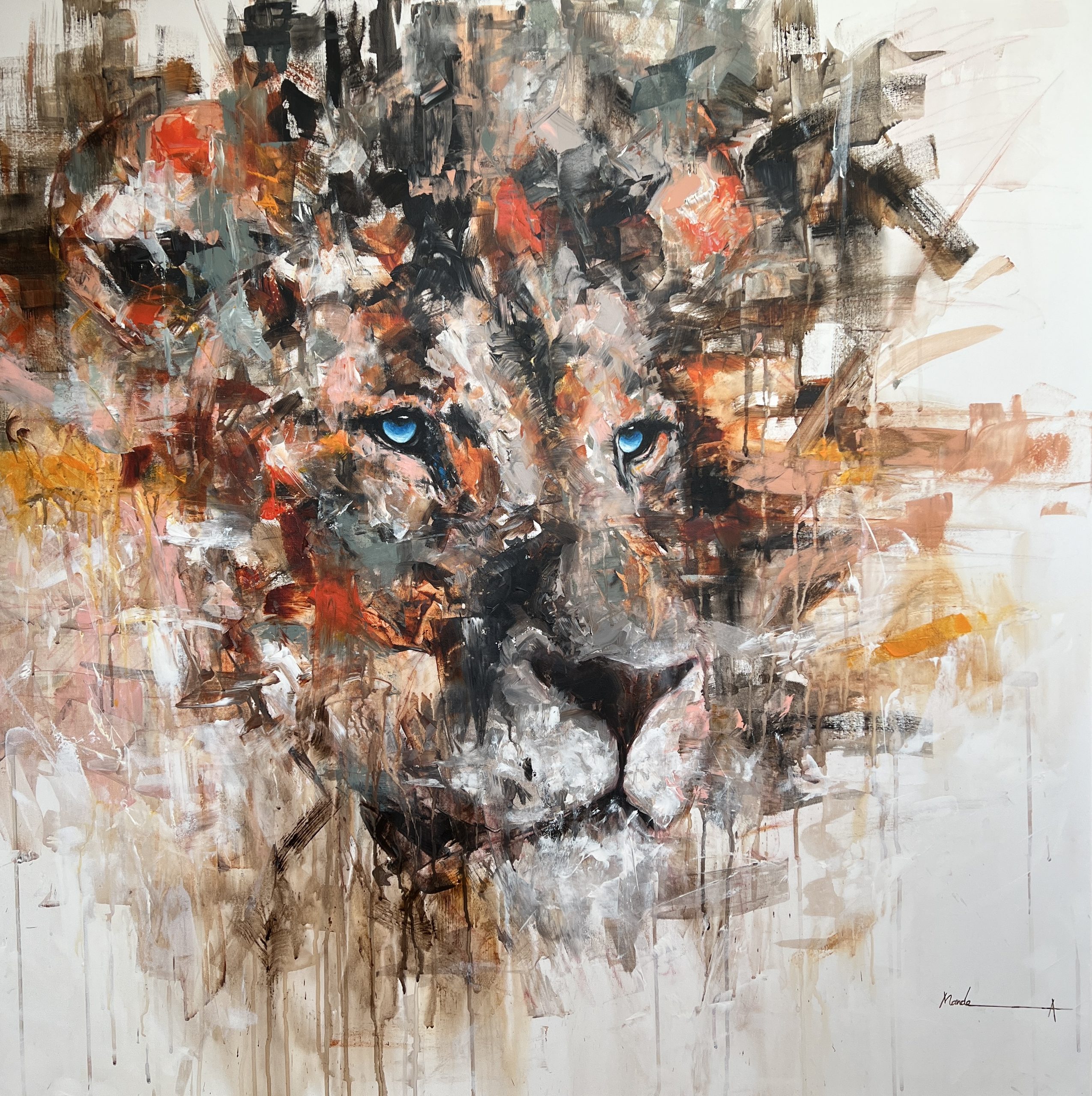
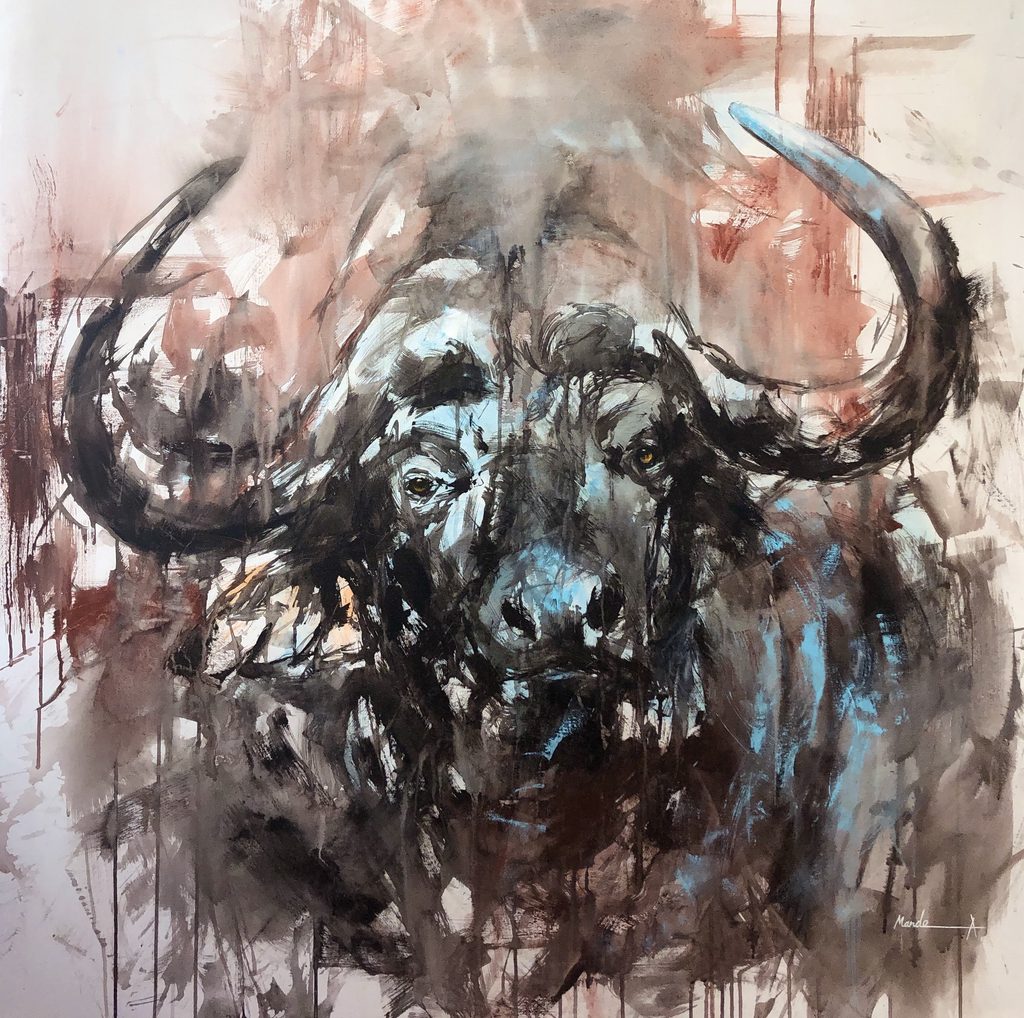
Mande: I’m mainly trying to capture emotion, connection, and presence. In my wildlife series, I explore the relationship between people and nature, especially at a time when that connection feels increasingly distant.
Animals may not speak, but they communicate through expression and emotion, which is why I focus strongly on the eyes. I want the viewer to feel something human within them, whether it is connection, care, vulnerability, or reflection.
For my cityscapes and sports pieces, or what I call dynamic art, I’m interested in capturing movement, energy, and everyday life. Whether it’s a street, movement in sport, or the atmosphere of a moment, I try to translate feeling into visual form.
FAB: When someone stands in front of your work, what do you hope they feel before they try to understand it?
Mande: That’s a good question. I hope they feel an emotional connection before they try to analyse or understand the work. For me, art should speak for itself without needing too much explanation.
If someone stands in front of a piece and immediately feels something, whether it is calmness, reflection, curiosity, or empathy, then I feel the work has already done its job and I have achieved my goal.
FAB: Could you name some of those emotions?
Mande: Emotions like hope, calmness, curiosity, reflection, or even a sense of longing. It really depends on the individual, because everyone connects with art differently based on their own experiences. What I aim for is creating emotional depth and connection, so that each person finds something personal they can relate to within the artwork in their own way.
FAB: Your work provokes introspection. That’s just what I felt; it makes you dig into “self”.
Mande: I appreciate that, because I think introspection is an important part of art. I don’t try to control what people should feel when they look at my work. I prefer to leave space for personal interpretation and emotional connection. A lot of my paintings are influenced by conversations I have with people and the emotions behind their stories.
This is especially present in my animal work. Some of my gorilla paintings are inspired by human expressions and emotions. I study some people’s eyes and carry those feelings into the work, because from certain angles, the eyes of gorillas can feel very human. Because of that, some pieces carry emotional layers shaped by different people, conversations, and moments.
FAB: You’ve spoken about what goes into the work, adapting human eyes and people you’ve met into your animal paintings. But what does a typical painting day actually look like for you, from the first brushstroke to the moment you stop?
Mande: A typical painting day usually starts early. I wake up, have something light, and go straight to the studio. From the first brushstroke, I try to follow the feeling and energy of the work rather than forcing it.
I usually work on several pieces at the same time, moving between them depending on what each painting needs at that moment. That helps me stay fresh and return to a piece with a different perspective.
As I paint, I keep observing whether I’ve captured the emotion or feeling I’m looking for. Sometimes a piece suddenly feels complete, and that’s when I stop. Other times, I continue working on it over the following days until it feels right.
The atmosphere also changes depending on my mood. Some days I work in complete silence, and other days with music or podcasts in the background. I simply follow the flow of the work until I feel it’s time to put the brush down.
Recommended For You
FAB: Interesting. What’s the last piece you struggled with?
Mande: The last piece I really struggled with was actually one I only recently finished. It’s a large canvas with different dog species, maybe twelve or sixteen of them. I started it about two years ago, but because I usually work on multiple pieces at the same time, it kept moving into the background.
Every time I returned to it, I felt conflicted. Part of me felt it was finished, while another part felt there was still something missing. That’s probably why it became one of the most challenging pieces for me.
What’s interesting is that some people who saw it already considered it complete, but as an artist, the feeling can be very different. Sometimes a piece only needs a few final strokes before you know it’s done, and other times a work can look finished to everyone else while you still feel connected to it creatively.
I actually completed the piece about a week ago, and it’s now hanging in an exhibition. So I would say that piece, the one I kept returning to without fully letting go of, has been the hardest for me.
FAB: Let’s talk about your life in the diaspora. Your roots, any day, any time, are from Uganda. Do you ever feel pressure to represent where you come from?
Mande: I don’t really put pressure on myself to represent one specific place. Of course, my roots are in Uganda, and that will always be part of who I am, but over time my perspective became broader.
When I present my work internationally, people often see me as an African artist before anything else. Because of that, I naturally feel connected to representing the continent as a whole rather than carrying the responsibility of representing only one country.
Even before moving abroad, I always wanted my work to reach beyond where I started and connect with different cultures. I simply try to represent my story, my experiences, and where I come from through the work. In many ways, art has become my universal language.
FAB: Has living in Europe changed how you see Africa now?
Mande: Yes, I would say living in Europe has changed my perspective in many ways. It has given me a broader perspective and a deeper appreciation for where I come from.
One thing I have realised is that human connection exists everywhere. Even though people come from different cultures and backgrounds, there are still shared emotions, values, and experiences that connect us.
At the same time, living in Europe has made me more aware of the differences in daily life, culture, and perspective compared to how I experienced life in Uganda. In many ways, it has given me a broader understanding of both places.
Rather than changing how I feel about Africa, the experience has given me a deeper understanding of both where I come from and the world around me.
FAB: It really is. And I wish we had more time to unpack that, because there are many layers to it. Some people even think of Africa as one country, when it’s a whole continent with many different nations. But that’s a conversation for another day.
Mande: Yes, and I think that’s part of the broader conversation as well. Sometimes people outside Africa see it as one place, when in reality it’s an entire continent with many different cultures, identities, and artistic perspectives.
When I first came to Europe and started presenting my work to galleries, there were sometimes certain expectations of what “African art” should look like. But some of my work, especially my cityscapes or wildlife pieces, feels more universal in subject and emotion. You may not immediately look at it and identify where the artist comes from.
It’s often only after people learn more about me or see my portfolio that they make that connection. And I think that opens an important conversation about perception, identity, and the diversity that exists within African art itself.
FAB: Let’s touch on the realities of being a full-time artist. A lot of people romanticise this life, but what’s one reality people don’t talk about enough?
Mande: I think one reality people do not talk about enough is the emotional uncertainty that comes with being an artist. People often see the finished paintings, exhibitions, or recognition, but they do not always see the amount of self-doubt and pressure that can exist behind the work.
As artists, we constantly question ourselves while still trying to stay creative and emotionally connected to what we do. Even after finishing a piece, there are moments when you wonder whether it truly says what you wanted it to say.
I also think people sometimes underestimate how much discipline this life requires. Being a full-time artist is not only about inspiration. It’s about consistency, sacrifice, and continuing to create even during difficult periods.
FAB: Maybe this will help. What has been harder than you expected when you decided to go full-time, and what has been more rewarding than you imagined?
Mande: What has been harder than I expected is probably the uncertainty that comes with this path. As an artist, there are moments where you question yourself, your work, or whether things will truly move forward the way you hoped. Staying mentally strong through those periods is something people do not always see.
What has been more rewarding than I imagined is seeing where persistence can lead. I kept going, kept improving, and kept believing in the work even during difficult moments. Because of that, I’ve had opportunities I once only imagined, including being able to share my work internationally and connect with people through it.
For me, the biggest reward is simply being able to continue doing what I love and seeing it resonate with others. If I had given up, I would not be here having this conversation today.
FAB: So that’s the rewarding part. What has been harder than expected?
Mande: The hardest part has been patience. As artists, we create work without always knowing when it will sell or where the next opportunity will come from, unless it’s a commissioned piece. You cannot force people to connect with or buy your work, so you keep creating while learning to trust the process.
At the same time, you continue putting yourself out there, meeting people, connecting with galleries, sharing your work online, and constantly trying new ways to grow. That uncertainty can be challenging, especially over long periods of time.
I think many artists go through moments where things feel difficult enough to make them question whether to continue. But like any profession, persistence becomes part of the journey.
FAB: As a young artist still evolving, what are you currently trying to figure out in your work?
Mande: Right now, I’m trying to reach deeper emotional layers in my work. I feel like I’ve already explored a lot, but there’s still more to uncover emotionally and creatively.
I’m also exploring more looseness and freedom in the way I paint. I want the work to feel more open, instinctive, and emotionally free. It’s difficult to fully explain, but it’s a direction I keep feeling drawn toward.
At the same time, vulnerability has become important to me. The more you grow as an artist, the more you realise the process never really ends. You keep searching, questioning, and trying to go deeper.
Sometimes I even reach a point where I feel disconnected from a series, and that usually becomes the beginning of a transformation. It pushes me to experiment, evolve, and discover something new within the work.
FAB: If your art could be presented to one person today, who would you want that to be?
Mande: It would be someone who truly connects with the artwork. But if we’re speaking at this moment, maybe I’d say you.
FAB: That feels like Christmas came early for me.
Mande: But honestly, I would want it to reach someone who truly connects with it. That person is the real target for me. Whoever sees the work and genuinely feels something from it, that’s who I’m looking for. Unless you mean an iconic figure.
FAB: If it were an iconic figure?
Ahmed Mande: At this moment, I would probably say Kendrick Lamar. I appreciate creatives who bring depth, emotion, and storytelling into what they do, and I connect with that energy creatively.
But honestly, beyond any iconic figure, I think the most important thing is for the work to reach someone who truly connects with it. For me, that emotional connection is what matters most. When someone sees the work and genuinely feels something from it, that’s the real purpose.
FAB: Outside the studio, what brings you joy in the simplest way?
Mande: Outside the studio, I enjoy simple things that help me disconnect and recharge. I enjoy hiking, going to the gym, road trips, sports, and even dancing sometimes. Living around the mountains has made me appreciate nature and movement even more.
There’s a certain feeling you get when you’re out walking, driving through new places, or simply taking in the atmosphere around you. It clears the mind and gives you perspective.
I also love travelling and experiencing different cultures, people, and environments. A lot of those experiences inspire me creatively and often find their way back into my work in one form or another.
FAB: If someone feels lost creatively and is reading this right now, what would you tell them?
Mande: I would tell them not to give up on themselves or on what they feel called to do. Creative journeys are not always easy, and there will be moments of doubt, failure, frustration, and feeling lost. But those moments do not mean you should stop.
Keep learning, keep growing, and stay open to challenges and new experiences. Sometimes progress feels slow, and sometimes it may feel like nothing is moving, but consistency matters more than perfection.
Most importantly, protect your vision and keep your dream alive, even during difficult periods. Look at people who inspire you, learn from them, and let their journey motivate you rather than discourage you.
I believe many people give up too early without realising how close they might be to something meaningful. Sometimes the most powerful thing you can do is simply keep going.