
Huhhh, and we’ve officially crossed the Rubicon. We used to worry about AI taking our jobs; now, we’re mostly concerned with whether our AI sleep coach thinks we’re “hitting our recovery goals”.
There’s a specific kind of modern irony in saying, “Not me letting an algorithm micromanage my REM cycle,” while wearing a ring that knows more about your heart rate variability than your doctor does. The world feels increasingly chaotic, and handing the keys of our self-care to a super-intelligent “Digital Hype-Man” wouldn’t just be a trend but a survival strategy.
Recommended For You
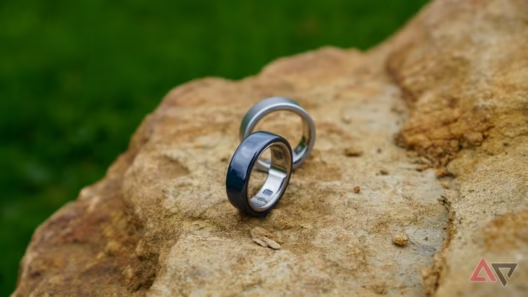
Top AI sleep-tracking wearables of 2026
Top African Fashion Influencers You Need to Follow for Style Inspiration
Beyond the “Don’t Drink Coffee” Advice
Remember when sleep tracking just meant a graph on your phone telling you that you stayed up too late watching TikToks? In 2026, AI doesn’t just watch you sleep; it engineers it.
Between AI-integrated mattresses that adjust their temperature in real-time based on your body’s thermal signals and “smart soundscapes” that use generative audio to mask your neighbour’s 3:00 AM power-washing, we’ve entered the era of the optimised slumber. You don’t necessarily “go to bed”; you “initiate a recovery protocol.”
While it’s great that your AI knows exactly when to dim the lights to trigger your melatonin, don’t let it become another source of “orthosomnia” (the anxiety of getting the perfect sleep score). Sometimes a 65% score is just a Tuesday.
Skin-Tech: The Era of Precision Aesthetics
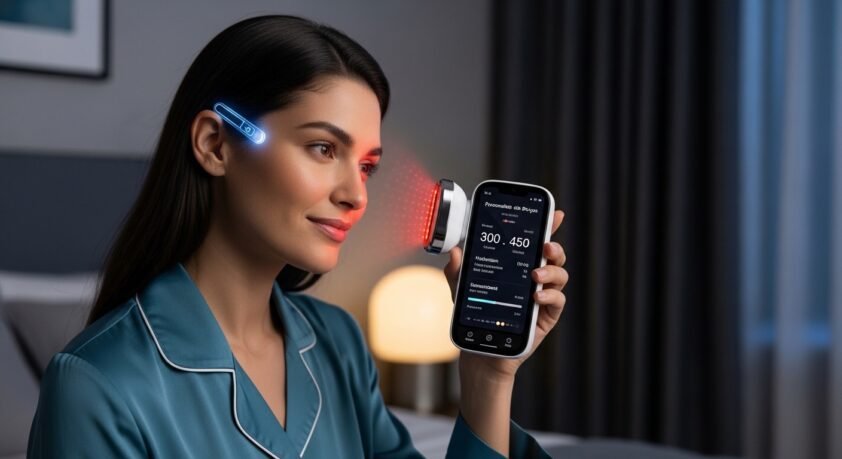
The “shelfie” is dead. In its place is the AI Skin Scan. By now, computer vision has moved from the dermatologist’s office to our bathroom mirrors.
We’re seeing AI that analyses the UV index, local humidity, and your hormonal cycle to tell you exactly which serum to apply that morning. It’s no longer about “normal to oily” skin types; it’s about “Tuesday at 10:00 AM in a high-pollution zone” skin types.
The innovation is definitely the custom-mixed, AI-formulated creams that are 3D-printed in your vanity.
Needless to say, no amount of $500 AI-formulated cream can replace a litre of water and a decent diet. The algorithm is a tool, not a miracle worker.
The Confidence Bot
This is where it gets interesting and a little weird. AI has moved into the “soft skills” space. We’re seeing “confidence coaches” that live in our earbuds, giving us real-time feedback on our tone of voice before a big meeting or a first date.
- The “Social Sandbox”: Using VR and AI to rehearse difficult conversations. It turns social anxiety into a “level” you can beat.
- The Mirror Effect: AI styling apps that don’t just show you clothes, but analyse your “colour season” and “body architecture” to tell you exactly why that blazer makes you look like a CEO.