




For an industry that has often been accused of being superficial, Wales Bonner represents a level of depth that feels almost radical. It is less a clothing label and more a research project manifested in textiles. Since its inception, Wales Bonner has operated with a level of stealth in dissolving the existing definition of luxury menswear. To truly grasp the thinking behind Wales Bonner is to grasp a fundamental shift in the luxury paradigm, in which cultural heritage isn’t simply a design reference point but the foundation upon which the business operates.
The trajectory of the brand from a graduate collection at Central Saint Martins to a global phenomenon that has rewritten the rules on collaborations with Adidas and walked the Paris Fashion Week runway is a textbook example of brand building around the idea of identity. Grace Wales Bonner has not only built a fashion brand; she has built a universe that marries Afro-Atlantic history with European couture craftsmanship and delivers a value proposition that deeply resonates with the contemporary consumer.
1. The Genesis: Who is Grace Wales Bonner?
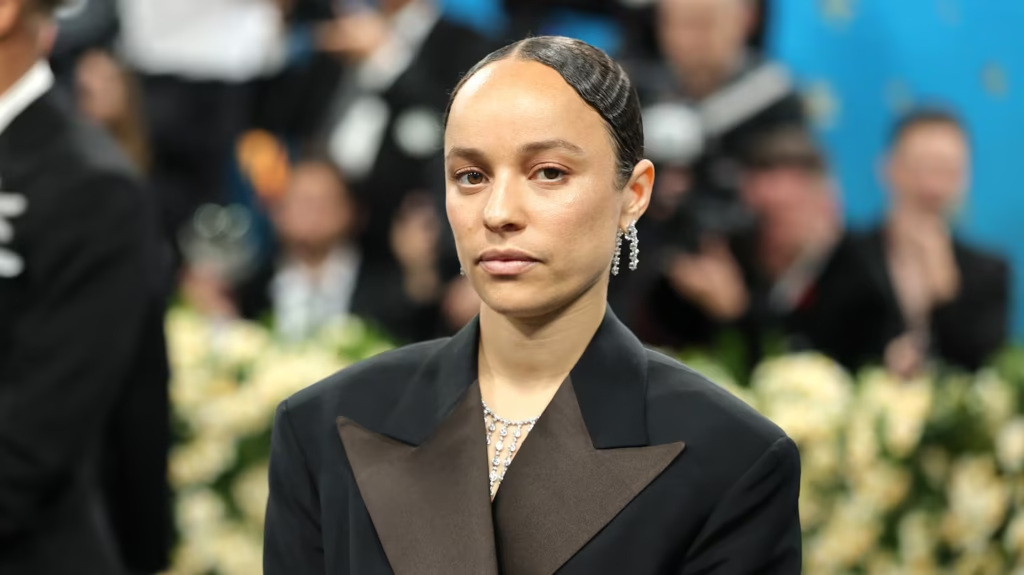
Born in London to a Jamaican father and an English mother, Grace Wales Bonner graduated from Central Saint Martins in 2014. Her graduate collection, Afrique, won the L’Oréal Professional Talent Award, instantly marking her as a designer to watch. However, it was her 2016 LVMH Prize win that catapulted her onto the global stage.
Unlike many contemporaries who focus on disruption through shock value, Wales Bonner’s genesis was founded in quiet confidence and academic depth. Her work is deeply biographical, exploring the space between her dual heritage. She treats fashion design with the discipline of an archivist, citing literature, critical theory, and historical photography as primary sources. This authenticity is the bedrock of her brand strategy; the founder is the brand’s narrative.
2. Brand Identity: Where Heritage Meets High Fashion
The visual identity of Wales Bonner is unmistakable: 70s-inflected tailoring, crochet detailing, and a distinct soulful elegance. But the strategy goes deeper than the silhouette. The brand operates on the concept of “retrofuturism through a diasporic lens”.
By elevating silhouettes associated with the Black experience—specifically the Windrush generation in Britain and post-colonial African studio photography—into the realm of high luxury, she validates these histories. The strategy here is elevation. By using Loro Piana cashmeres and artisanal production methods for tracksuits and bowling shirts, she forces the fashion establishment to re-evaluate what constitutes “luxury” clothing.
“I’m interested in a distinct notion of luxury… interpreting it from an Afro-Atlantic perspective.”
3. Cultural Strategy: Bridging African Diaspora and European Aesthetics
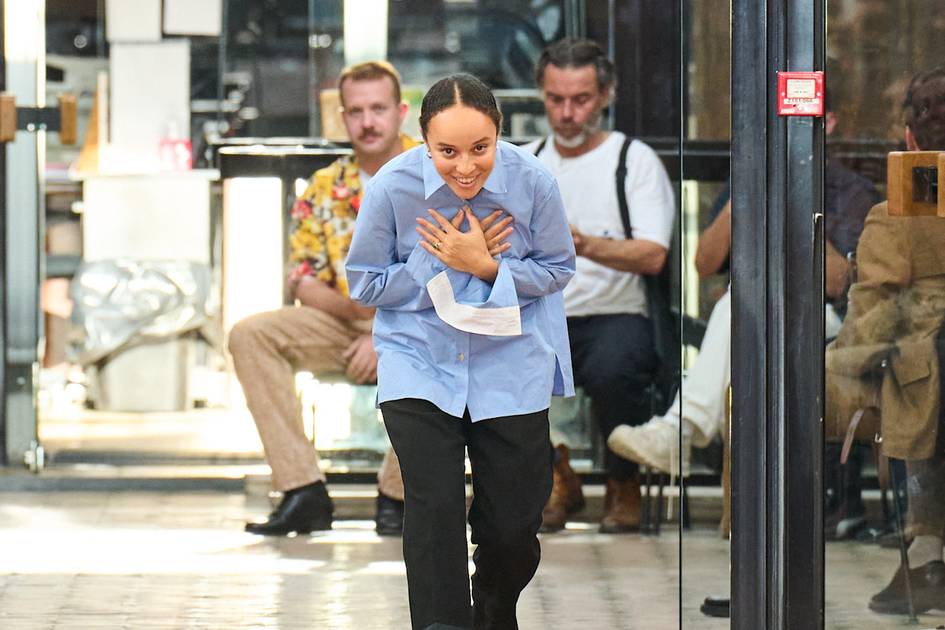
Wales Bonner’s genius lies in her ability to bridge worlds. She does not reject European tailoring traditions; she masters them and then infects them with specific cultural narratives. This creates a “hybrid” product that appeals to a diverse, global clientele.
Her collections often reference specific intellectual figures or moments in time—such as James Baldwin’s sojourns in Europe or the jazz musicians of the 1970s. This adds a layer of educational value to the consumption experience. Customers aren’t just buying a jacket; they are buying into a lineage of Black intellectualism and style. This strategy creates intensely loyal brand advocates who see the clothing as an extension of their own cultural literacy.
Recommended For You
4. Collaboration as Currency: The Adidas Partnership
Perhaps the most commercially potent arm of her strategy is her ongoing collaboration with Adidas Originals. In an era saturated with “hype” collaborations that feel transactional, Wales Bonner x Adidas feels organic.
She reimagined the Adidas archive through the lens of 1970s British-Jamaican lovers’ rock and 1980s dancehall culture. The result was the Samba sneaker becoming the “it” shoe of the early 2020s. This partnership served two strategic purposes:
1. Accessibility: It allowed younger, aspirational consumers to buy into the Wales Bonner universe at a lower price point ($150–$300) without diluting the mainline brand’s exclusivity.
2. Scale: It utilised Adidas’s massive distribution network to introduce her name to markets in Asia and the Americas that her mainline distribution hadn’t yet saturated.
5. The Storytelling Approach: Literature, Music & Art
Wales Bonner does not do “marketing” in the traditional sense. She engages in “world-building”. Every collection is accompanied by a zine, a curated Spotify playlist, or a literary reference. For her “Future Rites” collection, she didn’t just release a lookbook; she engaged in a dialogue with the work of artist Ben Okri.
This multi-disciplinary approach positions the brand as a cultural institution rather than just a retailer. It creates multiple entry points for the audience. You might discover Wales Bonner through a book recommendation, a museum exhibition she curated (like her MoMA show), or a song, eventually leading to a purchase. It is a “pull” strategy rather than a “push” strategy.
6. Global Influence and Market Positioning
Currently, Wales Bonner sits in a unique niche: intellectual luxury. Her price points place her alongside The Row, Loewe, and Prada. However, her cultural cachet gives her a coolness that legacy brands struggle to manufacture.
Her influence is visible in the wider market shift toward “soft masculinity”. The move away from the aggressive, oversized streetwear of the late 2010s toward slimmer, tailored, and more romantic silhouettes can be partly attributed to her consistent aesthetic. Retailers like SSENSE, Dover Street Market, and MatchesFashion position her as a key anchor brand, bridging the gap between avant-garde designers and traditional luxury houses.
7. The Future of Wales Bonner
As we move through 2026, the trajectory for Wales Bonner suggests a cautious but deliberate expansion. The challenge for any brand built on such specific, intense storytelling is scaling without losing soul.
We are seeing early signs of category expansion into homeware and perhaps a deeper dive into fine accessories. However, Grace Wales Bonner has shown a resistance to the “creative director musical chairs” of big fashion houses, preferring to nurture her eponymous label. The future strategy will likely involve deepening the direct-to-consumer relationship, relying less on wholesale to control the narrative fully.
Conclusion
Grace Wales Bonner has proven that identity politics and commercial viability are not mutually exclusive. In fact, in a fragmented digital world, specific identity is the only way to cut through the noise. By treating fashion as a medium for studying history and identity, she has built a brand that feels timeless. Wales Bonner is not just selling clothes; she is selling memory, dignity, and a sophisticated vision of a borderless world.