
Some artists paint light. Yago Sánchez builds it — one crystal at a time. Born and raised in Spain, where the Mediterranean sun cuts sharp contrasts between brilliance and shadow, Sánchez grew up with an obsession for illumination. He never attended art school. What he did instead was spend years disassembling small tiles used in swimming pools, puzzling over how a grid of tiny squares could become something alive, something that transformed depending on the hour of the day, the angle of the viewer, the quality of the light. That self-taught restlessness became a practice. That practice became an art form entirely his own.
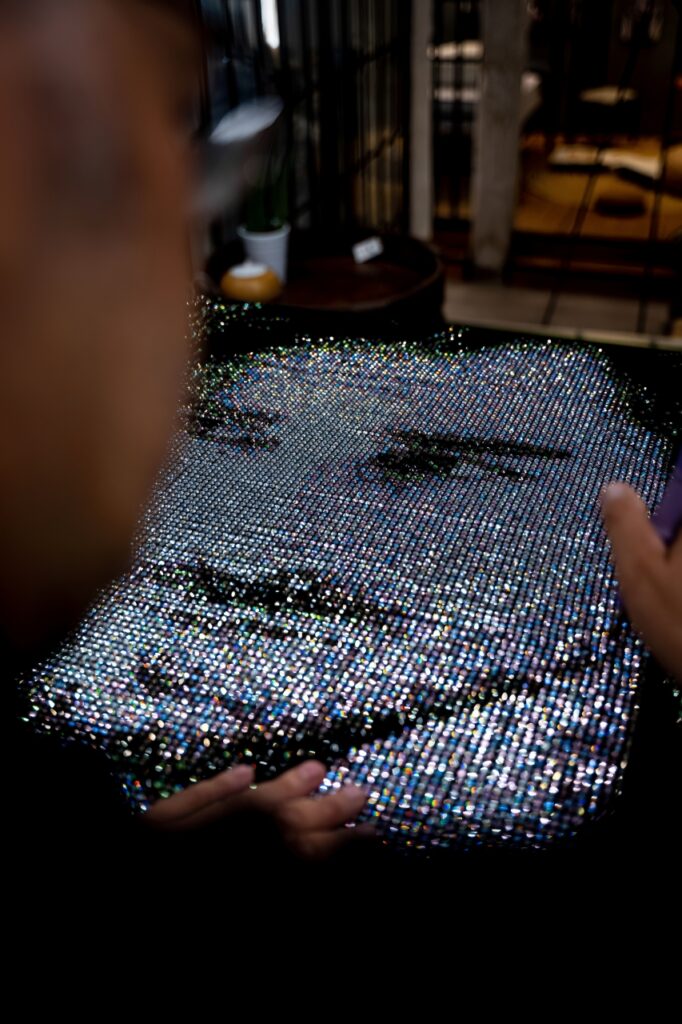
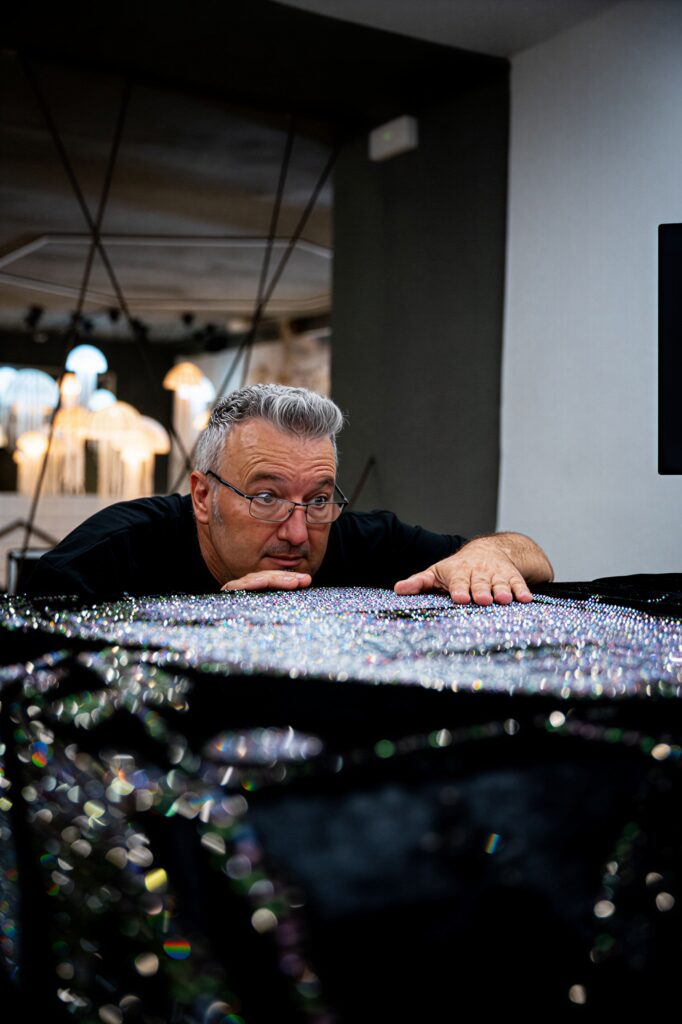
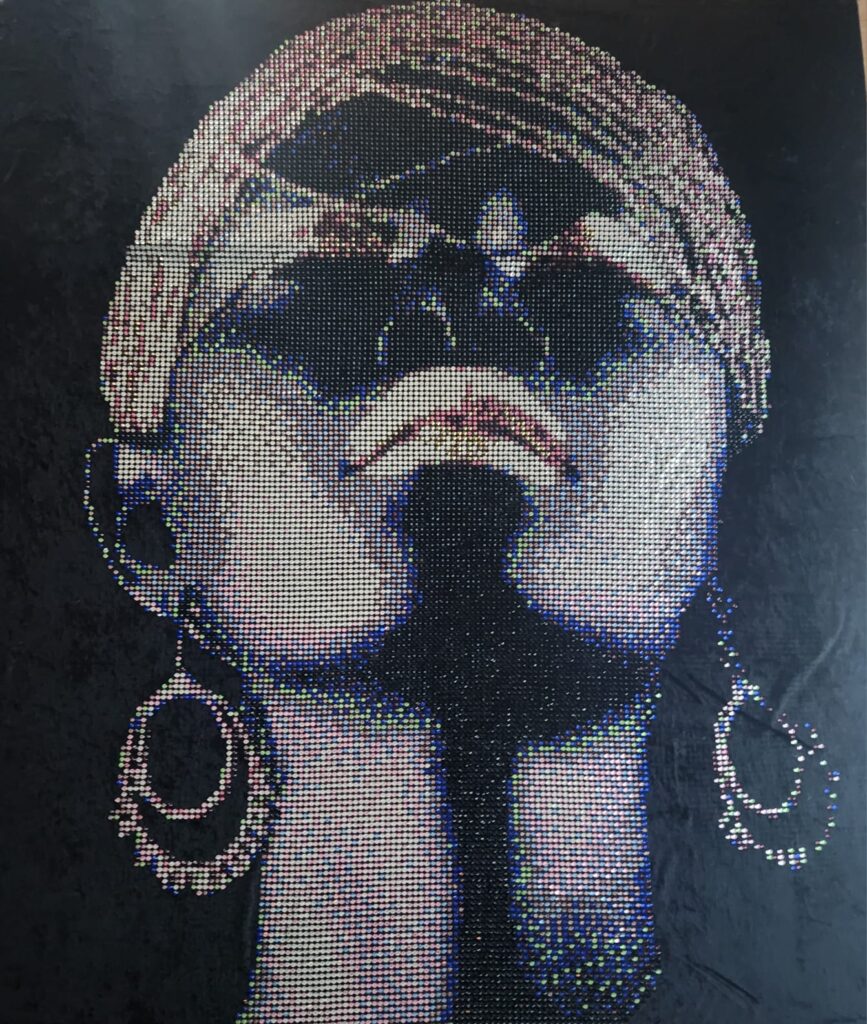
Today, Yago Sánchez works exclusively in crystal mosaic, thousands of individually placed crystals on fabrics, each one acting as a point of light that shifts and breathes as you move around the piece. Up close, his works dissolve into a constellation of gleaming points. Step back, and a portrait emerges; rich, dimensional, alive in a way that conventional painting simply cannot be. He describes his method as a pointillism of light: where Georges Seurat used paint to approximate luminosity, Sánchez uses real light, reflected, refracted, and redirected through each precisely placed crystal.
It is an art form rooted in one of the world’s oldest traditions. Mosaic has existed across cultures for millennia yet Sánchez has carried it into unmistakably contemporary territory. His works are not decorative objects. They are visual experiences that ask you to move, to pause, to look again.
This June, Lagos gets its first encounter with that experience. From June 15 to 21, 2026, Yago Sánchez will exhibit his crystal mosaic works in Lagos, Nigeria, a city whose own relationship with bold visual culture, craftsmanship, and artistic ambition makes it a fitting stage for a practice as disciplined and dazzling as his. FAB L’Style sat down with the Spanish artist to talk about light, darkness, discipline, and why in an age of digital everything, he still believes the hand is irreplaceable.
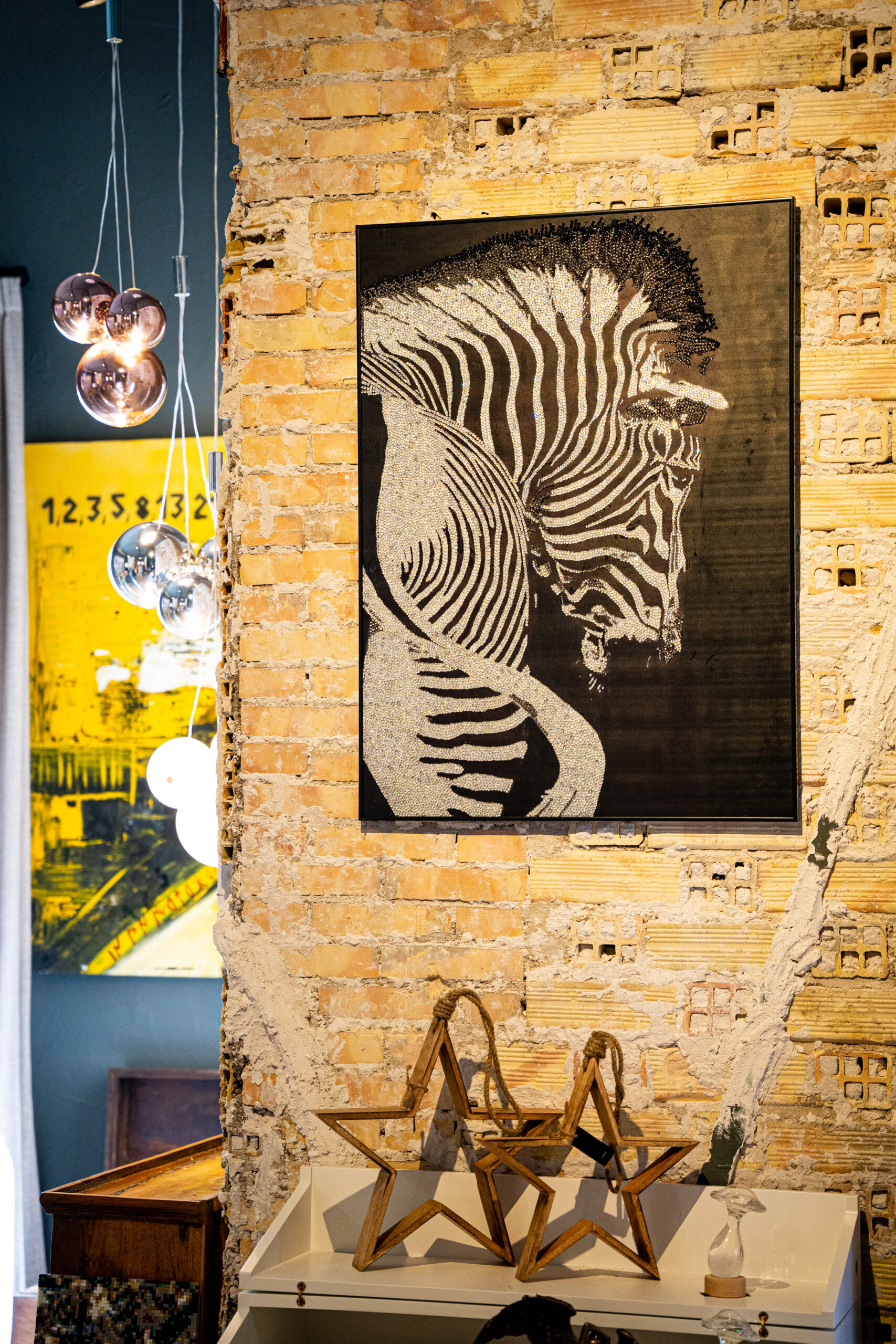
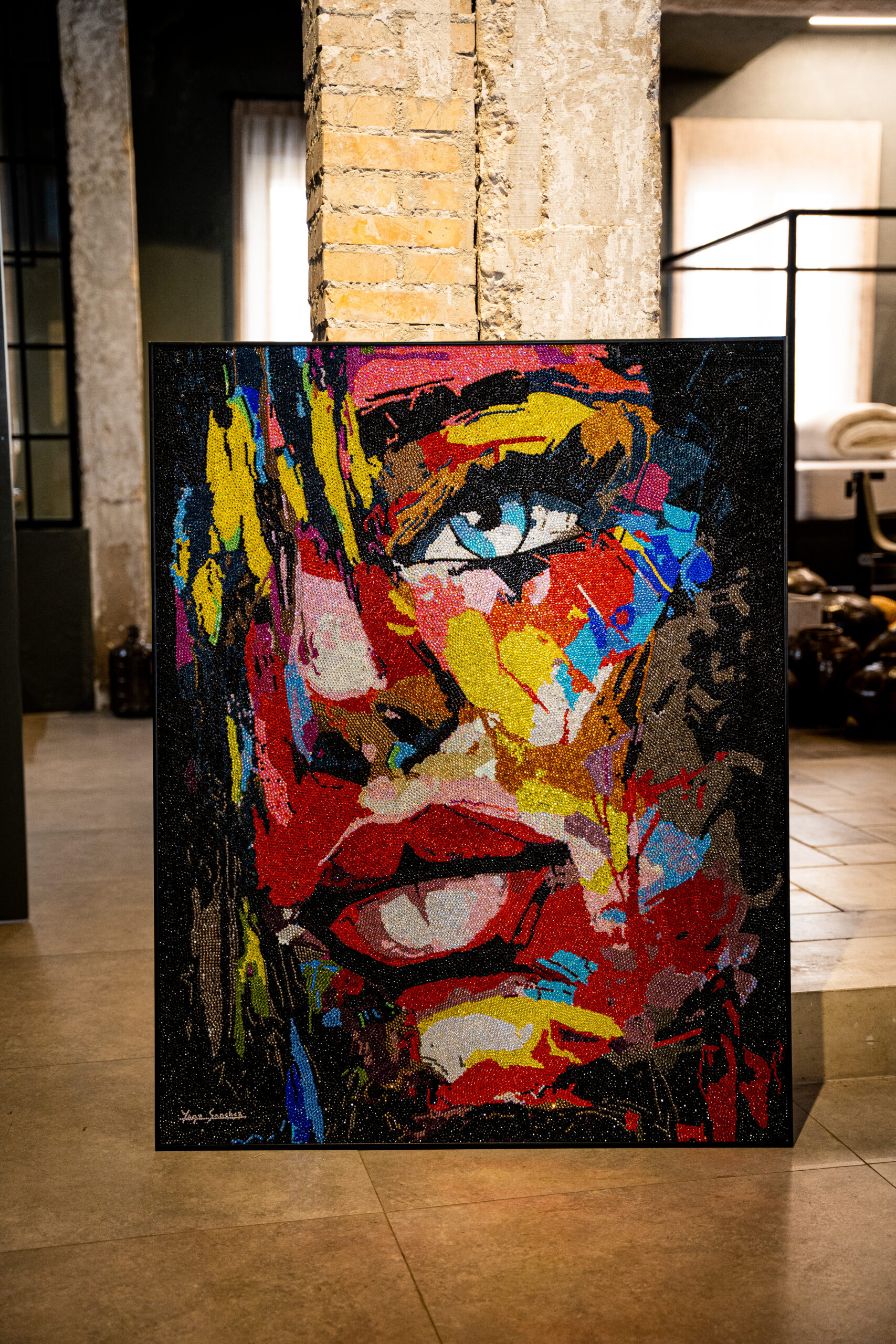
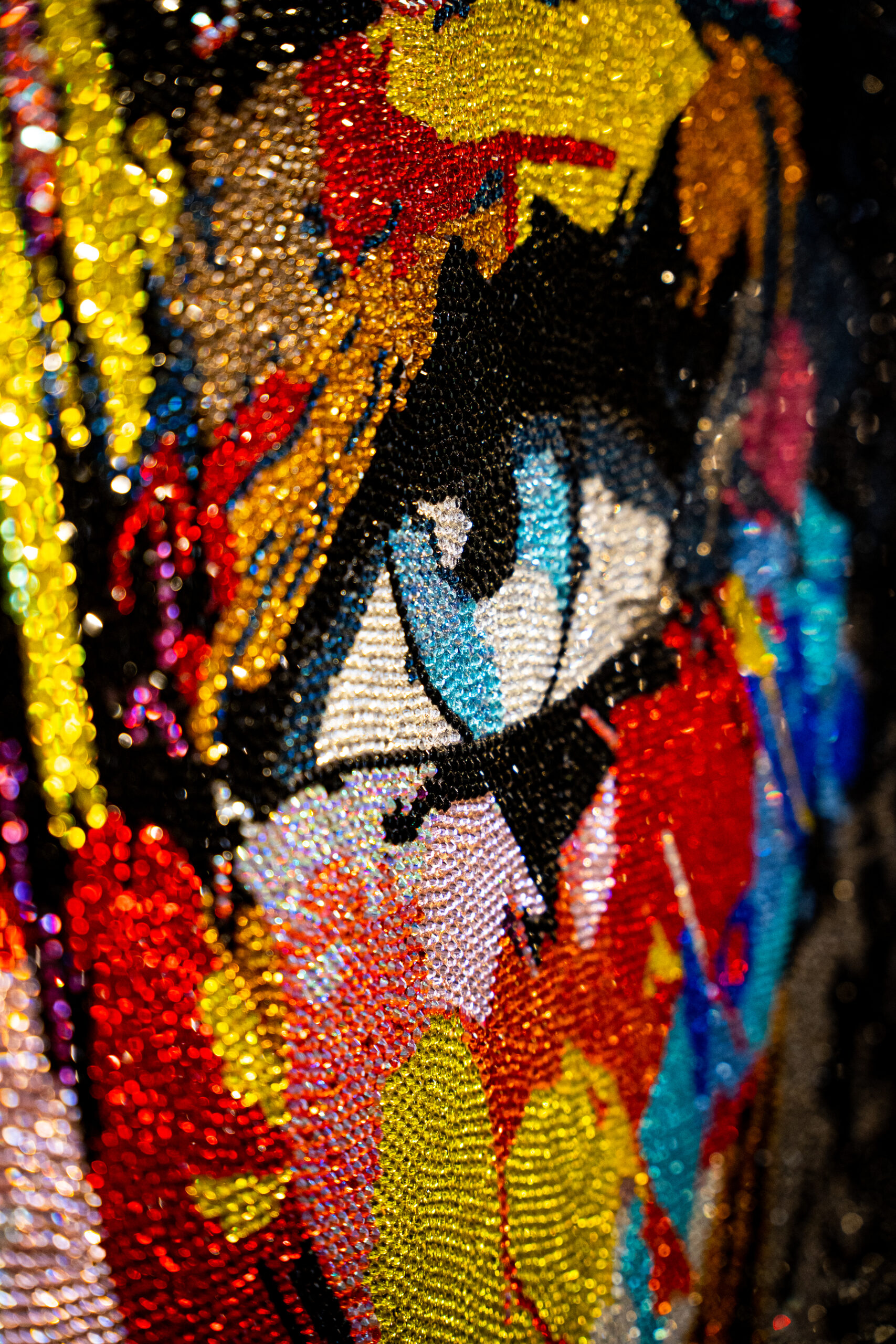
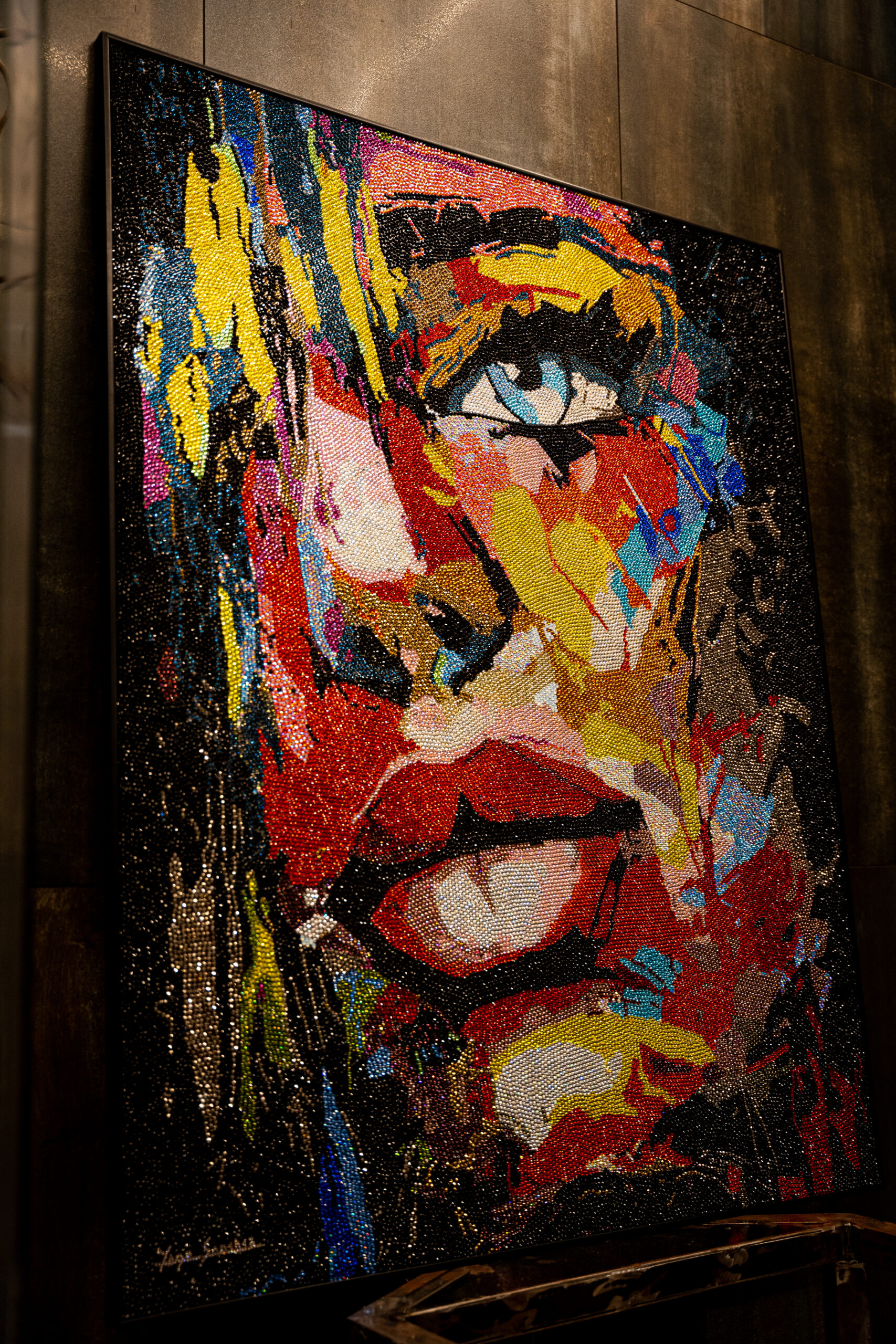
Artistic Origins and Personal Journey
FAB: You describe yourself as a self-taught artist whose fascination with art began at a very early age. Can you take us back to the moment when curiosity first became a vocation?
YAGO SÁNCHE: —Yes, of course. From a very young age I had the feeling that I needed to create. I was fascinated by puzzles because they entertained me a lot. I could spend hours looking for the right piece over and over again. That kept me focused on what I wanted… to start and finish something.
I was fascinated by understanding how a puzzle changed completely when you placed the last piece. I have carried that same idea into my work, where each crystal is unique and has its own meaning individually and as part of the whole.
Puzzles were left behind when I felt the passion to do something different. I began creating different forms and techniques for making artworks, and that’s when the inspiration came to achieve something that could convey the essence of how I see the world—with light and darkness, brilliance and black.
FAB: Your journey in art began through mosaics rather than painting or drawing, which is unusual for many artists. What specifically attracted you to working with mosaics as your starting point?
YAGO SÁNCHEZ: My relationship with art began through light, not through the brush. When I discovered mosaic, I understood that there was a way to build images that did not depend only on color, but also on shine, reflection, and how light interacts with matter. In a traditional painting the image is relatively fixed: the artist decides the color, the brushstroke, and the composition. In mosaic, however, every small element has its own life. Each crystal, each point, reacts differently depending on the light that touches it, the angle from which it is viewed, or even the moment of the day. This means the artwork is never exactly the same. It seems alive.
That was the point that captured me. I didn’t want to simply represent an image; I wanted to build a changing visual experience.
Over time I began developing my own language within that world. My works function like a pointillism of light: thousands of crystals that, seen up close, are small shining points, but when you step back they form an image full of depth and emotion. That is why my path began with mosaic. Because I was not only looking to paint an image, but to create something different.
FAB: Looking back over more than a decade of practice, how has your artistic voice evolved from those early experiments with mosaics to the crystal-based works you create today?
YAGO SÁNCHEZ: Over the years I have researched a lot in order to develop techniques that allow me to work more quickly without losing precision. That has given me more freedom to create and explore more complex compositions. But the essence has not changed: I still believe in handmade art in these very digital times, and I am still searching for the same thing I looked for in the beginning—this dialogue between darkness and points of light. The difference is that now I have more tools so that this light can stand out better within the work.
FAB: Being self-taught often means discovering techniques through experimentation rather than formal instruction. What were some of the most important lessons you learned through that process?
YAGO SÁNCHEZ: I learned to make mosaics with the small tiles used in swimming pools. Even back then I could already see the things that could be created by organizing those little squares properly, but people did not want a pool with complicated figures.
When I started making my first artworks with crystals one by one, I realized the result was spectacular, but the technique had to evolve. I have gradually refined the way I create mosaics. For example, I developed them on separate panels that I later joined together, but the seams were visible. Later I moved on to screen- printing an image onto a rigid board and covering it with crystals, until I finally decided to create mosaics on canvas, which is the technique I use today.
Vision and Expression
FAB: Your work includes mosaics, paintings, and murals. How do you decide which format best expresses the idea you want to communicate?
YAGO SÁNCHEZ: I only make mosaics. I prefer mosaics because crystals allows me to work with real light, not just its representation. In a painting, light is painted; in my works, light actually exists—it bounces off each crystal and changes depending on the environment. That means the artwork is never exactly the same. Depending on the angle, the intensity, or the color of the light, the piece transforms.
For me, art is not only about creating an image, but about creating something that has life. And crystal gives me exactly that.
Many artists speak about the relationship between light and art. Since crystals interact directly with light, how important is lighting when you imagine your pieces?
It is fundamental. Light is not just something that illuminates the work—it is part of the work. When I work with crystals, I am constantly thinking about how the light will enter, how it will bounce off each point, and what it will reveal at every moment. A small change in angle or in the type of lighting can completely transform the perception of the piece.
That is why I am so interested in the contrast between darkness and points of brightness. The black spaces create visual silence, and the light that emerges from the crystals is what gives life and emotion to the work.
FAB: When you begin a new piece, do you start with a clear vision of the final work, or does the process evolve organically as you work?
YAGO SÁNCHEZ: I begin with a clear idea of the image and the emotion I want to convey, but the process always has something organic about it. When you start working with thousands of points of light, the artwork begins to dialogue with you. The way the crystals react, how the contrast with darkness appears, or how the light breathes inside the image begins to guide you.
So there is an initial vision, but there is also discovery during the process. Many times the work ends up telling you what it needs in order to come alive.
The Emotional and Cultural Dimension
FAB: Mosaic traditions have existed for centuries across many cultures. Do you see your work as part of that historical continuum?
YAGO SÁNCHEZ: Yes, in some way I do. Mosaic is a very ancient form of art that has always built images from small pieces. I have great respect for that tradition.
But my work tries to bring that idea into another territory: instead of stone or ceramic, I use crystal, and I work with mosaic almost like a pointillism of light. I am interested in maintaining the handcrafted and patient spirit of traditional mosaic, while exploring how light, shine, and darkness can create a more vivid and changing visual experience.
FAB: What emotions or ideas do you hope viewers feel when encountering one of your crystal works for the first time?
YAGO SÁNCHEZ: This is one of the most rewarding parts for an artist, at least for me. I like the viewer to first experience a moment of surprise. From a distance they see an image, but when they approach they discover that it is built from thousands of points of light. From there I hope something more intimate happens: that the artwork changes as they look at it, that the light reveals different nuances, and that each person finds their own interpretation. For me, the contrast between darkness and brightness is not only visual; it is also emotional. It speaks about silence, reflection, and those small points of light that give meaning to everything. I hope people leave with the emotion of having seen a living artwork that has captivated them with the serenity of its dark tones. People who see my works often comment that they have never seen anything like it before, and they leave with the feeling that art has evolved.
FAB: In what ways does your cultural background influence the stories or themes in your work?
YAGO SÁNCHEZ: It influences the sensitivity more than the specific subject. I grew up in a culture where light has a very strong presence: the light of the Mediterranean, the intense contrasts between brightness and shadow.
That relationship between light and darkness is very present in my work. The black spaces create depth and silence, and the crystals act as small points of light emerging from that darkness.
FAB: Do you think art should provide answers, or mainly ask questions?
YAGO SÁNCHEZ: I believe art is more powerful when it asks questions. A work that explains everything quickly becomes exhausted. But when it leaves space for interpretation, each viewer can find something different in it.
In my pieces something similar happens: the image is there, but the light changes, the reflections change, and each person sees different nuances. That makes the artwork offer not one single answer, but many possible readings.
FAB: Have you ever created a work that surprised you, revealing something you did not initially intend?
YAGO SÁNCHEZ: Yes. Once I created a very personal portrait for a friend whose wife had recently passed away. The commission was a great challenge because of how delicate the situation was, and because he asked for it with a very short deadline.
I worked day and night for weeks and was able to deliver it on December 23rd. When he saw it, he broke down in tears and thanked me more than a hundred times for making such a portrait.
For me, that is the essence that stays with me—when someone shows their happiness upon seeing your work. Money cannot pay for that. Because he is someone special to me, I also committed to installing the artwork in his home.
We placed it and covered it. On Christmas Day I was having lunch with my family when my friend called me crying. He had uncovered the artwork and his three daughters loved it. I was able to speak with them, and they thanked me for creating such a beautiful portrait of their mother.
As I said before, those things cannot be paid for with money. In the end, what artists want is to transmit something different—something that makes all the work and effort worthwhile.
Process, Discipline and Inspiration
FAB: The art of mosaic is as much about discipline as inspiration. What habits or routines help you maintain your creative focus during long hours of manual work?
YAGO SÁNCHEZ: Without a doubt: discipline, consistency, and passion for what you love. Otherwise it would be impossible to finish artworks like the ones I create. One of my pieces requires many, many hours of dedication. That is why you must have great discipline and, above all, know how to interpret what the artwork is expressing through each crystal.
FAB: Where do you usually find inspiration—in architecture, nature, cultural motifs, or personal experiences?
YAGO SÁNCHEZ: Inspiration can come from many places, but it almost always begins with an image that has a special strength. It could be architecture, nature, although what I enjoy most are portraits—something that has character and contrast. What really interests me is how that image can be transformed into light—how the points of brightness and the spaces of darkness can reconstruct it in a different way.
In the end, I am not only trying to represent what I see, but to reinterpret it so that the light itself tells the story.
FAB: Has there been any particular project that challenged your abilities or pushed your creative limits?
YAGO SÁNCHEZ: Yes. I created a piece with a huge amount of detail, completely different from what I usually do. The crystals were extremely small, between 1 and 3 mm, which allowed me to achieve greater definition in the work.Several times I was close to not finishing it. I left it abandoned until one day I found the motivation and discipline to complete it. This artwork was not meant to be sold, but to showcase what I am capable of doing. However, as soon as a client saw it, he bought it—much to my regret—and I was never able to exhibit it.
Vision and Future
FAB: How do you imagine the future of mosaic art within the contemporary art world?
YAGO SÁNCHEZ: I believe mosaic still has a long path ahead in contemporary art. For a long time it has been associated with something very classical or decorative, but in reality it is a language with enormous potential.
When new materials such as crystals are incorporated, and light becomes part of the artwork itself, mosaic stops being just a traditional technique and becomes a very contemporary art form. The future lies in that evolution: respecting the essence of mosaic while exploring new ways to construct images and sensations.
FAB: Are there new techniques, materials, or collaborations you hope to explore in the coming years?
YAGO SÁNCHEZ: Up to now I have collaborated with several crystal companies. We created artworks for celebrities while they supplied the crystals, promoting their brand through my work.
One day I hope to collaborate with Swarovski and create something beautiful together.
FAB: When someone stands in front of one of your works for the first time, what do you hope they feel or discover?
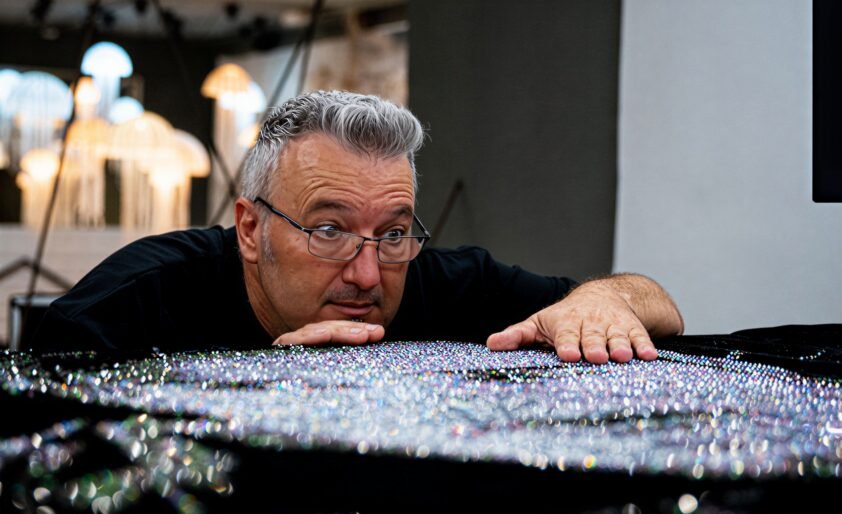
YAGO SÁNCHEZ: I like them to first see the artwork as a whole from a distance. Then, little by little, they approach until they focus on a single crystal—any one they choose. Then I ask them to observe the artwork starting from that crystal and moving their gaze toward the different angles of the piece. Finally, I ask them to slowly step back while continuing to look at the artwork, until they return to a final view of the entire composition.
Each person experiences something different during this process.
FAB: What advice would you give to young artists who want to dedicate themselves to traditional craft-based art forms in the modern era?
YAGO SÁNCHEZ: I am not really the one to give advice, but I would like to tell young artists that technology is great, but craftsmanship is another level.
Being able to say “I created this, I made this myself” cannot be compared to what a machine produces, no matter how beautiful it may be. There is no sacrifice, no effort, and therefore the true essence of handmade work is missing.