
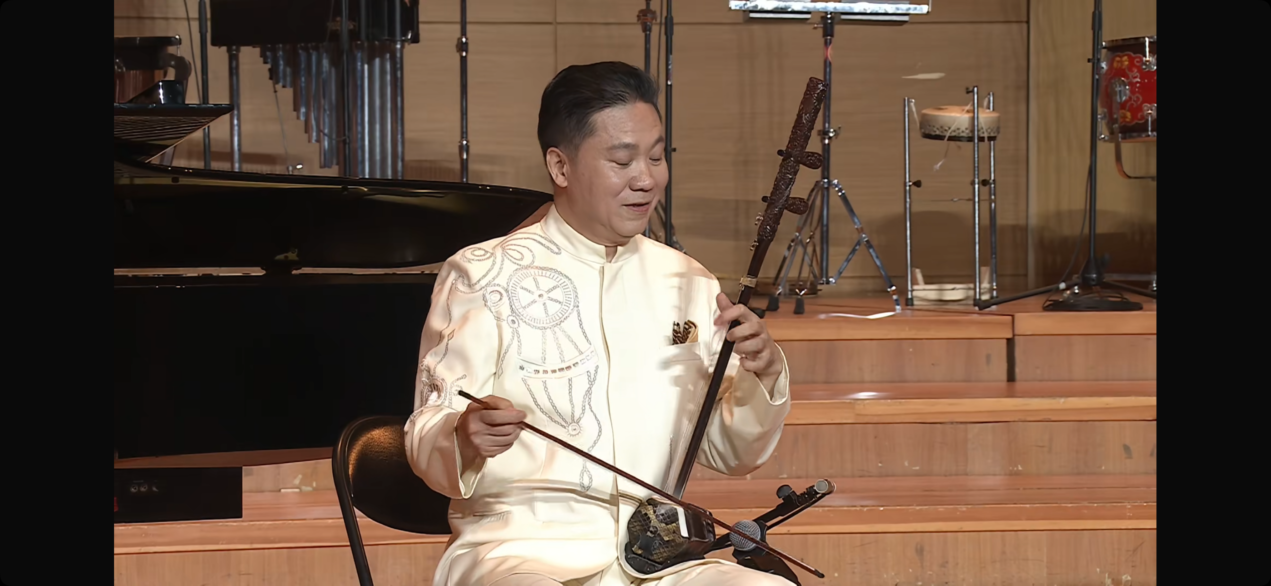


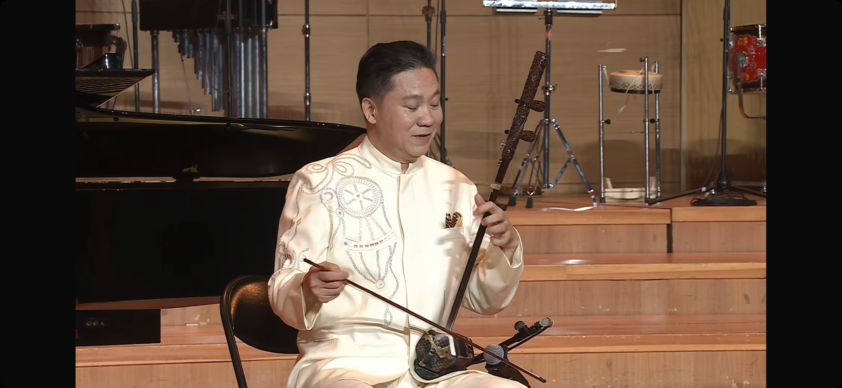
So, what is the erhu, you might ask? The erhu is a traditional Chinese two-string instrument known for its voice-like tone and expressive vibrato. One of the leading Chinese masters of the modern era in the traditional Chinese two-string instrument called the ‘erhu’ is Zhou Wei. He has been instrumental in bringing the instrument into the modern age without losing its classical essence. Zhou Wei’s association with the erhu started at the tender age of five with a tune wafting through the streets of Jiangsu. In this interview, the renowned Chinese erhu master talks about destiny, discipline, interpretation, and how China’s two-string instrument speaks powerfully to global audiences today.
Zhou Wei Erhu: Tradition, Destiny, and the Global Voice of China’s Two-String Instrument
FAB: How did the erhu enter your life, choice or destiny?
Zhou Wei: I was born in Dongtai City in Jiangsu Province. As a child, I often heard street performers playing traditional Chinese instruments. They performed pieces such as Jasmine Flower, Nine Chains, and Scenes of Wuxi. In those days, we had no television, no piano, and very few toys. For a five-year-old boy, those melodies felt magical.
Whenever I heard them, I ran out of the house and followed the musicians through the streets. One day, a performer asked me whether I liked the instrument. I told him I loved the erhu in his hands. He said, “Then ask your parents to buy one.”
I remember it cost only 3.8 yuan, but to a five-year-old, that was an astronomical sum. My family was not well-off, so they ignored my request. I secretly saved every bit of my daily breakfast money, little by little, for an entire year, and finally bought my beloved erhu. From that moment, my life became inseparable from it. Looking back, it feels less like a choice and more like destiny.
FAB: What did practice mean to you in childhood compared to now?
Zhou Wei: As a child, practice meant joy. Because the instrument was so difficult for me to obtain, I treasured it deeply. No one forced me to practise. I wanted to play every moment I could.
Today, practice carries more responsibility. It is not only about repetition but also about refinement, interpretation, and artistic depth. However, the foundation remains the same. Without love, no amount of discipline will create true mastery.
FAB: What part of formal training impacted you the most?
Zhou Wei: Finding the right teacher impacted me profoundly. A good teacher does more than correct technique. A good teacher influences artistic understanding and musical thinking. I was fortunate to study with a mentor who emphasised scientific technique and emotional authenticity.
The erhu has only two strings and no fingerboard. The strings hang freely, which makes intonation extremely challenging. At the same time, this structure allows wide vibrato, subtle slides, and expressive pitch changes. Because of this freedom, the erhu can imitate the human voice very naturally.
Understanding this balance between technical control and emotional expression influenced me more than anything else in my training.
Must Read
Afropop Shaping The Future Of Global Music
Chinese Dining: Learn the Dos and Don’ts for a Flawless Cultural Experience
FAB: When did you realise that mastery required interpretation rather than repetition?
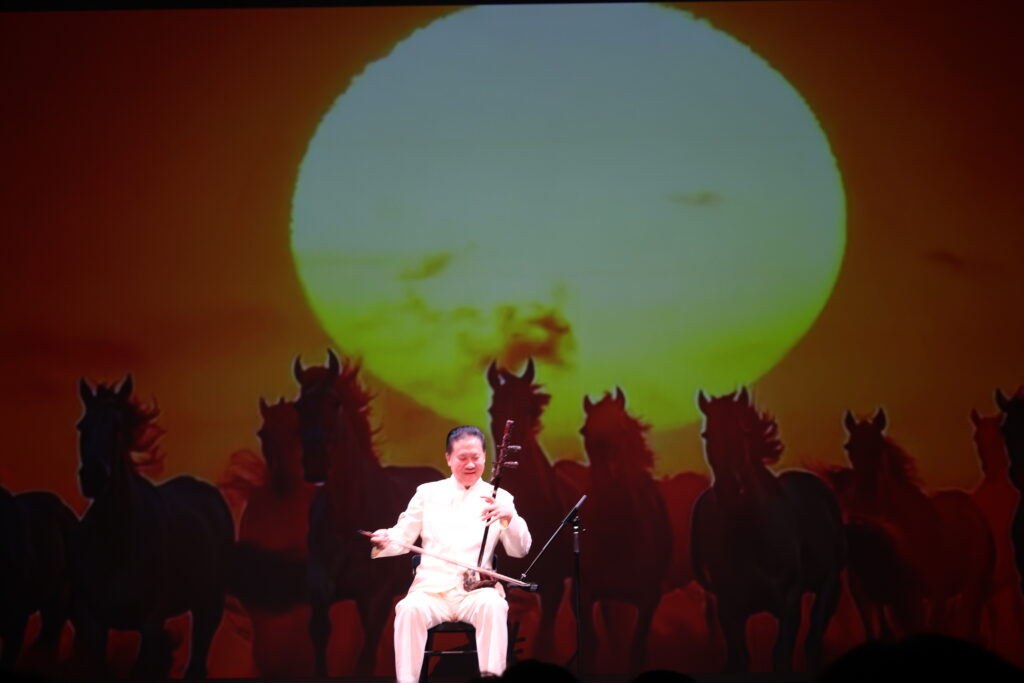
Zhou Wei: I realised it when I began exploring silence and space in performance. Erhu music resembles traditional Chinese painting. In painting, empty space invites imagination. In music, silence creates emotional depth.
When I perform Birds Singing in an Empty Mountain, inspired by a Tang poem that describes hearing birds in a mountain where no one is seen, I shape distance, softness, and resonance carefully. Interpretation transforms notes into atmosphere. That was when I understood that repetition alone is not enough.
FAB: What traditions have you preserved, and which have you intentionally renewed?
Zhou Wei: I fully respect and inherit tradition, but I also believe tradition must speak to the present. I have worked to integrate the erhu into modern contexts by performing music from different cultures around the world.
As artistic director for state banquets and major international events, I have performed melodies from host countries on the erhu. There is something powerful about playing foreign music on an ancient Chinese instrument. It allows the erhu to speak a modern language.
I have also collaborated with various ensembles, vocalists, and global styles. Many of my original compositions are lively and accessible, which helps younger audiences connect with the instrument. I see this renewal as one of my most important contributions.
FAB: Do you worry that global audiences exoticise the erhu before truly hearing it?
Zhou Wei: Music always carries cultural identity, but it should not be reduced to novelty. Presentation matters. If we present the erhu only through outdated forms, young people at home and audiences abroad may struggle to connect.
Music is a universal language. The challenge is to communicate clearly. We must use modern forms of expression while preserving artistic integrity. When that balance exists, audiences respond to the music itself rather than to exotic curiosity.
What Makes the Erhu Unique Among World Instruments
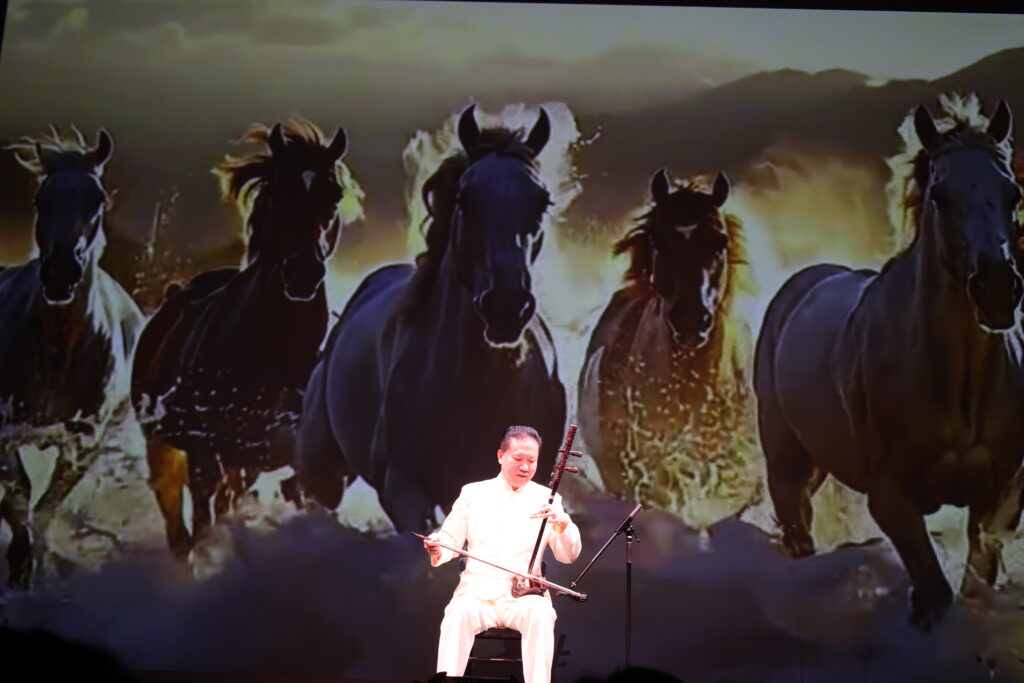
FAB: What does the erhu allow you to express that words cannot?
Zhou Wei: The erhu allows me to express emotions that language cannot fully capture. It speaks in tones that feel closer to the human voice than ordinary speech.
The instrument has only two strings, and we often describe it to foreign audiences as the Chinese two-string fiddle. Its structure differs completely from the violin. The erhu produces sound through membrane vibration, while the violin relies on the resonance of a wooden body. Because of this difference, the erhu carries a uniquely intimate and textured tone.
It has no fingerboard. The strings hang freely in the air, which makes intonation more difficult to control. At the same time, that freedom allows subtle pitch changes, deep vibrato, and fluid slides. These qualities enable the erhu to imitate the human voice with remarkable sensitivity. It can sigh, whisper, cry, and sing.
You can hear this expressive depth in classic works such as The Moon Reflected on the Second Spring and River Waters. The instrument conveys longing, tenderness, restraint, and quiet strength in ways that words would struggle to articulate.
Many people describe the erhu as melancholic, but I do not believe sadness defines it. The erhu can also sound bright, playful, and powerful. The emotion depends on the performer’s intention. Through the erhu, I can shape feeling directly, without explanation.
FAB: At this stage of your career, what are you still trying to learn?
Zhou Wei: I continue to learn how to deepen communication with audiences from different cultures. Music has boundaries influenced by context, but expression can overcome them. I want to refine how I share Chinese musical heritage in a way that resonates globally.
I also continue to explore new compositions and collaborations. Growth never ends.
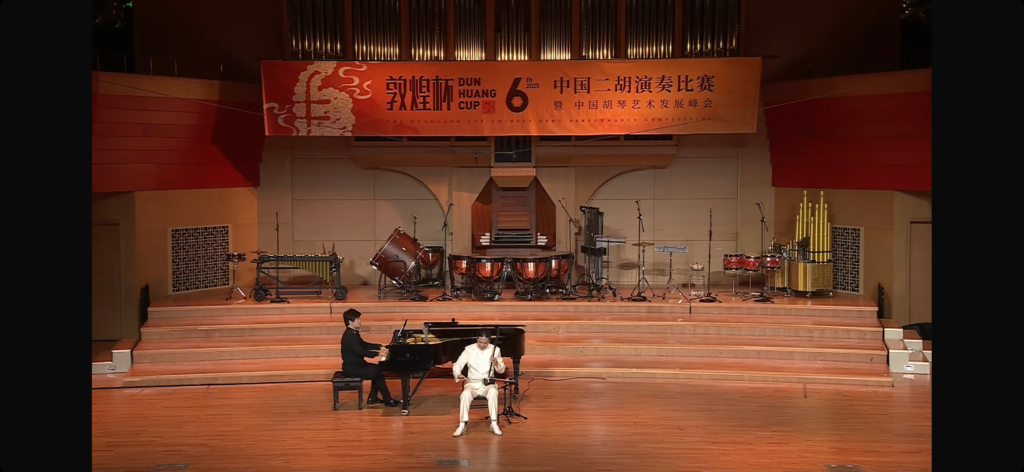
FAB: What has the erhu taught you about patience in a fast modern world?
Zhou Wei: The erhu demands patience because it offers no shortcuts. With no fingerboard, every note requires careful listening and control. You cannot rush intonation or emotional phrasing.
In life, people face pressure and competition. The instrument reminds me to remain steady and faithful to my purpose. Success requires genuine love and sustained devotion. Without inner commitment, nothing lasting can be achieved.
FAB: If there is one message you hope international audiences take from your music, what would it be?
Zhou Wei: I hope audiences hear sincerity. The erhu carries profound historical roots, but it also belongs to the present. I want listeners to feel that Chinese traditional instruments are alive, expressive, and relevant today.
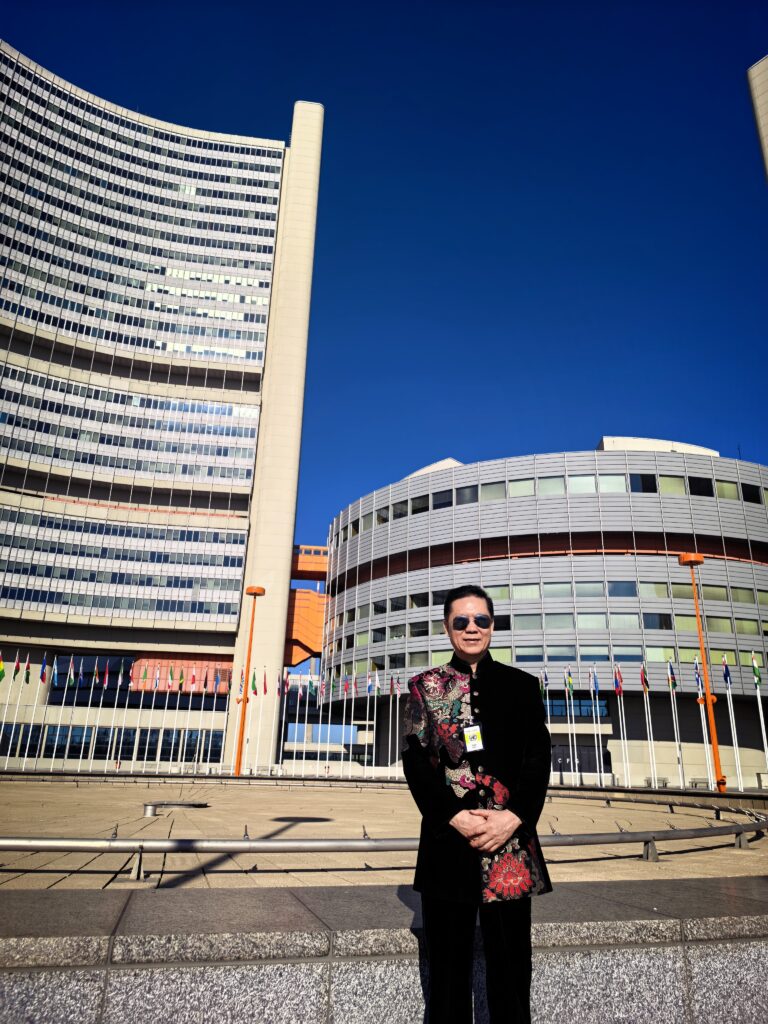
Music builds friendship. I hope people everywhere, including audiences in Austria and across Europe, will come to know and appreciate the beauty of the erhu more deeply.