
Kirkland Kampala is an Afro-modern fashion brand founded by Ugandan designer Kasozi Steven, blending indigenous textiles like kikoi and kitenge with contemporary streetwear while operating on a zero-waste and community-driven model. In this conversation, Kasozi reflects on fabric as storytelling, fashion as community work, and why impact, not hype, defines his vision.
Growing Up With Kikoi, Kitenge and Cultural Memory
FAB: You grew up in Uganda surrounded by rich textile traditions. What is your earliest memory of fabric, colour, or clothing that stayed with you?
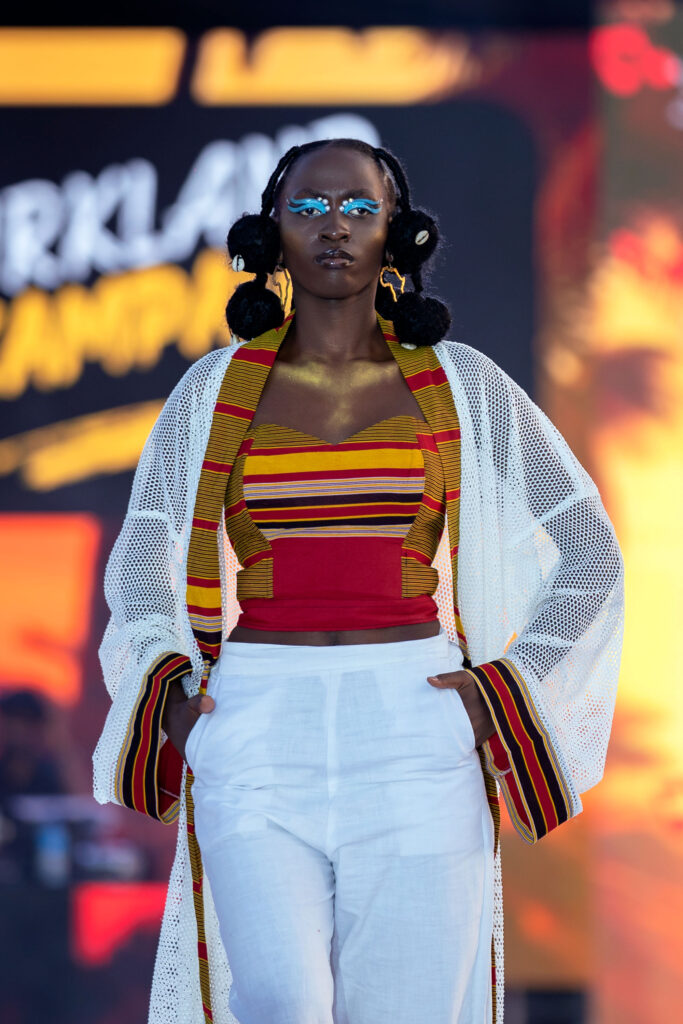
Kasozi Steven: My earliest memories of fabric are rooted in everyday Ugandan life, seeing my mother and grandmother use kikoi as an inner layer for traditional gomesi during cultural ceremonies like kwanjula and kukyaala. At the same time, walking through Kampala’s markets exposed me to vibrant kitenge prints from congo and tanzania which were commonly sold in two yards and used as wraps by women and for making shirts and dresses.These came in vibrant colours with uniform, bold and also floral patterns. Those early experiences taught me that fabric is not just material but memory, culture, and identity passed down through generations because we use to identify kitengi alot with the congolese and kikoi with the ugandans.
FAB: What first made you see fashion not just as clothing, but as a way to tell stories?
Kasozi Steven: Fashion became storytelling for me during my early training years between 2016 and 2017 when I began turning simple fabrics into wearable pieces and doing garment deconstructions for pattern analysis and self learning especially to jackets that I commonly do. As a student of Education in art and design, I always fantasized about fusing art into fashion through blending skills like screen printing, patching, blending fabrics based on colour themes to give life to fabrics by turning them into wearable pieces that tell a story of creativity.
This was my major basis in the creation process in addition to the youtube sewing tutorials for self learning of pieces and trends. Seeing how people reacted emotionally to what i created made me realize that fashion communicates pride, belonging, and aspiration. Designing for my campus choir was a defining moment which showed me that garments could unify people and express shared identity.
FAB: As a young man choosing fashion in a society that doesn’t always accept it easily, what resistance did you face and how did you overcome it?
Kasozi Steven: Fashion in my community was often viewed as unserious, feminine, or meant for those without academic direction. I faced skepticism from society, especially after my graduation at NTC Muni as a teacher of art and design. Most of my colleagues believed that following a path of fashion was kind of downgrading my career but I overcame it through persistence, education, and discipline. Choosing to build my fashion career as a consistent brand and later earning leadership and entrepreneurship training helped me prove that fashion is both intellectual and impactful.
Challenging Perceptions of Fashion in Uganda
FAB: In 2017, you founded Kirkland Kampala. What problem were you trying to solve through this brand?
Kasozi Steven: As a young creative, I wanted to solve the disconnect between African heritage and modern fashion. Many local fabrics by then were confined to traditional wear, while modern streetwear relied heavily on imported materials. During my visits in different market days in Arua where I studied and in Kampala, my homeplace, I realised that fellow youth preferred modern streetwear that are commonly imported as ready to wear. Kirkland Kampala was therefore created to reimagine Ugandan textiles like kikoi and kitenge into contemporary silhouettes that speak to such a young generation through designing streetwear pieces that relate with their trends but at the same time celebrate our culture and heritage.
FAB: Why was it important for you to work with fabrics like kikoi and kitenge instead of imported materials?
Kasozi Steven: Fabrics like kikoi, kitengi and cotton carry a cultural significance to both local and the global market. Sourcing them locally supports vendors in downtown Kampala and Owino Market while preserving cultural craftsmanship. Using indigenous textiles allows my work to remain authentic and carry a unique Ugandan identity. I therefore relate much with buying Uganda and Building Uganda.
Why Kirkland Kampala Was Founded
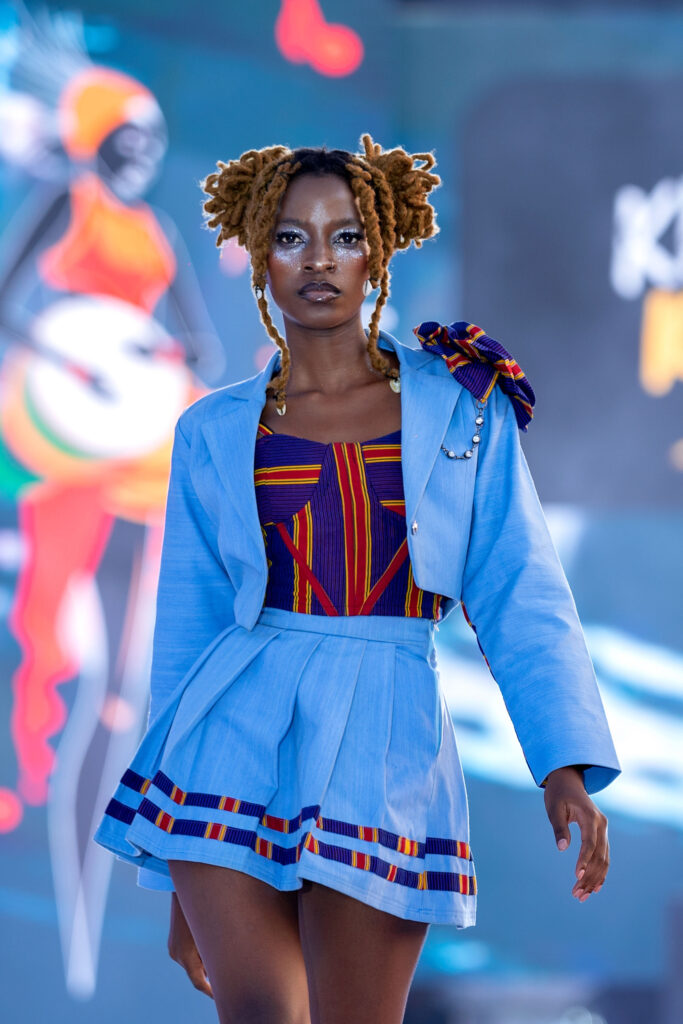
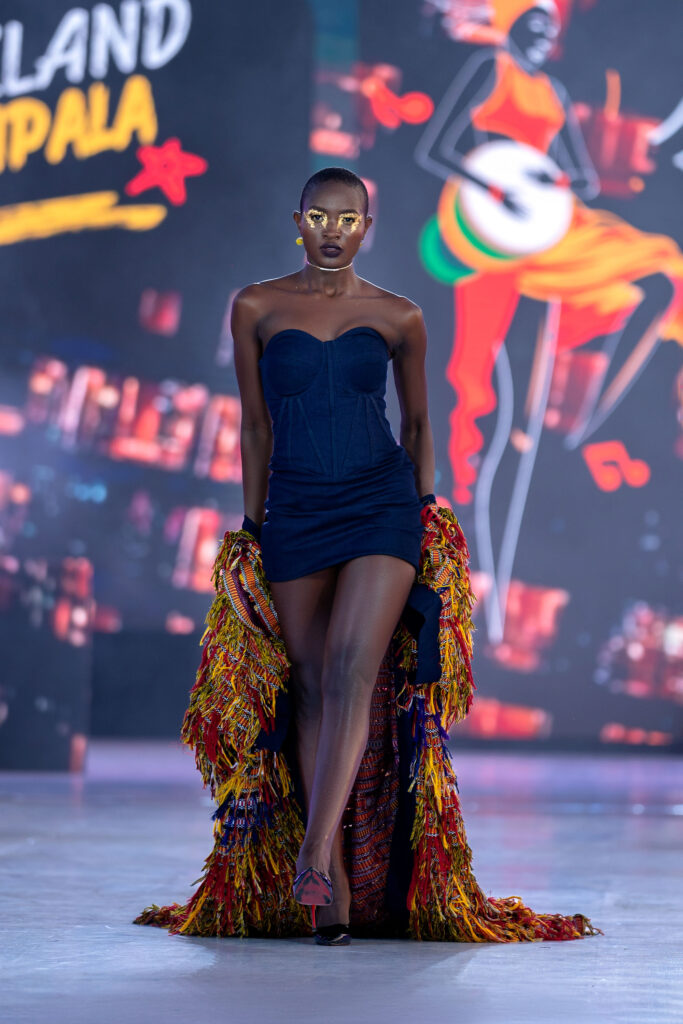
FAB: What does the name “Kirkland Kampala” mean to you personally?
Kasozi Steven: ‘Kirkland’ comes from my nickname, Kirk, and symbolises structure, craftsmanship, and a global mindset. ‘Kampala’ expresses the brand in my roots, the hustle, energy, resilience, and creativity. Together, the name reflects the balance between global fashion language and African heritage.
FAB: You describe your work as Afro-modern fashion. What does that mean in your own words?
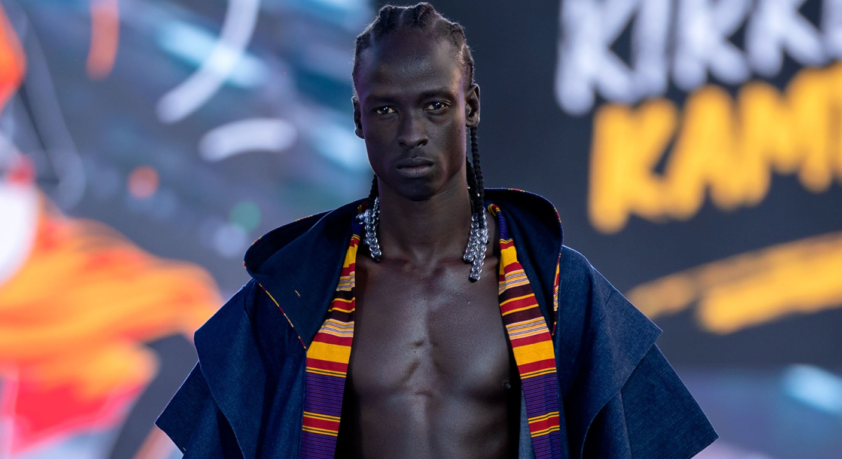
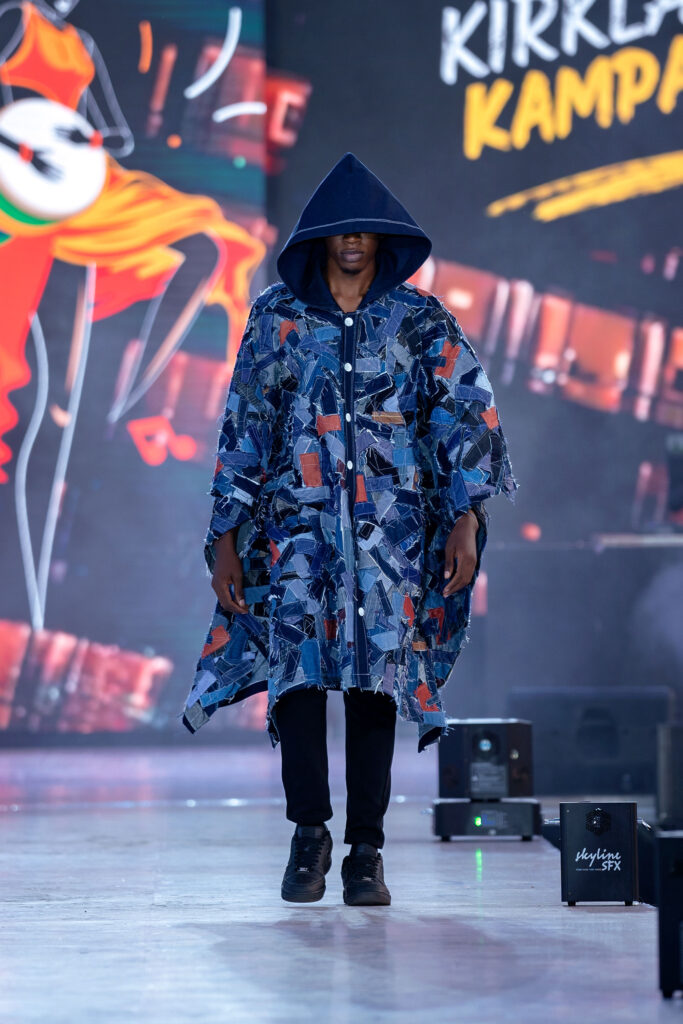
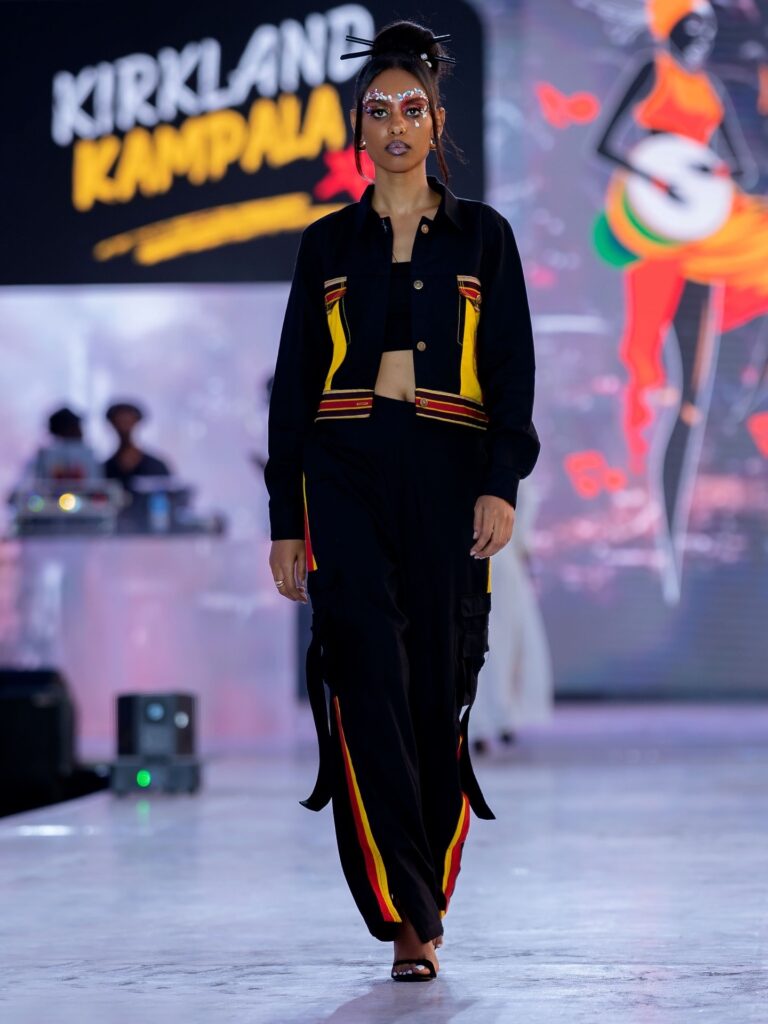
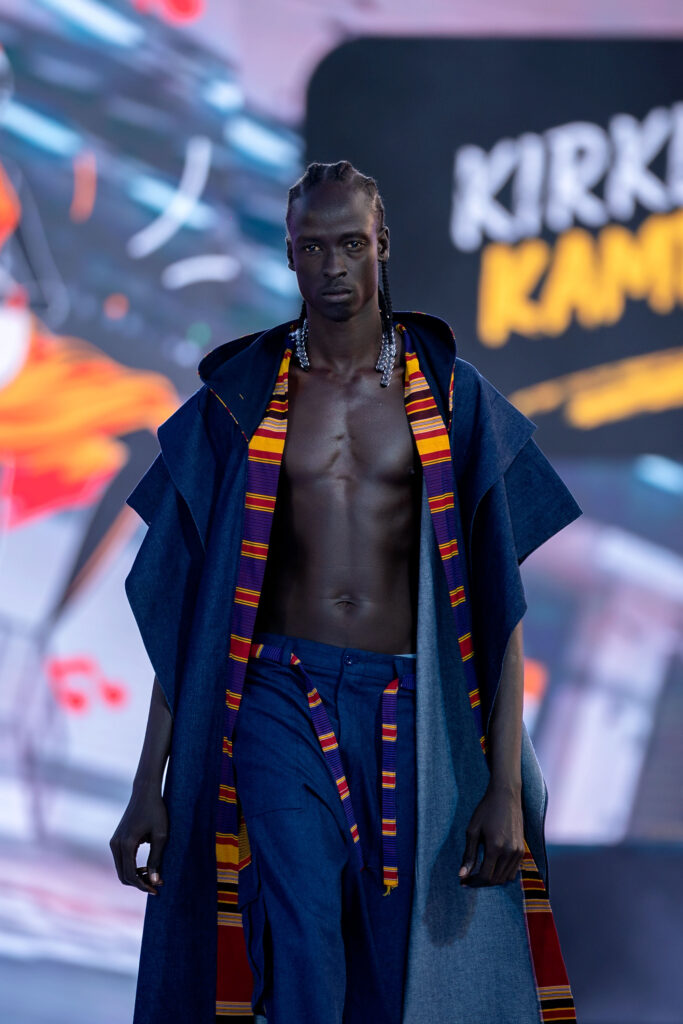
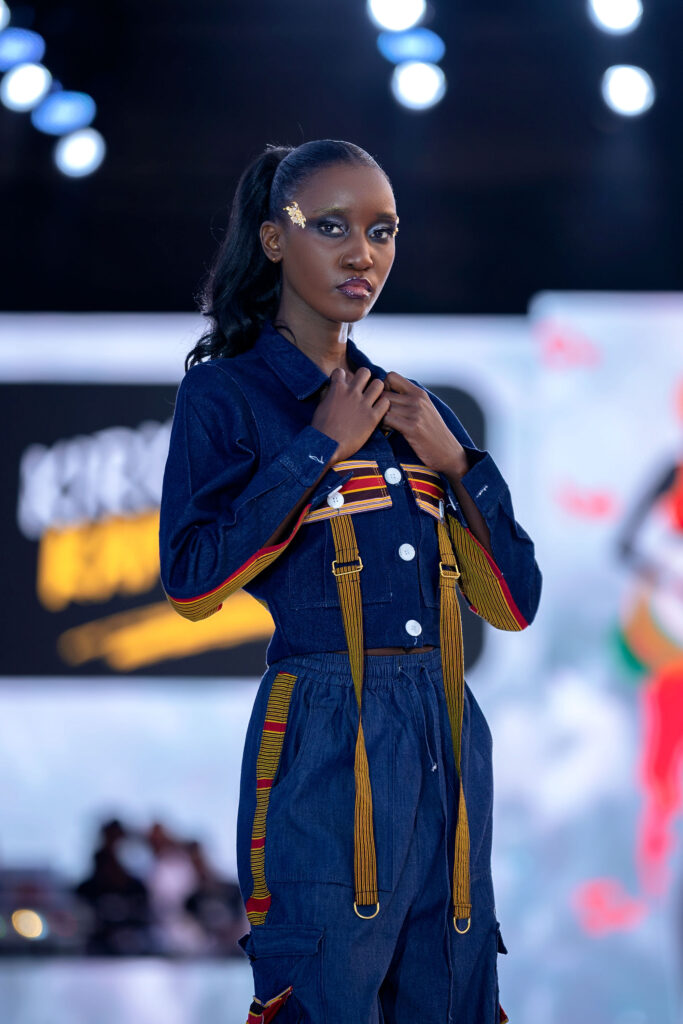
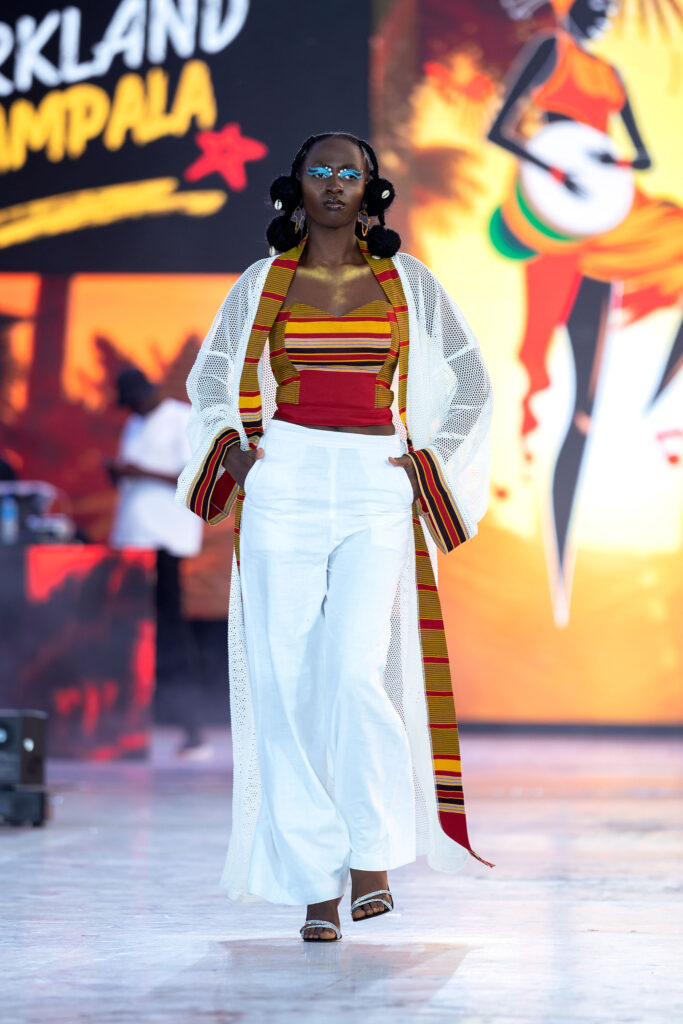
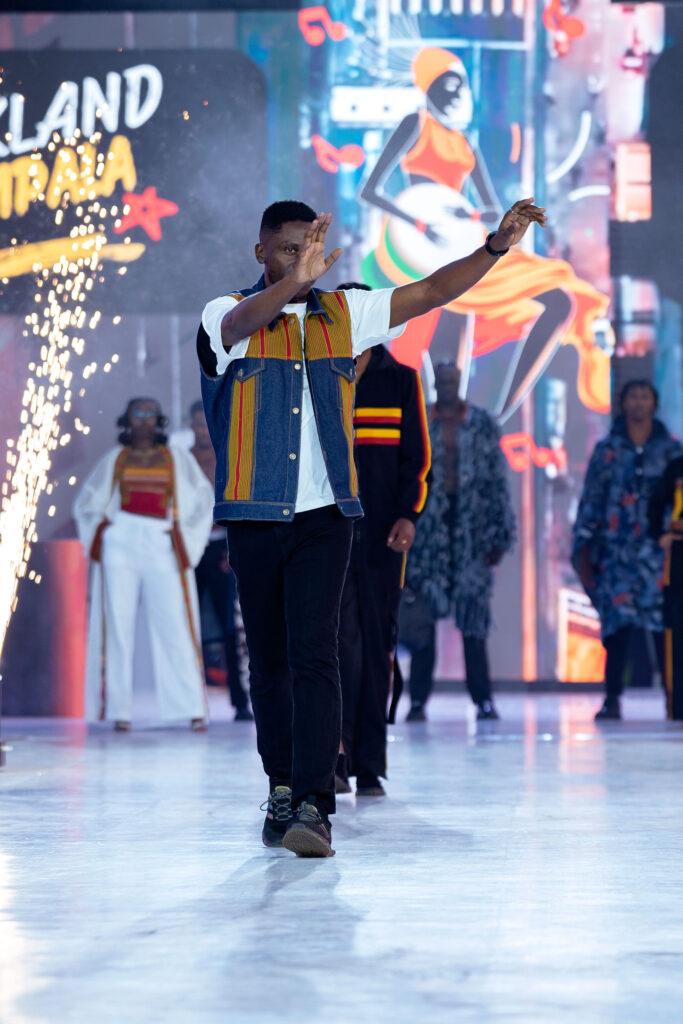
Kasozi Steven: To me, Afro-modern fashion is about respecting our Ugandan and African tradition while boldly reshaping it for the present. It’s the fusion of heritage fabrics like kikoi with modern fabrics such as denim and cotton using creative design techniques that help me create streetwear and trendy pieces such as the kikoi-blended jackets that relate with the current generation and modern market.
FAB: How do you turn tradition into something young people want to wear today?
Kasozi Steven: Through my design process I draw my inspirations from both our traditional history and modern tales or events. Each piece I make carries my strong desire to portray our African story in a modern way that relates well with the current generation. I therefore experiment with oversized forms, kikoi pattern cuts, denim pairings, and street-inspired cuts while allowing the fabric to tell its cultural story. This makes heritage wearable, relatable, and exciting for younger audiences that love style and tradition.
FAB: Your “Uganda @ 62” collection mixed fashion with national pride. What emotions were you hoping people would feel wearing those pieces?
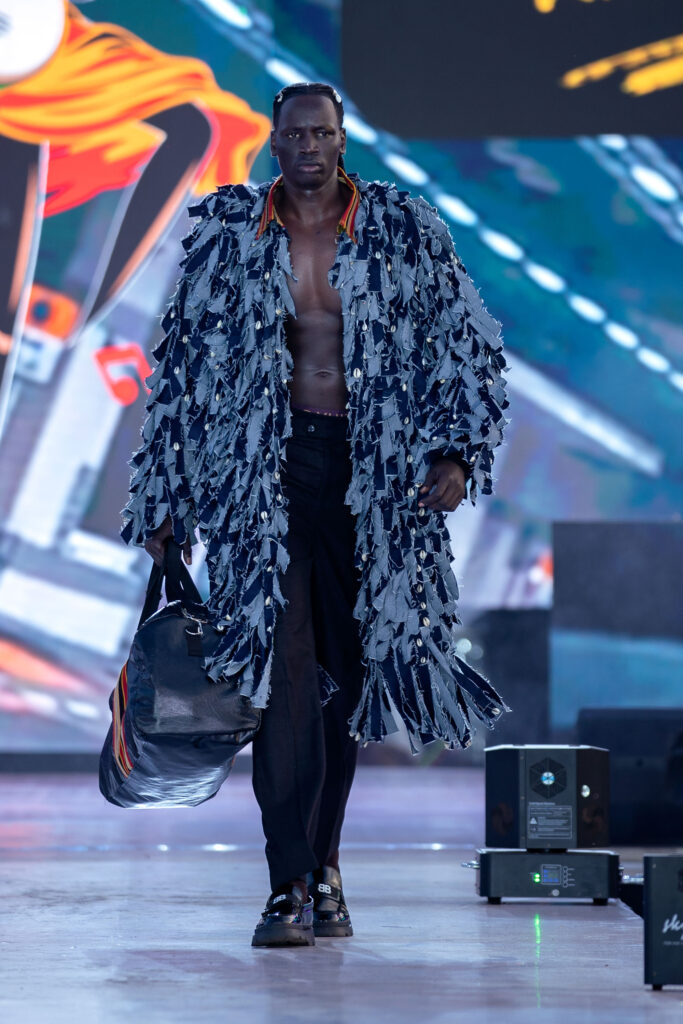
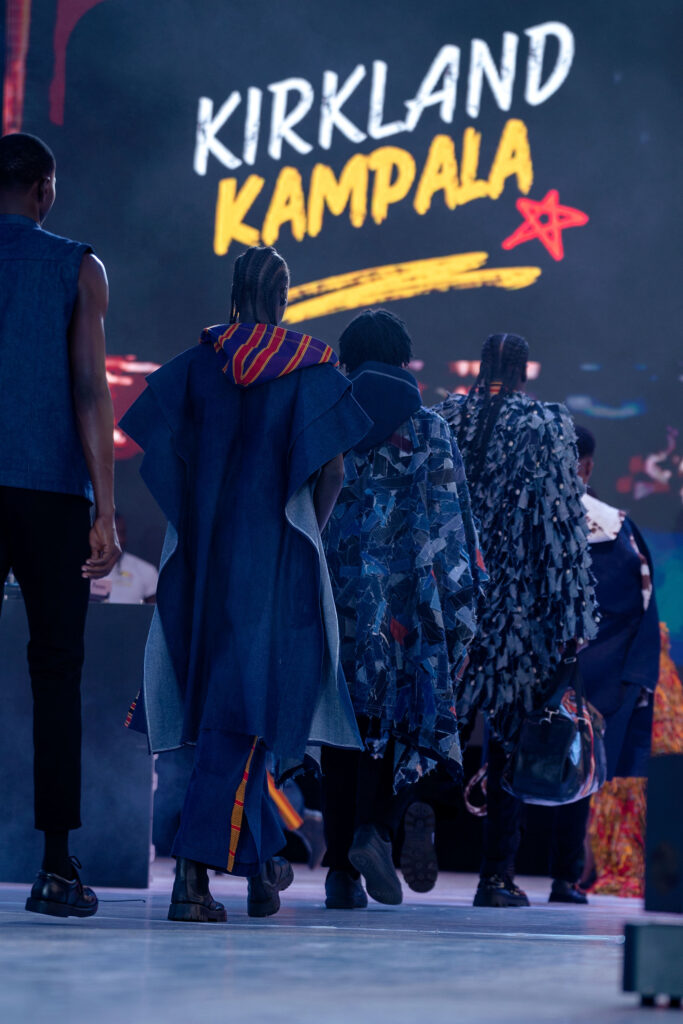
Kasozi Steven: My “Uganda @ 62” was released exactly 62 years after 1962, when Uganda got its sovereignty. Most of the current generation, including me, rely on history to understand and feel what independence means. I wanted people to feel pride, unity, and confidence. The collection celebrated independence through fashion, with black and white as the base materials and Ugandan colour stripes as designs, reminding wearers that national identity can be expressed boldly and creatively. I am happy that I managed to showcase this collection at the ‘Vvumbula Festival 2025’.
Zero-Waste Fashion and Owino Market as a Creative Source
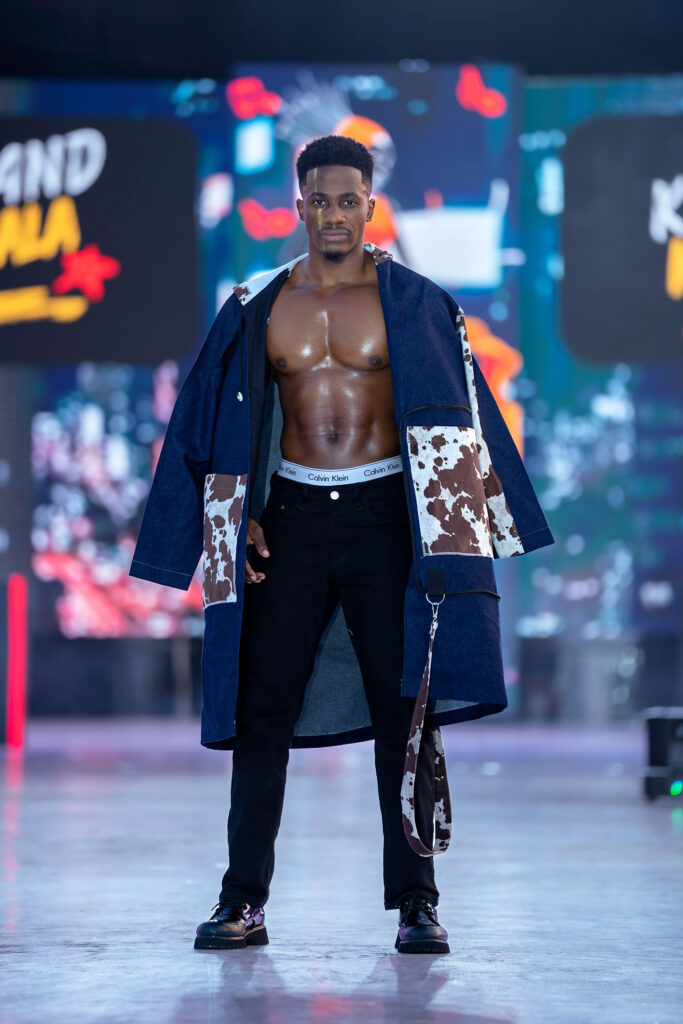
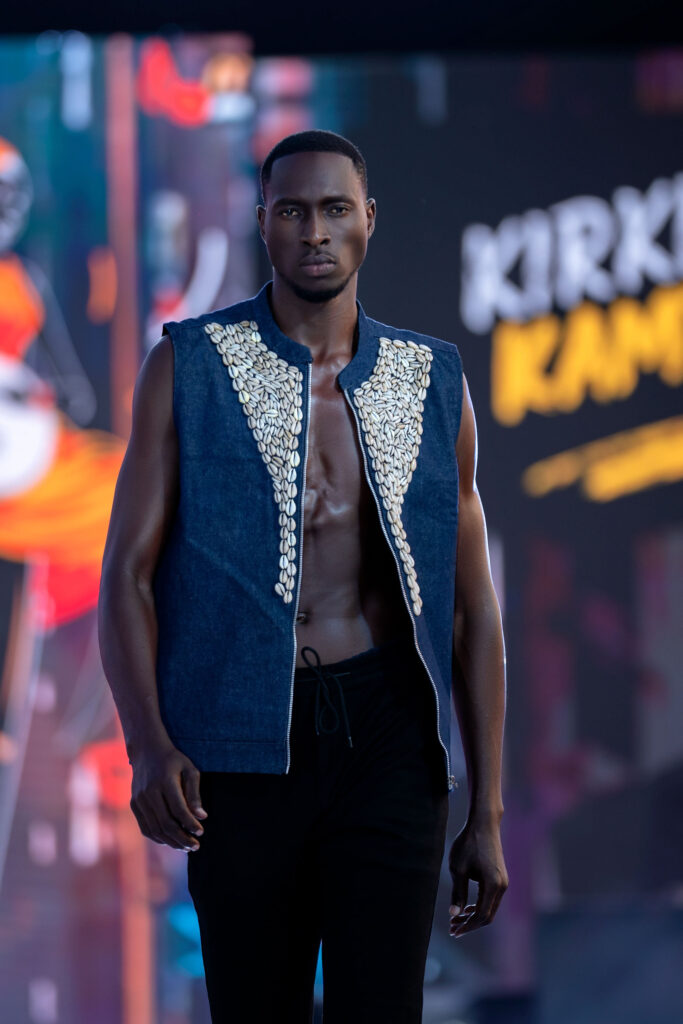
FAB: Your brand runs on a zero-waste model. Why is sustainability not optional for you?
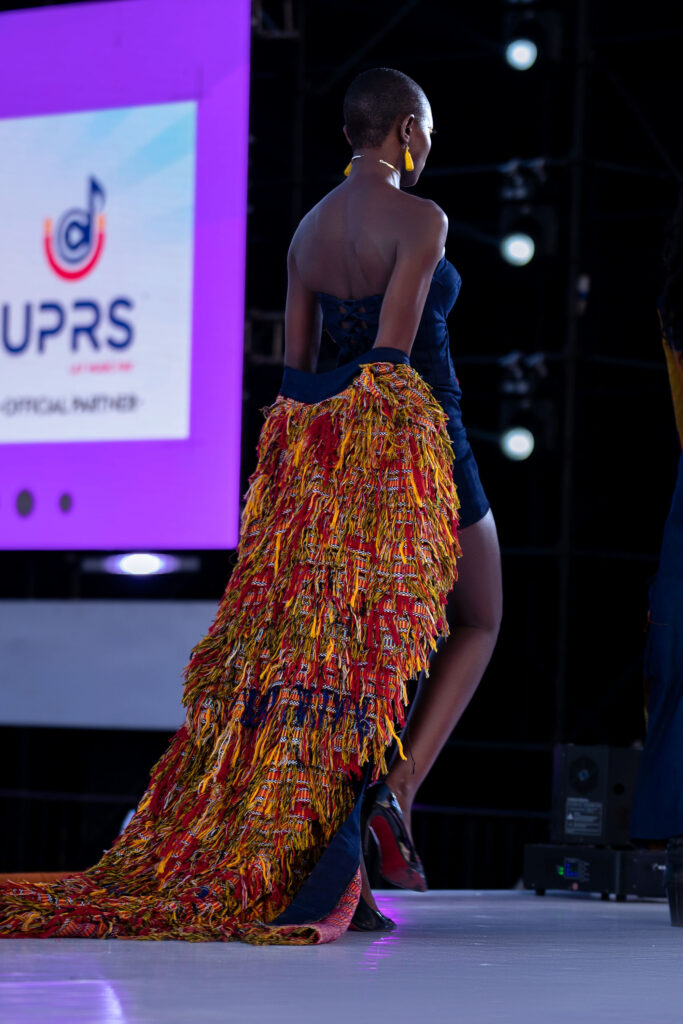
Kasozi Steven: I personally take sustainability as a responsibility. Operating near Owino Market taught me that fabric should never be wasted. It also gave me an opportunity to experiment more with secondhand materials that I have used as main material bases for blending with kikoi and kitenge fabrics for seven years now. This has not only enabled me to support the local Owino traders but also to recycle and repurpose such fabrics into beautiful and wearable outfits that can be sold. I strongly believe that fashion should respect the environment and the communities it serves. I am glad that these practices enabled me to emerge as the award winner of the ‘Eco and Sustainable Designer of the Year 2025’.
FAB: What does the journey of a piece look like from Owino Market to the final design?
Kasozi Steven: It begins with sourcing locally of the fabric, followed by intentional design planning and design sketching based on the size of the fabric. I then carefully cut and match the fabric with the preferred kitenge or kikoi while following the planned design and accessories to be used. Finally, when the piece is designed and complete, the last stage is repurposing leftovers into patchwork designs or accessories. Each stage is deliberate and creative.
FAB: How do offcuts and leftover fabrics inspire creativity instead of limitation?
Kasozi Steven: I believe there is beauty in fabric waste, and as a designer, offcuts force me to rethink design, experiment with textures, and create unique pieces that carry both sustainability and art. The different sizes and shapes of the offcuts inspire the kind of designs that I create, for example, the patchwork jackets that I sometimes create from square patches and horizontal patchwork designs. The bigger leftover material I use as base fabrics that I blend with minimal kikoi or kitenge material in unique designs inspired by shapes, lines or sometimes the irregular shapes of the offcut materials.
FAB: You don’t just make clothes; you train people. Why was skills empowerment important to include in your vision?
Kasozi Steven: As a male youth designer in my community who has taken fashion as a career, I desire to inspire fellow youth, especially those with a wrong perception about fashion, to take up fashion as a career through equipping them with sewing skills. Skills create independence. Teaching sewing and design equips youth with practical tools for self-reliance and helps change perceptions around fashion as a respected career path.
FAB: What is the most touching story you’ve heard from someone who learnt to sew through your workshops?
Kasozi Steven: The most memorable story is my old friend who came through for training in 2021 after covid time. She had run out of business due to covid but was glad she learnt jacket making, and I connected her to one of my production partners. I am glad that she picked the skill and took fashion as a career.
FAB: How do you balance running a business with serving your community?
Kasozi Steven: Practices such as sustainability, local sourcing, and training are part of my brand, and in order to achieve everything effectively, I partner and collaborate with existing stakeholders and organisations or businesses that reach the communities and are also equipped with enough resources to enable both of us to execute the projects at hand. I hope to improve my reach more in the future when my brand expands.
FAB: What does success look like when your goal is impact, not just profit?
Kasozi Steven: Success is seeing others grow. When the goal is impact, Kirkland becomes a movement, not just a brand. This therefore benefits future generations, not just short-term wins.
FAB: How do you make sure your designs stay rooted in Uganda even when they travel the world?
Kasozi Steven: I achieve this through conscious production such as intentional storytelling, material and colour choice, and cultural references. Every piece is authentic and carries a visible Ugandan identity no matter where it is worn. All pieces are made from scratch using locally sourced fabrics blended in contemporary designs; this is a unique idea of expressing our identity and creativity. I am also mindful about preserving the value of our fabrics, such as kikoi; this helps me in choosing the best designs that are fashionable but at the same time do not devalue our norms.
What Global Audiences Should Know About Ugandan Fashion
FAB: What do you want international audiences to understand about Ugandan fashion?
Kasozi Steven: I would like international audiences to understand that Ugandan fashion is innovative, sustainable, and globally relevant. It is not a trend; it is a powerful means of expressing our culture and heritage through our vibrant colours, shapes, symbols and stories behind our creations.
FAB: Who is Kasozi Steven when he is not designing?
Kasozi Steven: When off the sewing machine, I practise small-scale farming, mostly matooke. I am a good visual artist with a great love for painting, a lover of music, God and travelling.
FAB: What keeps you grounded when attention and recognition grow?
Kasozi Steven: Remembering my journey and purpose in life keeps me grounded. I believe that my existence and talent are God’s blessing to serve my community faithfully and not glorify myself. Remembering why I started keeps me focused.
FAB: What dream do you have for Kirkland Kampala in the next 10 years?
Kasozi Steven: I dream of having a permanent home for Kirkland that employs a number of youth. I also dream of having Kirkland as a hub of fashion tourism where tourists from different global locations come through and experience the beauty of creative wear and experiment with the texture and colours of different fabrics and production techniques.
FAB: If a young boy in Uganda is afraid to dream creatively, what would you tell him?
Kasozi Steven: I will use one key word: “passion”. Every young man in Uganda should passionately follow their dream without fear. Your creativity is valid. Fashion, art, and design are powerful tools. Start where you are, use what you have, and don’t let fear silence your vision.
FAB: When your story is told one day, what do you hope people say was the heart of your work?
Kasozi Steven: I really hope people would say that I used fashion and art to blend the gap between tradition and modern street style wear as a way to preserve culture, inspire the new generation, and show that African creativity belongs on the global stage.